Oven-Fried Oysters

Oven-fried anything will always be far inferior to anything flat-out fried, but these are awfully good on the fly when you don’t want to deal with a lot of hot oil.

Mix a cup of corn meal with a half cup of flour along with about a tablespoon of salt, black, and red pepper. Dip drained oysters in a wash made with one large egg whipped with a cup of water—you want it a little frothy. Dredge in meal/flour mixture, place in a well-oiled pan on the upper rack of a very hot oven. Spray with Pam. Flip two minutes after they begin sizzling, and continue cooking until plump and crisp.. These are actually pretty good cold.

Creole Pecan Catfish

This dish was one of our more popular choices at the Downtown Grill in Oxford. Though a Creole mustard is used here, the recipe works well with brown, stone-ground, or Dijon.

Oil and line a skillet or sheet pan with parchment paper. Preheat oven to 400. Stir together 1 cup finely chopped pecans with about a quarter cup finely-crushed saltines; you can use Panko instead, but for some reason I never seem to have any Panko.

Mix ¼ cup mustard with 1 large egg and ¼ cup water. Beat very well. Dredge the fish through the mustard mixture and coat the tops of the fillets in crushed pecans. Bake at 400 for about 10-15 minutes, depending upon the size of the fillet.

The Sultan of Jazz: A Black Russian from Mississippi

If you were to travel back in time to Constantinople’s Taksim Square in the 1920s, you might hear the lively beat from Club Maxim. Inside, you’d likely find a black man in a top hat, perhaps with a pipe in his hand. He might just tell you, as he did one tourist, how he’d overcome “difficulties that would stagger the ordinary man.”

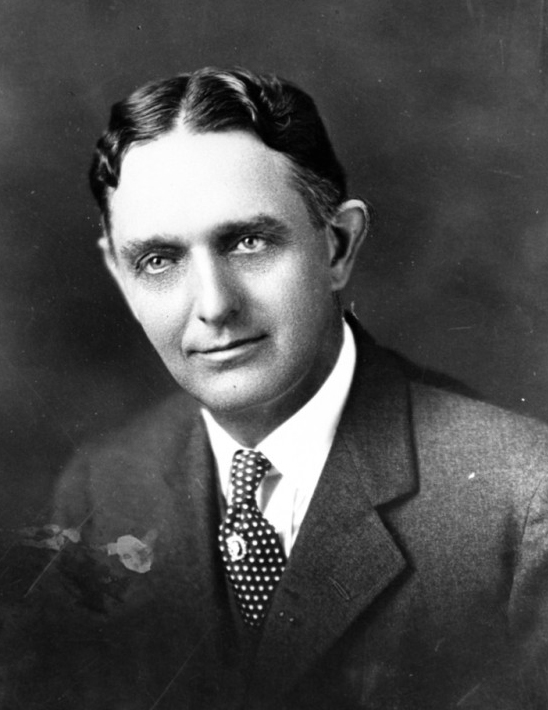
This would be Frederick Bruce Thomas, known later in his life as Fyodor Fyodorovich Tomas, the Mississippi farm boy who became a Moscow impresario and introduced jazz to Asia.

Thomas was born June 12th, 1872 to Hannah and Lewis Thomas, who owned 600-plus acres in Coahoma County, Mississippi. In 1886, a white planter took over their land. Against all odds, the Thomas family sued the planter, and in what must have been one of the few successful cases for black landowners at the time, the Mississippi Supreme Court ruled in their favor. However, the planter appealed and, under threat, in 1890 the Thomas family decided to leave Mississippi and settle in Memphis. In late October, 1890, just a few months after moving the family to Memphis, where he took work as a flagman for the railroad, Lewis Thomas was hacked to death in bed by a jealous husband.

A short time later, Frederick Bruce Thomas, who’d only known life in the South, hopped on the rails, first to Arkansas, then to St. Louis, Chicago, and Brooklyn. He went to Europe in 1894, and in 1899, after crisscrossing the Continent, mastering French, and honing his skills as a waiter and valet, he signed on to accompany a nobleman to Russia.

Thomas’s career in Moscow proved to be more successful than he could ever have imagined. He found no color line in Moscow, where he worked for ten years as a waiter, a butler, and a valet, before becoming assistant to the owner of Yar, the city’s most prominent café-theatre. The Sokolovsky gypsy choir performed there on a regular basis and their songs about their years as slaves likely reminded him of his own people’s story.

Yar was frequented by the bourgeoisie of Moscow and Frederick Thomas became the darling of the wealthy clientele. By 1911 he had earned enough money to open an entertainment garden, “Aquarium,” with the help of two Russian partners. In 1912, he rented a music venue in the city center called “Maxim” which very quickly became popular with wealthy Muscovites.

In Russia, Thomas was one of only a dozen blacks. With his résumé of jobs in the finest European hotels and restaurants, he had the three things he needed most: opportunity, access and know-how. Ironically, he also had history on his side. The African Abraham Gannibal had been seen as “the dark star of the Enlightenment” in Russia as far back as the 18th century, and his great-grandson, Alexander Pushkin, became an icon of Russian literature.

With his talent for booking musical acts from Western Europe, Thomas’ night spots, Aquarium and Maxim, became the spots in which to be seen (and from which to disappear) during Russia’s late imperial era. Black performers visiting from the States remembered, everything was “gold and plush” so that “you would sink so deep in carpets that you would think that you would be going through the door to the cellar.”

Frederick Thomas blossomed in Moscow. He obtained Russian citizenship, was married three times and had five children. Around 1914, he bought a dacha near Odessa and he also owned buildings in Moscow. An African-American immigrant from Mississippi, the son of slaves, had made a fortune in Russia.

But when the Bolsheviks seized power in 1917, Thomas found himself on the wrong side. His newly acquired wealth trumped his past oppression as a black man in the United States. He went to Odessa, but the city was evacuated in April 1919 by the French and British forces allied to the White Army. He managed to embark with his wife Elvira, his children and other refugees on the Russian ship “Emperor Nicholas” bound for Constantinople.

Arriving in the Ottoman capital, he hastened to the American embassy to seek help, or even repatriation to the United States. Officials at the embassy refused to recognize his American nationality and therefore refused to help him; his skin color undoubtedly played a decisive role.

Having lost all his wealth, Frederick Thomas started to do business again in Constantinople, like many Russian refugees. After three months, he opened his Anglo-American Garden Villa (the “Stella Club”) on August 31, 1919, with acts by “Mr. F. Miller and Mr. Tom.” Thanks to his new establishment’s success, he rented the basement of the Magic cinema with gardens in Pera in 1921, and transformed it into a jazz and night club. He named it “Maxim” in memory of Maxim in Moscow which had allowed him to start his career in the entertainment world.  Harry A. Carter and the Shimmie Orchestra to headlined the first season, 1921-22.

Though opening “Maxim” left Thomas on the verge of bankruptcy, business at last started to pick up. After the First World War, you had been an American tourist looking for a good time in Constantinople, you probably would’ve been directed across the Golden Horn to one of the popular Russian-Western, European-style “cafés chantant,” where you could order a drink (outside of Prohibition), sample the finest cuisine, listen to all kinds of music and dance.

Despite the economic and political upheavals of the crumbling Ottoman Empire, Frederick Thomas succeeded in making his establishment the most popular place in the city.  He was the first person to import jazz to Turkey, and its popularity among the city’s natives and swarms of well-heeled tourists consolidated his success and made him rich once again. All those who remained of the Stanbuliot bourgeoisie, along with the English and French soldiers occupying the capital, hurried to listen to jazz at Maxim. Thomas became known as the “Sultan of Jazz.”

It’s astonishing that a black American who’d left the U.S. in 1894 and became a Russian citizen in 1914 was bringing America’s greatest music to the other side of the world by hosting black jazz bands in Constantinople before Louis Armstrong had even joined King Oliver’s Creole Jazz Band. But Thomas had already done similar things for the tango in Russia, and whatever obstacles he had to overcome as a Russian refugee. Ottoman Turkish had no word for Negro. Thomas told those who visited his clubs “he was ‘conservatively rated to be worth at least $250,000,’ which would amount to $10 million today.

Then, during the first years of the Turkish Republic, business began to decline. Foreigners and a large part of the bourgeoisie had left the city, while embassies and their staff began to be transferred to the new capital, Ankara. Frederick Thomas plunged into debt. Unable to pay his creditors, they had him put in jail and seized his nightclub, which they renamed “Yeni Maksim”.

Frederick Thomas was never to recover. Although his skin color was of no concern to the Turks, he could not avoid dealing with the diplomats in the American Consulate General in Constantinople, or with their racist superiors in the State Department. When he most needed their help, they refused to recognize him as an American and to give him legal protection.

Abandoned by the United States, and caught between the xenophobia of the new Turkish Republic and his own extravagance, Thomas fell on hard times, was thrown into debtor’s prison, and died in Constantinople on July 12th, 1928 at Pasteur Hospital in Taksim. Forgotten by the Americans, Russians, Stanbuliots and all those he had entertained throughout Europe, Fyodor Fyodorovich Tomas was laid to rest at the Protestant Feriköy Cemetery in Istanbul, far away from the “most Southern place on earth.”

(Thomas’s biography, The Black Russian, by Vladimir Alexandrov, was released by Atlantic Monthly Press in 2013.)

Hot Hominy

This wonderful old buffet dish is perfect for a tailgate brunch. Most recipes call for white hominy, but yellow or a blend is pretty. To four cups drained and rinsed hominy, add a small jar of pimentos, a chopped mild pepper,–poblanos or bananas, what have you–and two cups mild cheese sauce. (Make your own; you can do it.) Season with a little salt and white pepper. Bake at 300 for about 20 mins.

A Dog Named Rex

Consider Gus Levy:

“. . . a nice guy. He was also a regular fellow. He had friends among promoters and trainers and coaches and managers across the country. At any arena or stadium or track Gus Levy could count on knowing at least one person connected with the place. He knew owners and ticket sellers and players. He even got a Christmas card every year from a peanut vendor who worked the parking lot across from Memorial Stadium in Baltimore. He was very well liked. (A Confederacy of Dunces, p. 202)

Levy was also the owner of Levy Pants, of late the workplace of Our Hero, Ignatius J. Reilly, where he had made himself at home among the filing cabinets, posting a a hand-lettered sign saying “Department of Research and Reference: I. J. Reilly” (97). Gus Levy met Ignatius after a fracas in the office left Ignatius and his co-worker, Miss Trixie in a heap on the floor. Intent on making a positive impression, Ignatius had announced to Levy that he has taken an interest in his business and will help him with innovations. But Ignatius quite to the contrary, responds to a letter from a client, Abelman’s Dry Goods, with extensive insults and addresses Abelman as “Mongoloid, Esq.” (105). Abelman, obviously not to be intimidated, responds with a threat of legal action.

After discovering his company is on the brink of bankruptcy because of the bungling machinations of a cloistered, anachronistic crusader, Gus Levy, after convoluted campaign, finally reaches the home of his antagonist on Constantinople Street in a declining neighborhood among

(31) a block of houses built in the 1880s and 90s, wooden Gothic and Gilded Age relics that dripped carving and scrollwork, Boss Tweed suburban stereotypes separated by alleys so narrow that a yardstick could almost bridge them and fenced in by iron pikes and low walls of crumbling brick. The larger houses had become impromptu apartment buildings, their porches converted into additional rooms. In some of the front yards there were aluminum carports, and bright aluminum awnings had been installed on one or two of the buildings. It was a neighborhood that had degenerated from Victorian to nothing in particular, a block that had moved into the twentieth century carelessly and uncaringly—and with very limited funds.

The address . . . was the tiniest structure on the block, aside from the carports, a Lilliput of the eighties. A frozen banana tree, brown and stricken, languished against the front of the porch, the tree preparing to collapse as the iron fence had done long ago. Near the dead tree there was a slight mound of earth and a leaning Celtic cross cut from plywood.

(307) Mr. Levy climbed the steps and read the “Peace at Any Price” sign tacked to one of the porch posts and the “Peace to Men of Good Will” sign tacked to the front of the house. This was the place all right. Inside a telephone was ringing.

“They not home!” a woman screamed from behind a shutter next door. “They telephone’s been ringing all morning.”

The front shutters of the adjoining house opened and a harried

(308) looking woman came out on the porch and rested her red elbows on her porch rail.

“Do you know where Mr. Reilly is?” Mr. Levy asked her.

“All I know is he’s all over this morning’s paper. Where he oughta be is in a asylum. My nerves is shot to hell. When I moved next door to them people, I was signing my death warrant.”

“Does he live here alone? A woman answered the phone once when I called.”

“‘That musta been his momma. Her nerves is shot, too. She musta went to get him out the hospital or wherever they got him.”

“Do you know Mr. Reilly well?”

“Ever since he was a kid. His momma was sure proud of him. All the sisters at school loved him he was so precious. Look how he ended up, laying in a gutter. Well, they better start thinking about moving off my block. I can’t take it no more. They’ll really be arguing now.”

“Let me ask you something. You know Mr. Reilly well. Do you think he’s very irresponsible or maybe even dangerous?”

“What you want with him?” Miss Annie’s bleary eyes narrowed. “He’s in some other kinda trouble?”

“I’m Gus Levy. He used to work for me.”

“Yeah? You don’t say. That crazy Idnatius was sure proud of that job he had at that place. I useta hear him telling his momma how he was really making good. Yeah, he made good. A few weeks and he was fired. Well, if he worked for you, you really know him good.”

Had that poor Reilly kook really been proud of Levy Pants? He had always said that he was. That was one good sign of his insanity.

“Tell me. Hasn’t he been in trouble with the police. Doesn’t he have some kind of police record?”

“His momma had a policeman coming around her. A regular undercover agent. But not that Idnatius. For one thing his momma likes her little nip. I don’t see her drunk much lately, but for a while there she was really going good. One day I look out in the backyard and she had herself all tangled up in a wet sheet hanging off the line. Mister, it’s already took ten years off my life living next to them people. Noise! Banjos and trumpets and screaming and hollering and the TV. Them Reillys oughta go move out in the country somewheres on a farm. Every day I gotta take six, seven aspirin.” Miss Annie reached inside the neckline of her housedress to find some strap that had slipped from (309) her shoulder. “Lemme tell you something. I gotta be fair. That Idnatius was okay until that big dog of his died. He had this big dog useta bark right under my window. That’s when my nerves first started to go.

Then the dog dies. Well, I think, now maybe I’ll get me some peace and quiet. But no. Idnatius is got the dog laid out in his momma’s front parlor with some flowers stuck in its paw. That’s when him and his momma first started all that fighting. To tell you the truth, I think that’s when she started drinking. So Idnatius goes over to the priest and ax him to come say something over the dog. Idnatius was planning on some kinda funeral. You know? The priest says no, of course, and I think that’s when Idnatius left the Church. So big Idnatius puts on his own funeral. A big fat high school boy oughta know better. You see that cross?”

Mr. Levy looked hopelessly at the rotting Celtic cross in the frontyard. “That where it all happened. He had about two dozen little kids standing around in that yard watching him. And Idnatius had on a big cape like Superman and they was candles burning all over. The whole time his momma was screaming out the front door for him to throw the dog in the garbage can and get in the house. Well, that’s when things started going bad around here.”

While Levy was absorbing this information, Ignatius and his mother came wheeling to the curb before the house, and were promptly engaged in an imbroglio over Inez’s engagement to the gentle, well-meaning Claude Robichaux. Gus Levy stood, transfixed by the absurd tableaux.

(311) (Irene) had fallen to her knees and was asking the sky, “What I done wrong, God? Tell me, Lord. I been good.”

“You’re kneeling on Rex’s grave!” Ignatius shouted.

We can all understand how powerful the death of a beloved pet can affect anyone, particularly a boy such as Ignatius who was overweight (a “big fat high school boy”) and assuredly precocious, neither trait likely to endear him to others his age. Perhaps we could reason that, for Ignatius, the dog Rex was the only creature who loved him wholeheartedly and without reserve. For that love to be negated by his Church and scorned by his mother (“throw the dog in the garbage can”) amounted to an apocalypse for Ignatius, for whom that love had almost if not actual divine connotations.

Seeing his mother not only kneeling on Rex’s grave, but praying, triggers such an outrage in Ignatius, as if she were committing some sort of profound blasphemy. Perhaps we can find sufficient theological implications in these passages to suggest that the death of Rex (“the king”) is for Ignatius nothing less than the death of God.

Perhaps. Yet, bearing in mind that A Confederacy of Dunces is nothing if not a work of genius employing absurdity, slapstick, and a winsome affection to tell the story of a modern-day crusader, we shouldn’t expect Toole to craft an—albeit offstage—character with anything approaching unrelenting gravity. Indeed, we find a generous dose of camp/Rebalaisian comedy earlier in the novel.

Ignatius and Irene have been at it again, and Ignatius has bolted to his room for refuge. Again, note the theological language in the passage:

(26) Ignatius pulled his flannel nightshirt up and looked at his bloated stomach. He often bloated while lying in bed in the morning contemplating the unfortunate turn that events hd taken since the reformation. Doris Day and Greyhound Senicruisers, whenever they came to mind, created an even more rapid expansion of his central region. But since the attempted arrest and the accident, he had been bloating for (27-28) almost no reason at all, his pyloric valve snapping shut indiscriminately and filling his stomach with trapped gas, gas which had character and being and resented its confinement.

He wondered whether his pyloric valve might be trying, Cassandralike, to tell him something. As a medievalist Ignatius believed in the rota Fortunae, or wheel of fortune, a central concept in De Consolatione Philosophiae, the philosophical work which had laid the foundation for medieval thought. Boethius, the late Roman who had written the Consolatione while unjustly imprisoned by the emperor, had said that a blind goddess spins us on a wheel, that our luck comes in cycles. Was the ludicrous attempt to arrest him the beginning of a bad cycle? Was his wheel rapidly spinning downward? The accident was also a bad sign. Ignatius was worried. For all his philosophy, Boethius had still been tortured and killed. Then Ignatius’ valve closed again, and he rolled over on his left side to press the valve open.

“Oh, Fortuna, blind, heedless goddess, I am strapped to your wheel,” Ignatius belched. “Do not crush me beneath your spokes. Raise me on high, divinity.”

“What you mumbling about in there, boy?” his mother asked through the closed door.

“I am praying,” Ignatius answered angrily.

“Patrolman Mancuso’s coming today to see me about the accident. You better say a little Hail Mary for me, honey.

“Oh, my God,” Ignatius muttered.

“I think it’s wonderful you praying, babe. I been wondering what you do locked up in there all the time.”

“Please go away!” Ignatius screamed. “You’re shattering my religious ecstasy.”

Bouncing up and down on his side vigorously, Ignatius sensed a belch rising in his throat, but when he expectantly opened his mouth, he omitted only a small burp. Still, the bouncing had some physiological effect. Ignatius touched the small erection that was pointing downward into the sheet, held it, and lay still trying to decide what to do. In this position, with the red flannel nightshirt around his chest and his massive stomach sagging into the mattress, he thought somewhat sadly that after eighteen years with his hobby it had become merely a mechanical physical act stripped of the flights of fancy and invention that he had once been able to bring to it. At one time he had almost developed it into an art form, practicing the hobby with the skill and fervor of an artist and philosopher, a scholar and gentleman. There were still hidden in his room several accessories which he had once used, a rubber glove, a piece of fabric from a silk umbrella, a jar of Noxema (sic). Putting them away again after it was all over had eventually grown too depressing.

Ignatius manipulated and concentrated. At last, a vision appeared, the familiar figure of the large and devoted collie that had been his pet when he was in high school. “Woof!” Ignatius almost heard Rex say, once again. “Woof! Woof! Arf!” Rex looked so lifelike. One ear dropped. He panted. The apparition jumped over a fence and chased a stick that somehow landed in the middle of Ignatius’ quilt. As the tan and white fur grew closer, Ignatius’ eyes dilated, crossed, and closed, and he lay wanly back among his four pillows, hoping that he had some Kleenex in his room.

St. Teresa envisioned an angel carrying a long, golden spear with a fiery tip. ‘[He] plunged it into my deepest inward. When he drew it out, I thought my entrails would be drawn out too and when he left me. I glowed in the hot fire of love for God.” I’d be among the many who might present this passage as a precedent for religious eroticism.

But let’s remember where we are—in a world rife with absurd, comic scenarios—and who we’re dealing with–delusional, immature Ignatius J. Reilly, whose “hobby”, however stripped of the “flights of fancy and invention” retained the “vision of the large and devoted collie,” Rex, chasing a stick that had somehow landed in his lap, an image of pitiable, grubby auto-eroticism slathered with a sordid sweep of Christian religiosity.

Pimento Cheese at the Masters

“The Masters pimento cheese must be the most famous sandwich in all of sport,” wrote journalist Andy Bull, and it was Nick Rango’s recipe for “the pȃte of the South” that made the Masters gallery snack iconic.

The pimento cheese Nick Rango sold from his store, Woodruff Drug in Aiken, South Carolina, was so famous that in the 1960s, Masters organizers dropped the husband-and-wife catering team they’d hired since the 1940s to make way for Rango’s. For 45 years, Rango and his two children, Billy and Stella, whipped up massive quantities of pimento cheese by hand to take to Augusta every April.

More than 20 years ago, the Masters chose not to renew Rango’s contract; afterward he refused to share the recipe, taking its secret to his grave in 2015. Ted Godfrey, Rango’s replacement, claims that the missing ingredient in Rango’s pimento and cheese came to him in his sleep, as missing things tend to do.

By the next year’s tournament, Godfrey had filled Rango’s shoes, and patrons were none the wiser. But Godfrey also withheld his recipe after the Masters replaced him with in-house catering in 2013.

When Rango lost the contract, the change of hands hardly registered with patrons, but when Godfrey lost the contract, patrons noticed—and so did the press. Wright Thompson, a writer for ESPN noticed, and he was directed to Godfrey, who spilled the beans. Thompson’s 2013 exposé—later known as “Pimento-Gate”—revealed a Masters’ operation that tournament organizers would’ve preferred stay shut.

The episode, Thompson wrote, “left the Masters concessions staff trying—and failing, in a rare moment of fallibility—to recreate the same recipe that generations of golf fans have enjoyed.”

Admittedly, until the unlikely event that a Rango relative shares the original recipe, the best we have is an imitation of an approximation created by lifelong Masters patron and Augusta food blogger, Gina Dickson. Since her family moved to Augusta in the 1970s, Dickson estimates she’s been to no fewer than 25 Masters tournaments.

A deft cook who’d eaten countless pimento cheese sandwiches dating back to the Rango era, Dickson says it took her several hours to reverse-engineer the ingredients and consistency. I recommend you add a grain of salt.

Masters Pimento Cheese

2 cups sharp cheddar cheese, shredded
1 cup Monterey Jack cheese, shredded
4 ounces cream cheese
½ cup mayonnaise (“just don’t use Miracle Whip—that’s a Northern thing”)
4-ounce jar pimento peppers, drained and diced
1 tablespoon onion, very finely minced
¼ teaspoon garlic powder
¼ teaspoon cayenne pepper
¼ teaspoon salt
¼ teaspoon black pepper

Combine all the ingredients in a medium bowl and mix until smooth and creamy. Refrigerate the mixture for at least an hour to allow it to become firm. Serve on white bread.

Southern Recipes from the Great American Writer’s Cookbook

“In recent months I have looked forward to the mail with an anticipation and excitement I’ve not felt since, in the summer of 1946 as a ten-year old, I sent off penny postcards from Oxford, Mississippi, to Hollywood, California, and waited anxiously for autographed, black and white glossies of Alan Ladd and Jeanne Crain, Clark Gable and Betty Grable, Cornell Wilde and Yvonne de Carlo, Flicka, and Lassie to be delivered at my front door. The letters I’ve received in the past six months are even better.”

So writes Dean Faulkner Wells in her forward to The Great American Writer’s Cookbook (Yoknapatawpha Press, 1981), one of if not the most distinctive collection of culinary/literary memorabilia. Dean and her husband Larry collected over 200 recipes sent by 175 writers of novels, short stories, history, commentary, plays, poetry, reportage, columns, and criticism, all among the finest of their generation. Most are predictably far better at writing than cooking, as hinted at in the introductory quote by John Cheever: “The only time I ever go into a kitchen is when I’m being chased out the back door.” The majority of the recipes are serious; exceptions include John McPhee’s “Count Zeppelin Pancakes,” Larry L. King’s “Party Boy’s Midnight Snack Puree,” David Halberstam’s “Cracked Crab à la McNamara,” and Irwin Shaw’s Italian Delight.”

“Many of the writers who sent recipes questioned the title,” Dean wrote, “advising me to change it to The American Writers’ Great Cookbook, or The Minor Regional American Writers’ Cookbook, or even concluding, ‘I heard that there once was a Great American Writer, but he died.’ She adds that the book is “in a small way a tribute to the men and women who have given me, in their distinguished work over the years, so many hours of pleasure and edification.”

In his introduction, Craig Claiborne writes that when attending a party of glittering literati in the Hamptons, he was astounded to find William Styron staring at him and pouting.

“You,” he said accusingly, “are the one critic who hurt me most.” I frowned. Me? A literary critic. He must be thinking of another man with my name. “You,” he continued, “criticized my recipe for fried chicken.” I laughed when he recounted the basis for my alleged attack.

 It seems that some years ago there was published a book called The Artists and Writers Cook Book, and in it was his recipe for southern fried chicken. I should have learned long ago that there is nothing that can come nearer to creating lifelong enmity, if not to say bloodshed and worse violence, than one Southerner criticizing another Southerner’s fried chicken. Bill, of course, is from Virginia and I from Mississippi. It seems that the crux for my attack was that he had recommended cooking that chicken in bacon fat in lieu of lard blended with butter which my mother used and a technique which I in my turn borrowed. He also said, as I recall, that frozen chicken might be used. And that, I found unpardonable. In any event, before the evening which included a pitcher of martinis, we had a fine old time swapping recipes for grits and corn pones and hushpuppies.

Here’s a selection of recipes Dean and Larry garnered from Southern writers.

Barry Hannah: Three Bean Soup

This is a recipe that I learned from my aunts when I was little. It’s plain, staple food that can feed a big gang of people-friends, lovers, kids, relatives, everybody! I call it “Three Bean Soup.”

You start with three kinds of beans: kidney, white (navy) and black- eyed peas. Take a big-real big-pot of water, dump ’em in, and add some shredded onions. Sauté either pork or beef, cut up in little chunks, and dump it in. Bring it to a boil. Add salt mixed with pepper, to taste. Turn up the heat and bring it up again. Add water if needed; dump in a small bag of rice, and bring it up. Boil until it thickens. For extra seasoning, I sometimes add some crab-boil, Tabasco, or whatever’s handy on the shelf. Serve it with French bread and butter. It’s all the nutrition you can stand.

Shelby Foote: Viennese Boiled Beer

This is a two-step recipe, long-drawn-out but easy all the way. What’s more the result is well worth the trouble, for what you get is nothing less, I think-though I may be genetically prejudiced; one of my grandfathers came to Mississippi from Vienna-than the best main dish in all the world.

Step One, ingredients:
3 lbs. chicken parts, preferably
backs and wings.
1 veal knuckle.
5 large carrots, sliced.
2 medium turnips, quartered. 6 sprigs parsley.
2 bay leaves.
3 large onions, quartered.
8 stalks celery, sliced.
10 whole peppercorns. 6 whole allspice. 2 T. salt.

Place the above in an 8- or 10-quart stock pot. Add 5 quarts water; cover and bring to a boil, then reduce to a winking simmer for three hours, skimming and degreasing if necessary. Strain into another pot and keep the resultant four quarts of stock hot on the back of the stove for use in Step Two.

Step Two, ingredients:
5 lbs. boned beef brisket, whole and well-layered with fat. 18 small white onions, peeled.
12 small carrots, trimmed. 12 small potatoes, peeled. 6 wedges young cabbage.
Place brisket in stock pot, pour in hot broth from Step One; let simmer gently, covered, for three hours. Then add onions and carrots; let simmer another half hour, while potatoes and cabbage wedges are boiling in separate uncovered pots of salted water.

Serving: Remove brisket to a large well-and-tree platter; arrange vegetables around it and ladle stock generously over all. At table, carve brisket into medium thin slices; serve each plate with two slices of the beef and a fair portion of the vegetables, spooning more stock from the platter. Have handy a bowl of coarse salt, a pepper mill, and plenty of good cold beer. The best accompanying condiments are Dijon mustard, applesauce, and sour cream laced with horseradish. Serves six hearty eaters, most of whom will come back for seconds- and some for thirds. Leftover broth makes an excellent soup for future meals or will serve as the basic stock for preparing sauces.

Borden Deal: Southern Fried Chicken Like It Ought to Be . . . Along with ‘Erbal ‘Ushpuppies

This recipe is not an “old family favorite,” but an invention of my latter-day bachelor status.

Most Southern Fried Chicken you will encounter is not the delicate dish it’s cracked up to be. The culprit, as a usual thing, is the heavy, wet batter applied to the bird so thickly that’s all you can taste. It was precisely my dissatisfaction with “the old family favorite” that led to my creation of the following recipe:
First, dismember your bird: I do it in the country style, removing the wishbone intact, separating thigh from drumstick, trimming off the rear- ward tallow along with the pope’s nose, and surgically removing the neck (all of which I save for homemade soup). Rub the parts with a crushed clove of garlic.
Second, measure out nine tablespoonfuls of corn meal, (preferably stone ground), add three tablespoonfuls of plain flour (for the sole pur- pose of persuading the corn meal to stick better), then sprinkle a modi- cum of salt, two or three teaspoons of crushed fines herbes, a judicious measure of decent paprika to taste, and mix well.

Roll the chicken parts in the dry mixture and drop into a skillet half- filled with simmering corn oil. (You will need two large skillets). Save out the liver and gizzard for later insertion.
It is essential, for achieving the proper golden texture, to cover the skillets for five minutes; turn the chicken, cover for a second five minutes; then allow the chicken to finish cooking uncovered.

As soon as the chicken is underway, add the proper amount of milk and baking powder commensurate with the amount of left-over corn meal (you may also wish to add a bit more fines herbes also), and with your very own hands (a utensil will not do) mix the resultant mess into a firm batter. After flouring your hands, roll out between your palms the ‘erbal ‘ush- puppies in small balls about the size of a large marble. You should have about ten or so when you are done.

When you have turned the chicken pieces and are ready to cover them for the second time, drop the ‘erbal ‘ushpuppies in and around the chicken parts… along with the liver and the gizzard. This should bring them off at approximately the same time as the chicken.
(The traditional hushpuppy is “spoon dropped” into the cooking oil, but that’s hard to do along with the frying chicken. You can cook them separately, but your ‘erbal ‘ushpuppies won’t then pick up flavor from the meat).

Be sure to turn the ‘erbal ‘ushpuppies with a spoon from time to time so they will rise and cook evenly. When they, along with the chicken, are crisp and golden, serve piping hot (with a Scottish bagpiper, if your amenities extend so far) and you have the perfect one-dish meal: South- ern Fried Chicken Like It Ought To Be, with my special creation, ‘erbal ‘ushpuppies.

And it’s just as good cold the next day.

Harry Crews: Snake Steak

Take one diamondback rattle snake.

(Fifteen feet of garden hose, a little gasoline in a capped jar, a croker sack, and a long stick will be all you’ll need to take the snake. On a cold day, 32 degrees or colder, find the hole of a gopher-the Southerner’s name for a land tortoise. Run the hose down the hole until it is all the way to the bottom. Pour a teaspoon of gasoline into the hose. Cover the end of the hose with your mouth and blow. Shortly, the rattlesnake will wander out of the hole. Put the stick in the middle of his body, pick him up, and drop him in the sack. On the way home, don’t sling the sack over your shoulder, and generally try not to get struck through the cloth.)

Gut and skin the snake. No particular skill is needed for either job. Cut off the head six inches behind the eyes. Cut off the tail 12 inches above the last rattle. Rip him open along the stomach and take out everything you see. Peel him like a banana using a pair of pliers as you would to skin a catfish. Cut the snake into one inch steaks. Soak in vinegar for ten minutes. Drain and dry. Sprinkle with hot sauce, any of the brands out of New Iberia, Louisiana. Roll in flour and deep fry, being careful not to overcook. Salt to taste and serve with whatever you ordinarily eat with light, delicate meat.

Figure one snake per guest. Always better to have too much than too little when you’re eating something good.

Hodding Carter: Betty Carter’s Barbecued Shrimp

Hodding was the cook in our family at Feliciana—he and Phalange Word. Phalange would cook-and serve a perfect dinner for ten and leave just before the guests. When they had all gone Hodding would go into the kitchen, open the refrigerator door, look at the dabs of left overs so recently put away and announce mournfully that here was all this good food going to waste. Then, getting out a gumbo pot, he would fill it with whatever he saw, seasoning it as he went and thus creating one of Daddy’s Incredible Ice Box Soups. No recipe ever written down, no two ever alike. (I ate one I had taken out of the deep freeze while he was sail- ing to La Coruña. It was almost cannibalistic of me, it tasted so much like him!)

My forte is easy easies served informally and the best of these is Bar- becued Shrimp, served right from the baking pan with French bread. A green salad and beer and/or coffee and perhaps apple pie for dessert (someone else can make that!)-the smallest possible time investment. But Good!

5 lbs. headless raw shrimp, unpeeled, frozen or fresh, any size from medium on up.
1 pound of oleo (not butter, which burns)
Black pepper-have a fresh can ready
2 teaspoons garlic salt

Thaw the shrimp, if frozen; drain off excess water, spread in two layers in baking pan. Melt the oleo and pour it over the shrimp. Pick up your can of pepper and start shaking it over the shrimp, blanketing the whole sur- face so the shrimp disappear. Then do it again. Sprinkle the garlic salt over the surface. (The trick is to use more pepper than you think you should.)

Bake in 350 degrees about 25 minutes. At end of 15 minutes take a long spoon and turn the shrimp so those on top are on the bottom. Peel and sample one shrimp. Judge whether to cook another five minutes or ten.

Required is a heavy trivet to protect the table from the oven heat of the pan—I use a baking pan a bit larger than a 3-quart pyrex.

When done, take the baking pan directly to the center of the table where the guests will be seated. The diners serve their plates with a spoon, then tear off hunks of French bread and dunk in the liquid in the pan, repeating as their appetite suggests and as long as the sauce remains.

Serves six without trepidation on the hostess’ part, seven adequately and eight perhaps.

Reynolds Price: Pimento Cheese

I’ve failed in a long effort to trace the origins of pimento cheese, but it was the peanut butter of my childhood-homemade by Mother. I suspect it’s a Southern invention (I’ve seldom met a non-Southerner who knew what it was, though they take to it on contact); in any case, prepared ver- sions can be bought to this day in Southern supermarkets-most of them made apparently from congealed insecticides. Last year, once I’d ac- quired a Cuisinart, I rebelled and tried to reconstruct Mother’s recipe. I’ve made a change or two, in the interest of midlife zest; but I think any child of the thirties and forties (from, say, Baltimore down) will recall the glory and bless my name.

Grate a pound or more of extra sharp cheddar cheese. Chop coarsely one jar of pimentos (four ounces, more if you like) with one or two cloves of garlic. Mix into the grated cheese with plenty of freshly ground pepper and a minimum of salt; then gradually add enough homemade mayonnaise (maybe three tablespoons) to form a stiff chunky paste. Sometimes I add a little lemon juice or a very little wine vinegar or Tabasco-nothing to disguise the bare cheese and peppers and good mayonnaise. I’ve been caught eating a pound in two days (though it keeps well), especially if life is hard. On rough brown bread, it’s a sovereign nerve-salve.

James J. Kilpatrick: Black-Eyed Peas and Stewed Tomatoes

Go into the pea patch about 4 o’clock of an August afternoon, and pick half a peck of black-eyed peas and two or three ripe tomatoes. Then repair to the verandah (or deck, or porch as the case may be) and sit in the shade sipping some Tennessee whisky.

The pea pods should be about as long as a fresh copy pencil, fully packed but not turned brown. Using your thumbnail, gouge each precious pearl from its velvet case. When you are done, put the peas on to simmer. Throw in a nice hunk of ham hock or a couple of pieces of bacon. After the peas have simmered for an hour or so, quarter the tomatoes and toss them in. Salt and pepper. A couple of licks of Tabasco will im- prove the batch. Under no circumstances whatever is sugar permitted. A small onion, finely diced, is allowed.

When it gets too dark to see the label on the whisky, remove pot from stove and serve the delectable mess over hot cornsticks. Serves one.

Roy Blount, Jr.: Garlic Grits and A Song to Grits

I have cooked a few things, but I don’t remember how I did any of them. This recipe means something to me, though, because I got it from Maureen Dees, of Mathews, Alabama, who served me and her then-hus- band Morris some of it in their house, which once had a cross burned outside it. I always wanted to eat grits in a house that had had a cross burned outside it.

1⁄2 cup milk
1 tablespoon salt
1 cup quick cooking grits 1⁄2 cup margarine
2 eggs beaten
23 package garlic cheese, finely diced
2 to 3 cups cornflakes crushed 1⁄2 cup melted butter
1/2

Combine 1⁄2 cup boiling water with milk, salt, grits, margarine, eggs and half the cheese in casserole dish. Stir over low heat until cheese melts. Top with cornflakes. Pour butter over cornflakes. Sprinkle with re- maining cheese. Cook in 350 degree oven for 45 minutes. Yields six servings.

In between bites, sing stanzas of my poem about grits, called “Grits Poem,” or, “A Song to Grits.”

When my mind’s unsettled, When I don’t feel spruce, When my nerves get frazzled, When my flesh gets loose-
What knits
Me back together’s grits.
Grits with gravy,
Grits with cheese.
Grits with bacon,
Grits with peas.
Grits with ham,
Grits with a minimum Of two over-medium
Eggs mixed in ’em: um!
Grits, grits, it’s
Grits I sing-
Grits fits
In with anything.
Grits
Sits
Right.
Rich and poor, black and white, Lutheran and Campbellite,
Jews and Southern Jesuits, All acknowledge buttered grits.
Give me two hands, give me my wits, Give me 40 pounds of grits.
True grits,
More grits,
Fish, grits and collards.
Life is good where grits are swallered. GRITS!

Scottie Fitzgerald Smith: Bloody Bull

Everybody has heard of a Bloody Mary or a Bloody Shame (without vodka), and many have heard of a Bullshot (bouillon with vodka), but better than either on a hot summer holiday, when you can take a nap after lunch, is a cross between them known as a Bloody Bull.

My father and Hemingway are alleged to have invented the Bloody Bull while arguing about a Faulkner novel in the Ritz Bar after Hemingway’s return from Pamplona. My father thought that Mr. Faulkner was one of the greatest writers who ever lived, and it would have been quite characteristic of him to have defended this position while horizontal, if necessary.

1 large can V-8 juice
2 cans bouillon
Juice of 4 lemons
Lemon pepper
Worcestershire sauce Tabasco Celery salt
Stalk of celery
Mix all these, stir vigorously, add vodka, and pour over cracked ice. The celery stalk is not necessary but adds a touch of elegance.

David Donald: Date Loaf

One of my favorite recipes, which my mother gave me and which in turn her mother gave her, is for a Date Loaf.
Here are the ingredients:

3 cups white sugar
1⁄2 pound package of dates
1 cup of chopped nuts (pecans or walnuts)
1 cup sweet milk
1 teaspoon vanilla flavoring 2 tablespoons butter.

Boil the sugar, butter, and milk until a soft ball is formed when dropped in cold water. Turn off the heat and add dates and nuts, then cook slowly, stirring all the time until the dates have completely cooked to pieces. Take off the heat, add vanilla, and stir until a little of the mixture will not stick when dropped on a damp cloth (or waxed paper). Pour in rolls (i.e., like a long, thin loaf) on two damp cloths. Roll up the cloths, let cool, and slice with a sharp knife.

The result is a wonderful, rich, and very, very filling dessert. About two small slices will hold the most ravenous adolescent for a whole afternoon.

Elizabeth Spencer: Golden Dream

This is my grandmother Elizabeth Young McCain’s recipe for Golden Dream, which was my favorite dessert when I was a child, and still is! Beat the yolks of 4 eggs slightly and add 1⁄2 cup sugar, the juice of one orange. Grate rind of 4 of it, also juice of one lemon. Cook in a double boiler until thick, then beat in the whites of the eggs beaten stiff. Cook a couple of minutes and if desired two teaspoonfuls of dissolved gelatine may be added and the whole poured into a mould. Chill till firm and serve with whipped cream.

You can also pour it into individual molds, of course.

Turner Catledge: Pork Balls Prytania

Tidbits named for the house on Prytania Street in New Orleans where many have been cooked and enjoyed tidbits between many drinks, where they fit in best.

1 cup cheddar cheese, grated
1pound hot sausage
3 cups Bisquick

Mix all ingredients, roll into bite-size balls, place on cookie sheet. Bake for 12 minutes in an oven heated to 350 degrees. Uncooked balls can be stored in deep freezer and heated when needed.

Eudora Welty: Charles Dickens’s Eggnog

This is the eggnog we always started Christmas Day off with. I have the recipe my mother used, though she always referred to it as “Charles Dickens’s Recipe.”

6 egg yolks, well beaten
3 Tbs. powdered sugar, sifted 1 cup Bourbon
1 pt. whipped cream
6 egg whites, whipped into peaks but not dry
nutmeg if desired

Add the powdered sugar gradually to the beaten egg yolks. Add the Bourbon a little at a time to the mixture. Add the whipped cream and the beaten egg whites, folding gently in. Chill. Serve in silver cups with a little grated nutmeg on top if desired.

Mississippi Roast

Credited to Robin Chapman from Ripley, Mississippi, this ranch-riddled beef became a web phenomenon, and–according to The New York Times–“a favorite of the mom-blog set.”

Chapman–who was interviewed by Times writer Sam Sifton for the article,–simply called it “roast” (and still does). The recipe involves beef chuck topped with a packet of dry ranch dressing mix, a packet of dry “au jus” gravy, a stick of butter, and a few pepperoncini. Robin claims it’s riff off a recipe she received from an aunt who used packaged Italian dressing. But Robin wanted something “milder” (the word is in quotes in the Times article), so she used ranch instead. “Over time,” Sifton writes, “the recipe has slowly taken on a life of its own.”

To his credit, Sifton did a considerable amount of footwork delineating–as if from sub terraria–the “rise” of this recipe, moving from Chapman’s kitchen to a cookbook put out by the Beech Hill Church of Christ in Ripley, then over to nearby Hickory Flat, where it was sampled by visiting food blogger Laurie Ormond, of Bentonville, Arkansas. Ormond  published the recipe, which was picked up by Candis Berge on her blog in 2011. Soon afterwards, “Mississippi Roast” became popular on Twitter, Reddit, and Pinterest. Berge claimed it passed what she called “the hubby test;” the Times italicizes this phrase to emphasize its importance as a key factor in the recipe’s “mom-blog set” popularity.

Sifton actually goes to the trouble to make “Mississippi Roast”, though predictably he is not faithful to the original recipe. He uses less butter (not saying how much less), reasoning that “there is plenty of fat in chuck roast”, uses five times as many pepperoncini, sears the roast before placing it in the cooker, “browning it aggressively beneath a shower of salt and pepper” (do I hear a faint echo of Craig Claiborne in that sentence?) and coating it with flour to create a “base of flavor” to replace the gravy mix. He even makes ranch dressing seasoning and “dumped that” into the pot. “Eight hours later,” Sifton writes, “My family dived into their meal with glee. It was exactly the same as the original effort (my italics), and took about the same amount of time to make.”

Sifton’s article ends with wine pairings compiled by one Eric Asimov (nephew of Isaac), who states, “This soft, beefy roast calls for a robust, structured red that will both complement the flavor of the meat and accommodate the bite of the peppers,” and recommends among others “a Brunello di Montalcino or its more modest sibling, Rosso di Montalcino” from Italy, “a garnacha-based wine from Montsant or its grander neighbor, Priorat” from Spain, a “southern Rhône, like a Gigondas or a Châteauneuf-du-Pape” or “if you are a fan of Argentine malbec, try one.” Anyone who can write such frivolous drivel about what wine to serve with a “Mississippi Roast” must have a background in science fiction. We can safely assume that (most) everyone at the Beech Hill Church of Christ assiduously ignore Asimov’s alcoholic promptings (or anyone else’s, for that matter).

The compelling theme behind this prolonged smirk against Mississippi, not to mention the “mom-blog set” across the nation–is a sort of exasperated incredulity that such an atrocious recipe could actually find any sort of popular appeal. This is of course disturbing news to “food writers and scholars,” but not to those of us who actually cook to feed unpaid day by day.

Shortcake

Shortcake, like all quick breads, is more American than apple pie, since chemical leavening was developed in the U.S. in the late18th century, and people began making apple pies in central Asia shortly after wheat was domesticated. The shortcake you’re likely to find sold in supermarkets strategically placed near a display of strawberries is actually a concave sponge cake, which is far different from the big sweet bisc-itty bread that real shortcake actually is. While shortcake is most often served with macerated strawberries, any fruit or berry in season works just as well.

Any good cookbook will give you a simple recipe for shortcake with flour, leavening, butter, sugar, and whole milk or cream. But if you google shortcake, you’re going to find a recipe involving sieved boiled egg yolks that purportedly came from James Beard’s mother. Now, I ask you: can there be a more authoritative source for a recipe than one from the mother of the “Dean of American Cookery?” No, but I’m calling bullshit on this one, because eggs in any form are superfluous in a shortbread recipe, and sieved yolks are an even more suspicious inclusion. This recipe, used by a St. Louis restaurant, states that it was never printed in one of Beard’s cookbooks (he wrote dozens), and for good reason; because it SUCKS! Here is Beard’s recipe for shortcake from his enduring 1972 classic, American Cooking.

Sift a tablespoon of baking powder and a half teaspoon salt into two cups all-purpose flour, cut in a half stick cold butter, add about three-quarters cup of (cold!) milk, a quarter cup of sugar, and a teaspoon of vanilla. Work quickly into a sticky dough. Spoon or spread the dough on a well-buttered cookie sheet. I always use buttered parchment paper as well. Place in an oven preheated to 400. Bake for about fifteen-twenty minutes until golden. Cool before serving.

The Dixie Limited: Faulkner’s Global Echos

With The Dixie Limited, M. Thomas Inge fills a crucial academic niche in work on the Faulkner canon. Arranged chronologically from over the last eight decades in a collection of essays, articles, reviews, letters, and interviews by Faulkner’s contemporaries and their successors.

In his introduction Inge refers to a paper presented by Thomas L. McHaney at the 1979 Faulkner and Yoknapatawpha Conference at the University of Mississippi, “Watching for the Dixie Limited: Faulkner’s Impact upon the Creative Writer,” later published in Fifty Years of Yoknapatawpha (University Press of Mississippi: 1980), edited by Dr. Doreen Fowler and Ann Abadie. McHaney stated that “writers seem to have more in common with one another than with their own native literary establishments.” He continues to say that “the literary establishment, especially in the sense that it constitutes the best-seller and the major book-reviewing media, did not have as much to do with him . . . as did the other creative writers in English. His impact on them was immediate and sustained . . .” Inge’s thesis echoes—and subsequently amplifies—this assessment: “The novel has certainly not been the same since Faulkner, that much seems clear, and the intent here is to document some of the reasons by surveying the exact nature of what Faulkner has meant to his colleagues both in the United States and abroad.”

The title references a famous quote by Flannery O’Connor that first appeared in a paper she read in 1960 at Wesleyan College in Macon, Georgia. The subject of the speech, “Some Aspects of the Grotesque in Fiction,” notes a tendency to the grotesque in the “Southern situation” as well as the “prevalence of good Southern writers.” She then states, “The presence alone of Faulkner in our midst makes a great difference in what the writer can and cannot permit himself to do. Nobody wants his mule and wagon stalled on the same track the Dixie Limited is roaring down.” Inge notes that O’Connor took heed of her own advice, and developed an original vision and distinctive style of spiritual and gothic austerity. Eudora Welty also cultivated her own talents in Faulkner’s looming shadow. “It was like living near a big mountain, something majestic—it made me happy to know it was there, all that work of his life,” she wrote. “But it wasn’t a helping or hindering presence.” She also said—with characteristic modesty—that “[Faulkner] wrote about a much vaster world than anything I ever contemplated in my own work.” She was not intimidated by Faulkner; she learned from him.

We often lose sight of Faulkner’s earlier works, situated as they are behind the towering edifices of his Yoknapatawpha novels, but he attracted the attention of other writers at the beginning of his career. The Fugitive poet and future Agrarian Donald Davidson found Soldiers’ Pay (1926) the product of “an artist in language, a sort of poet turned into prose,” and considered Mosquitoes (1927) grotesque, too heavily influenced by Joyce, yet admirable “for the skill of the performance.” Lillian Hellman read the manuscript of Mosquitoes (for publisher Boni & Liveright) and in an enthusiastic review for the New York Herald Tribune likewise found Faulkner at his worst under the influence of Joyce in overwritten passages, but the novel demonstrated to her a genius “found in the writings of only a few men.”

Following the publication of The Sound and the Fury (1929), As I Lay Dying (1930), Sanctuary (1931), Light in August (1932) and Absalom, Absalom! (1936), nobody with an eye to the landscape of American literature could ignore the emergence of William Faulkner as a dominant if not to say dominating presence. Sherwood Anderson, writing in an essay for The American Mercury in 1930—sixteen years after the editor, H. L. Mencken, published his searing denunciation of the state of southern literature, “The Sahara of the Bozart” in the New York Evening Mail—set the stage for the century’s most celebrated literary rivalry by saying, “The two most notable young writers who have come on in America since the war, it seems to me, are William Faulkner and Ernest Hemingway.” This comparison became even more unavoidable as the two barreled down, traveled the same track, or —in a perhaps more apt Hemingwayesque metaphor—faced off in the same ring.

As the century wore on, more and more writers, playwrights, and poets found it contingent upon them to weigh in on Faulkner’s looming stature. His impact in Britain was impressive, though mixed, with Rebecca West and George Orwell, who, as a champion of lucid style, condemning The Hamlet in 1940 as “fatiguing” and “certainly not worth a second reading to understand it.” Somewhat predictably, considering Faulkner’s own indebtedness to Proust in both style and theme, his reception in France was both spectacular and profound. Sartre declared in 1946 that Faulkner had “evoked a revolution” through his innovations in perspective, tonal monologues, and changing the “chronological order of the story” in behalf of “a more subtle order, half logical, half intuitive.” In a letter to Malcolm Cowley, Sartre wrote, “Pour la jeune France, Faulkner c’est un dieu.”

Inge delineates Faulkner’s deep impression on the literature of South America, saying, “By liberating these writers, and many others, from the traditional themes and methods of narration, and paving the way for new techniques in dealing with time and history and modern tragedy, Faulkner helped generate what may be the most vital writing in the world at the century’s end,” even going so far as to say, “It is indeed arguable that [Gabriel García] Márquez’s 1967 masterpiece, Cien años de soledad (One Hundred Years of Solitude), could not have been possible without Faulkner’s fiction to serve as inspiration and master instruction.” Inge also describes Faulkner’s global impact with contributions from writers in South Africa, Japan, and China.

In addition to the two above-mentioned, Dixie Limited includes a generous portion of women writers: Kay Boyle, Dorothy Parker, Elizabeth Spencer, Lee Smith, and others. Excruciatingly appropriate on several levels are selections from black writers: Ralph Ellison, Chester Gaines, James Baldwin, Toni Morrison, and Faulkner’s fellow Mississippian Richard Wright. Faulkner’s impact—and lack thereof—on political and social issues features prominently in Baldwin’s essay, “Faulkner and Desegregation,” and it’s also the theme of perhaps the most endearing essay in the collection, Roark Bradford’s “The Private World of William Faulkner” (1984).

Faulkner’s critics are not ignored. In addition to Orwell, you’ll find disparaging statements—in varying degrees and often at different stages in their own careers—from Ellen Glasgow, Booth Tarkington, F. Scott Fitzgerald, Thomas Wolfe, Katherine Ann Porter, John Barth, Truman Capote, John Steinbeck, and Vladimir Nabokov, as well as a generous helping of bile from Hemingway. Inge includes “one of the most damning assessments perhaps ever written about Faulkner” from Irish short story writer Sean O’Faolain, who concluded in a1953 address at Princeton University, that Faulkner demonstrated “More genius than talent.”  You’ll find most of these in Inge’s remarkable introduction, which deserves reading and re-reading for only for those includes these poison pen remarks, but also for and also paeons from the likes of Katherine Anne Porter, Carson McCullers, William Styron, Shelby Foote, and Walker Percy, along with illuminating observations from Richard Ford and John Grisham.

Though The Dixie Limited is an academic work, it is important for the lay scholar as well, particularly those of us who grew up in the same milieu as that of the man many consider the most important writer of the Twentieth Century. Our proximity to Faulkner seems to have bred in us a nonchalant acceptance of his stature. This book provides perspectives for a balanced appreciation of a literary figure of global stature from the hills of north Mississippi.