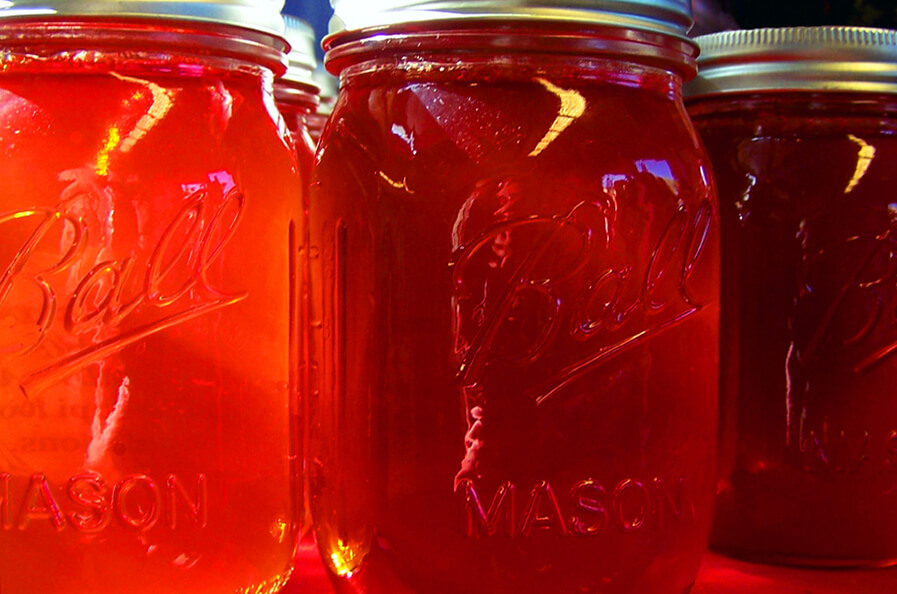
Black-Eyed Gumbo

My family’s New Year’s celebrations always included black-eyed peas as well as fireworks left over from my father’s superb Christmas collection, which contained the usual array of rockets, Roman candles, and sparklers, maybe a fountain to light in the side yard.

The peas, which we had on the table year-round, assumed an incandescence all their own that night as signatures of memory and rapport. Our freedom of worship brought many people to this country. Among the earliest were Jews who had endured centuries of barely tolerable hardships. Many Sephardic Jews settled in South Carolina, Georgia, and Maryland well before the Civil War, and they brought with them their tradition of eating black-eyed peas at Rosh Hashana.

In time, this custom spread to their New World neighbors who were already familiar with the bean (yes, a black-eyed pea is a bean) but doubtless confused as to why the Jews celebrated New Year so early and didn’t use a ham bone in their peas like everyone else did. Still, the tradition endures as evidence of the South’s many-layered and multifaceted culinary heritage.

This is another recipe I made at the Harvest Cafe in Oxford, a vegetarian restaurant on the corner of Jackson and South 10th. On the brunch shift, I’d make soup specials, which was always a challenge, because the black bean chili was outstanding and one of the most popular dishes.

Under duress, I rose to the occasion and in a memorable effort made a gumbo using black-eyed peas. This combination of peas and okra in a thickened, richly-seasoned stock with aromatic vegetables and tomatoes seemed a good combination for our clientele; most people who ordered soup wanted something warm and filling around Sunday lunch time, and this recipe seemed a good alternative to the favorite chili.

My idea received a guarded reservations; when my boss, John Anderson, asked me what he needed to put on the blackboard as the soup of the day, I said “black-eyed pea gumbo.” He blinked his eyes behind those big glasses he wears, slowly nodded his head and said, “Okay”, which in my experience with this gentle man I recognized skepticism of a profound and imponderable nature.

Jennie Lee, my co-worker, asked me if I’d lost my mind, but she’s from Charleston, was more perloo than gumbo. She didn’t sign my checks, either.

Besides, the dish was well underway. I’d made a good brown roux with vegetable oil and our lightest flour, added minced garlic, chopped onions, celery and bell pepper. This primordial goo I combined with a good base made with vegetable stock and seasoned with basil, thyme, oregano and bay. Not only that, but I’d been soaking the peas since happy hour the day before, and they were simmering on a back eye. I also had two packages of organic okra stashed in a refrigerator in the back; these were expensive contraband (imagine the price of a frozen package of organic okra in 1995 Mississippi), but essential to my enterprise.

The okra I rinsed under warm water before adding it to the pot to relieve it of ropy-ness. The peas I drained but kept the liquid. After adding the peas and okra to the pot, I started adding the liquid to achieve a good consistency (I like it thickish, but with a good juice) then added two small drained cans of diced tomatoes that I’d smuggled in from James’ Food Store. Once that was done, I began adjusting the seasonings, and finally put the gumbo in a serving pan on the line.

Of course, John ordered the first bowl. His critique was just as laconic as his first, but delivered with a smile, which I took as a positive sign. This interpretation was confirmed when the orders started coming in, many for the gumbo. This earned me a grateful nod from my co-workers, since pouring something in a bowl and sending it out the window is one of the less stressful acts you can perform in a busy kitchen.

Before the end of the shift, John came into the kitchen and said, “They loved your gumbo. How did you make it?”

John, here’s the recipe, sorry I’m late. Again.

True Grits

I have before me an article out of one of those upscale magazines devoted to the South as an intellectual and cultural milieu. This magazine is printed on the finest paper, has photographs taken by talented people, and if you put it on your coffee table, you’re liable to impress someone with your je ne sais quoi.

Inside an article on Southern food (ever-so-quaintly called “fixin’s”) targets “a grand grits revival.” The author cites grits pilaf, grits croquettes, stone-ground grits with morels, Southern fried grits, grits crackers, Logan Turnpike grits (God only knows what that is), and sweetbreads with grits as evidence of this renaissance.

People, this is chic commercial jive operating under the auspices of promoting a naturally progressive cuisine. Southern cooking is progressive; as new ingredients become available they’re assimilated into traditional recipes, often with good results, and as far as cultural assimilation is concerned, Southern cooking itself is a brilliant hodgepodge of distinct cultural influences, Native American, West European, and African, the tripod which forms the basis of the cuisine itself, and as new peoples with different traditions move into the region over time the such basic elements as grits as we know them will reflect these changes in wonderful ways we can’t begin to fathom.

But a shotgun wedding with French cuisine (or any other cuisine, for that matter) is too artificial to be taken seriously. This effort seems more intended to get people to pay exorbitant amounts for a serving of grits than it is to create a compatible blend of ingredients. For better or worse, grits are versatile; they’re essentially starch, as are potatoes, rice, or pasta. But can you honestly claim as the author does that adding “innovative twists and fresh accents” such as morels and/or sweetbreads to grits that you have a dish that “reflect(s) the changing nature of the South”?

I think not. For one thing, these recipes are the products of commercial establishments, of upscale restaurants designed to attract diners who have the time and money to eat at high-end tables. Recipes such as these tend to be the brainchildren of down-home boys and girls raised on their mothers’ or grandmothers’ good Southern cooking who travel to France where they stay in Paris or Provence, sopping up the local hubris, naturalizing their schoolroom French and drinking themselves into a pixilated delusion of fraternity with the local Jaques Bonhommes on the local vin ordinaire.

While there, they of course become so enamored of le haute cuisine de la France that they decide to launch a personal crusade bent on transforming the cuisine bourgeoise of the American South into “exciting food.” This is to say, of course, food that people will pay a lot of money for because they are “infused with French accents . . . and render (sic) with some finesse.”

For another thing, these commercial recipes are subject to the whims of restaurants, which are notorious for posturing. They have to be. If such recipes reflect the changing nature of the South, then the reflection is of a superficial and ephemeral nature. If foods can indeed be considered a barometer for a region’s or a nation’s changing identity—and they very well can, if examined properly—then foods should reflect such profound and lasting changes as those brought about by shifting demographics and technology, bearing in mind that poverty is always the bottom line.

To be trendy and fashionable our dishes must be finessed. Is Southern food in, you say? Well, yes, but then it does need sprucing up a bit, doesn’t it? Let’s take that plain fried chicken and serve it on squash waffles with peach salsa. Black-eyed peas? Let’s puree them, pat them out into cakes and fry them in olive oil and serve them with an herb-laden tomato puree. Grits? Yes, with morels, sweetbreads and jalapenos, deep-fried and served with cranberry chutney. Catchy, perhaps, but hardly reflective of “the changing nature of the South,” unless you take into consideration that we now have among us those who will actually pay twelve bucks for a bowl of grits.

Our best foods are narratives embedded in time and place, told by people for whom food and cooking is a conversation, not a monologue from a flim-flam chef manqué.

Theroux at Rowan Oak

Coming to Mississippi, enigmatic to others and more often than not  to we who live here, is objective enough for writers seeking an exotic literary locale within the United States. As one as such, Theroux joins V.S. Naipaul, Bill Bryson and Richard Grant. Without exception each have paid homage to the voice from Lafayette County, Mississippi that rings across the world.

Theroux reserves a passage for “The Paradoxes of Faulkner”, in which he provides a thorough analysis of the man and his works as well as observations on somewhat peripheral matters such as Blotner’s biography.  Theroux is a thorough writer, meaning he is considerate to detail, as is evident throughout Deep South: Four Seasons on Back Roads, which includes much that we should be grateful to have on record from a writer with an exceptional eye. The paradox of his title refers to Faulkner’s writing itself, which Theroux describes as either falling or flying, a critical encapsulation that might well describe any major writer with a significant volume of work, and Faulkner’s oeuvre spans generations.

It’s good to read the words others write about us, and it’s important that we read what others have to say about Faulkner’s twisted, frayed, and fallen South, however better perceptible by far in his own assessment than by any others.

With Stan and Joan in Meridian

In March, 2017, Joan Didion published the notes of her jaunt forty-eight years ago through Louisiana, Alabama and Mississippi in a slender book, South and West (Knopf). We’ll take a much more in-depth look at the book in a later entry, but first let’s focus on the passage in which Didion meets with the legendary “Voice of the Rebels” Stan Torgerson, in Torgerson’s home town of Meridian, Mississippi.

Bear in mind as you read that the month is June, the year is 1970. Nixon is in the White House for his first term. The nation as a whole is in a somewhat less turbulent mode after the riotous Sixties, but no section is more complacent than the South, where the key word had become progress. This passage is in essence an examination of the ongoing homogenization of the South as seem through the eyes of a transplant from the upper Midwest (Torgerson) and told to a visitor from California.

At times Torgerson sounds like a one-man chamber of commerce espousing racial harmony, social equality and industrialization. When Stan says, “We’re not as inbred as we used to be” he’s referring not (necessarily) to genetics but instead to the influx of people and ideas from outside the South; when he says “we don’t wear crinolines any more” he’s telling Didion that Old South is gone. But though he says, “If there were elm trees hanging over the street it would be very midwestern,” as they drive through residential Meridian, the issues of race and poverty he discusses are those of the South.

This section from Didion’s work appears here in its entirety not only for the more compelling reason that it needs to be read in toto to grasp its exhaustive effect on Didion and to understand more fully Didion’s comments in context—particularly the last line—but also on a somewhat sentimental level because those many of you–as I do–remain familiar with Torgerson’s voice from his 17 years on air with Ole Miss sports might recollect his voice in the cadences of the quoted passages.

When I called Stan Torgerson for lunch at his radio station, WQIC, and asked him the best place to lunch, he said Weidmann’s, “but it wouldn’t win any Holiday Magazine awards.” In fact it had, and was not a bad restaurant, but everyone in Mississippi begins on the defensive. “I’ll be the biggest man in a green shirt to come through the door,” he advised me. He was, at lunch, wary at first. He said he didn’t think I knew what I was doing. I agreed. He refused drink, saying he wasn’t in New York City. Stan Torgerson came out of the cold North (Minnesota, I think) and headed to Memphis, where he went into broadcasting. He worked in Miami, and then, for a year, in San Diego, living in La Jolla. He felt ill at ease in La Jolla—his neighbors kept to themselves, had their own interests—and he wanted to get back south. His son had won a football scholarship to Ole Miss. He was worried about his children and drugs in California. “Excuse me,” he said, “but I just haven’t reached the point where I think pot is a way of life.”

When the black radio station in Meridian came up for sale he bought it. He also broadcasts the Ole Miss games, something he began doing when he was in Memphis. “That’s right,” he said, “I own the ethnic station, WQIC. In its thirteenth year of serving the black community here.” He programs gospel and soul, and reaches 180,000 in several Mississippi and Alabama counties, the thirty-second largest black market in the country, sixty miles in all directions and forty-three percent of that area is black. We serve a major black market, program soul music and gospel music, but what does that mean? A month ago in Billboard there was a survey pointing out that the Top 40-format stations are playing basically soul. Jackson 5 with ‘ABC.’ ‘Turn Back the Hands of Time,’ that’s Top 40 but it’s soul. Once in a while we throw in some blue-eyed soul, like Dusty Springfield with ’Son of a Preacher Man.’ We don’t play rock because our people don’t dig it. We don’t play your underground groups like the Jefferson Airplane . .. We have goodly reason to believe that ten to fifteen percent of our audience is white; some of the phone calls we get in the afternoon for dedications, they’re definitely white voices. We get thirty-six percent of the audience.”

He said I was probably wondering why he came back to Mississippi. “I came because I dearly love this state. I have a son—he’ll be a senior this fall—playing football at the University of Mississippi.”

He pointed out that Meridian was timber country, hill country. Pulpwood is the backbone of the agricultural product. He pointed out how progressive Meridian was: its three new hospitals. “In most southern cities there is a much stronger tendency to old-line money . . . Southern retailers stayed in business privately, home-owned, until very recently. In most cases the retailer has just begun to feel the competition from the chains. There’s the greatest business opportunity in the country right here in the South . . . We don’t have a McDonald’s in a city of almost fifty thousand people, don’t have any of these franchises here yet. You give one corner of one intersection in Jackson, Mississippi, or you give me the whole ball of wax right here in Meridian, I’d take the whole ball of wax and I’d put a McDonald’s on one corner, a Burger Chef on the other, a Shoney’s Po’ Boy (sic! jly) ‘cross the street . . . “

His voice kept on, weaving ever higher flights of economic possibility. “There is and must be,” he said, a “continued turning to the South by industry. The climate is certainly one reason. Another is that the South wants industry and is willing to give a tax advantage to get it. Another, of course, is that there is a relatively low level of unionism in the South. Lockheed assembles tail sections here and ships them to California for assembly . . .

“Atlanta is the magic city for the young around here, across the whole social spectrum . . . The great migration out in the past ten years has been black, they get these glowing letters, and of course they’ve got relatively liberal welfare programs in some of the northern states . . . No doubt, too, there appears to be greater opportunity in the North.”

More on the progressive nature of Meridian: “Our radio station has probably got as fine a list of blue-chip clients as any in town, black or not. We’ve got all four banks, and anyone in retailing who’s interested in doing business with the black—the black’s dollar is very important. The minimum wage was probably the most important thing to happen along these lines, and then food stamps were a good dead, I would say they added millions of dollars to the economy.”

“We are in a transitional phase. There’s a tremendous push to education on the part of young blacks. The schools here are completely integrated. Of course, neither you not I can change the older black, the forty-year old, his life patterns are settled.”

“Ole Miss has its standards to keep up. As more and more blacks get an educational advantage, you’ll see blacks at Ole Miss. There’s a feeling among some black leaders that because these kids have not had advantages they should get some kind of educational break, but basically what has to happen is the standards have to stay up and the people come up to meet them.”

We were driving through town at night, and Stan Torgerson interrupted himself to point out the post office. “There’s the post office, the courthouse where the famous Philadelphia trials were held, the trials for the so-called Philadelphia deaths.”

“If there were elm trees hanging over the street it would be very midwestern,” Stan observed as we drove through the residential district. He pointed out his $29,500 house, a two-story frame, “twenty-eight hundred square feet, with magnolia, dogwood and pecan trees.” He pointed out Poplar Drive the “Park Avenue of Meridian, Mississippi, all the houses built by the old-line families.”

Fervently, he kept reverting to the wholesomeness of life in Meridian. His daughter, who would be a high school senior in the fall, had “her sports, her outdoor activities, her swimming. It’s a quiet, pacific type of living, which is one of the reasons I wanted to come back down here. The kids are taught to say ‘sir’ and ‘ma’am.’ I know it’s very fashionable to poke fun at the South, but I’ll pit our slum area any day against the slum areas where the Cubans and Puerto Ricans live in Miami, Florida, and Miami’ll lose.”

Meridian is the largest city between Jackson and Birmingham, and there is a naval base there which means a great deal to the community. At apartment buildings largely inhabited by the navy there are cars with plates from all over the country.

Some random social observations from Stan Torgerson included: most of the local children go to college within the state, at Ole Miss or Mississippi (sic jly): the other country club, built with federal money, has a membership which includes “assistant managers of stores and some navy people’: most of the subdivisions in Meridian feature “custom houses.” Torgerson paused dramatically, to emphasize the versatility of the new blood in town: “A fabric store.”

I asked if some of the children did not leave, and he allowed that some did. “Nothing here for the kid with an engineering degree. And of course the girls go where they marry. Southern girls are notoriously husband hunting, but I guess that’s the same anywhere.” It occurred to me almost constantly in the South that had I lived there I would have been an eccentric and full of anger, and I wondered what form the anger would have taken. Would I have taken up causes, or would I have simply knifed somebody?

Torgerson was would up now, and I could not stop his peroration. “There’s been a great metamorphosis in recent years in the South, the Volkswagen dealership for example comparable in size to anything you’ll find anywhere.”

“The KKK which used to be a major factor in this community isn’t a factor anymore, both the membership and the influence have diminished, and I cannot think of any place where the black is denied entrance, with the possible exception of private clubs. We don’t have any antagonistic-type black leaders working against racial harmony. Since the advent of black pride, black power, there is a little tendency to be self-segregating. On our station, we have a program we call Adventures in Black History to point out the contributions black people have made—a black minister does it. I have blacks working in the WAIC Soul Shop, and there’s a black druggist here, a man eminently qualified, who is a local boy who went north and came back, received his training at the University of Illinois. We have a certain degree of black business, including this gas station here, which is owned by a black. The key is racial harmony, and education, and we’ll try to provide our people with both, ‘cause we’re gonna live together a long time. Every major retailer hires black clerks, Sears has a couple of black department heads, there’s a black business college here, and a black and white Careen Training Institute.

“Of course we have transplants, too, new ideas, like any other hybrid we’re generally stronger. We’re not nearly as inbred as we used to be. We’ve been withdrawn in this part of the South for many, many years, but we’ve become more aggressive, and as people come in they’ve helped us become more aggressive—we don’t wear crinolines anymore, no we don’t.”

“And about our politics, well, George Wallace got a lot of votes in Indiana, let’s face it. I’m not saying I’m going to have a black minister come home to dinner tonight, ‘cause I’m not. But things are changing. I had a man the other day, owns an appliance store, he never believed you could send a black repairman into somebody’s house. Now he can’t find a white … He asks me if I know a black man who makes a good appearance. That’s progress . . .”

Of course, there’s a tremendous lack of skilled blacks, and the problem is training and education. It’s no longer a matter of lack of opportunity, it’s a matter of lack of skills. We’re still two generations from full equality, but so are they in Chicago, in Detroit, and have you ever been in Harlem?”

Glazed by the two hours in which this man in the green shirt had laid Meridian out before us as an entrepreneur’s dream, a Shoney’s Po’ Boy (!) on every corner and progress everywhere, even at the country club, I dropped him off and drove through the still-deserted streets of the downtown. A few black women were on the streets and they carried umbrellas against the sun. It was almost five o’clock. In the middle of 22nd Avenue, the main street of Meridian, there was a man holding a shotgun. He had on a pink shirt and a golfing cap, and in one ear there was a hearing aid. He raised the shotgun and shot toward the roof of a building several times.

I stopped the car and watched him a while, then approached him. “What are you shooting at?” I asked.

Pi-eagins,” he said cheerfully.

In this one demented afternoon Mississippi lost much of its power to astonish me.

Eden on the Apalachicola

Ever since the Expulsion man has searched for the Garden of Eden, and we shouldn’t find it at all surprising to know that among the many who claim to have found it, one was a bespectacled, God-fearing lawyer from Weogufka, Alabama, who declared in 1956 that “the Garden was in the Apalachicola Valley of West Florida.”

Elvy Edison Callaway was a man of faith who fell under the influence of Dr. Brown Landone. Among the books Landone wrote offering advice to ordinary mortals is Prophecies of Melchizedek in the Great Pyramid and the Seven Temples. Callaway describes his meeting with Landone as a “calling,” and promptly abandoned his family.

While surveying his Panhandle land, Callaway found the inspiration for his mission from Melchizedek: the Torreya yew tree, which Callaway, through the teachings of Dr. Landone and his “Teleois Key”, identified as the “gofer wood” from which Noah built the Ark.

After that revelation, everything fell in place. Abandoning his once ardent faith in Christianity, Callaway, through “teleology”, fused what he knew of evolutionary theory and Scripture and decided that “because all informed geologists admit that it is the oldest land mass on earth”, God created Adam about a mile outside Bristol, Florida. He then created the Garden of Eden along the Apalachicola River there and filled it with citruses, magnolias, hydrangeas, mountain laurel and of course the majestic gopher yew (one of the few trees in North America considered “critically endangered”).

E.E. Callaway’s Garden of Eden is protected today as part of The Nature Conservancy’s Apalachicola Bluffs and Ravines Preserve. Accessible via Garden of Eden Road, the preserve has a Garden of Eden Trail leading through the site. The scenery is spectacular; clear, bubbling streams flow through the bottoms of the steep ravines, which support rare plants and animals, some found nowhere else in the world.

Callaway’s southern Eden might not be the original–who are we, or who is anyone for that matter to say–but it’s still a little bit of paradise in this fallen world; God knows we need more of them.

Art, Food, and History: a Second Campaign in Vicksburg

As incredible as it may sound to us now, in the 1940s the Old Warren County Courthouse in Vicksburg was under threat of destruction from the very city itself.

The building is perched on the highest point in Vicksburg on land given by the family of the city’s founder, Newitt Vick. Construction began in the summer of 1858 on what was then to be a new Court House for Warren County. Contractors were the Weldon Brothers of Rodney, Mississippi, who used 100 highly skilled artisans to make the brick and erect the building, which was completed in 1860 for a cost of $100,000. During the War, the building dominated the city’s skyline and was the target of much Union shelling but suffered only one major hit. It was here on July 4, 1863 that the Stars and Bars were lowered and the Stars and Stripes were raised as General U.S. Grant reviewed his victorious army.

Enjoying an After-Dinner Pipe-Bucci

With the construction of a new Warren County Courthouse in 1939, the Old Courthouse stood practically vacant for years, and there was talk of its demolition. What was possibly planned to take its place on the highest point in the former Gibraltar of the Confederacy goes (perhaps mercifully) unrecorded.

But a local activist, Mrs. Eva Whitaker Davis, realized the significance of the building and established the Vicksburg and Warren County Historical Society for the purpose of preserving the structure. In 1947 she was elected president of the society and with the help of volunteers began cleaning the building and collecting artifacts.

On June 3, 1948 the museum opened its doors, where she continued to work on a volunteer basis for many years. Eva Davis was a local celebrity; she had a daily radio show, “Court Square”, which was a feature of WQBC in Vicksburg for many years. She put out two cookbooks, Court Square Recipes and Mississippi Mixin’s, both likely in the 1950s, though neither book is dated. A grateful public added the name Eva W. Davis Memorial to the Old Courthouse Museum several years before her death in 1974.

Fishing in the Mississippi-Bucci

Mississippi Mixin’s was illustrated by her fellow townsman and renowned Mississippi artist, Andrew Bucci. Sadly, Bucci’s art is reproduced in black and white, but the impact of the images is still powerful, perhaps even somewhat enhanced. Most of Bucci’s artwork in the book is comprised of small images for chapter headings, doubtless resized from larger works, but two large images are printed full-page (5.5×7). Again, dating these works has so far been unsuccessful and it is not known whether the original artwork still exists.

At least one image is by artist Suzanne Wilder, who was a student in the Mississippi Art Colony at Allison’s Wells, a popular resort in Way, Mississippi that was established in 1889. The Mississippi Art Colony was founded at Allison’s Wells in 1948, and Bucci along with noted Jackson artist Mildred Wolfe taught there until 1963, when the resort was destroyed by fire, then relocated to Utica, Mississippi.

An Enduring Bounty

In north Mississippi, where the Father of Waters skirts the final foothills of the Appalachians, the land undulates mile upon mile between river bottoms and wooded ridges, the sun is strong, and in December a weary green lingers in the woods and roadsides. There I spent my childhood. While not rich by any means, most of my family was well off when few were, but my father Jess Jr. made no bones about being a child of the Depression. He remembered the grinding hardships of his youth and sought to make better of his remaining time for us and for others.

Our lavish Thanksgiving  comprised an overture to Christmas. Soon after, my mother Barbara filled the house with glowing towers of glazed glass jars, papier-mâché crèche figurines, and ornaments light as air hung with shining ribbons. Her trees took days to decorate; among her most memorable was a loblolly pine draped in angel hair studded by tiny blue lights and hung with glittering glass ornaments. Garlands of smilax, holly, and magnolia adorned mantles and lintels, bowls of walnuts, almonds and pecans, oranges, tangerines and hard candy topped the tables, and on the hearth stood a bucket of dried pine cones to start the open fires where we roasted peanuts and made popcorn in a long-handled pan.

Barbara provided a groaning board. What she didn’t cook herself, she shared food friends and relatives brought for her table: ambrosia from Aunt Gay, bread-and-butter pickles from Ruby Zane, tea cakes from Aunt Leila, peanut brittle from Betty Edwards, pecan divinity from Ora Crocker, or a coconut cake from Zara Arrington. A splendid cook, Barbara spent days on the Christmas feast, making pans of chicken and dressing, baking turkeys, a hams, and yeast rolls, candying sweet potatoes, and stuffing dozens of eggs. This largess was there for all who called, and our doors were always open.

Above anyone I’ve ever known my father Jess loved Christmas, threw himself completely and unreservedly into the essence of the season and drew everyone he knew along in his wide wake. He was the Spirit of Christmas Present, bigger than life, colorful, jovial, generous and gregarious. For him, Christmas was to be celebrated with everyone in that world he called his own.

By the first week of the month, Jess had set his plans in motion, beginning with a party at the community building at the city park on the south side of town where local bands provided music for dancing (an activity widely frowned-upon at the time) and the local blue laws banning liquor were casually set aside while he pumped his friends for contributions to fund  his Christmas expedition. After the party, he would make a trip to Tupelo to the Lady Lee outlet store, where he would buy boxes of firecrackers and bottle rockets, huge sacks of Tootsie Rolls, cinnamon candies, peppermint sticks, and butterscotch rounds. From there we’d head to Cockrell Banana Company where he’d buy crates of oranges, apples, and tangerines.

These he brought home where they were put in a spare bedroom, and in the days before Christmas my brother Tom, sister Cindy and I along with a cadre of neighborhood children would sort them out and stuff them into small paper sacks, staple the tops together and pile them into boxes. On Christmas Eve, we’d pile into a car, at best a station wagon commandeered from a neighbor, at worst a ’65 Mustang convertible, and we’d drive across the tracks.

Jess wore a Santa suit, and Barbara would dress us children as elves. He once drafted his brother-in-law Jim to play Santa while he sauntered alongside laughing and greeting, often setting up visits to his law offices off the town Square. When we first rolled across the railroad tracks, we collected a troop of children flanking our route, shouting and jumping, reaching out to catch the sacks of candy, fruit, and fireworks. Jess would make sure that those children who were too shy to come to the car received their share, and he would often walk into homes where he knew of special need bearing a ham or an envelope with money.

Jess was in his glory then, doing what he felt was the most important thing he did all year. His career in public service gave him an opportunity to help many people, but seeing the eyes of these children for whom his visit was the only Christmas many if not most of them would have gave him a sense of wholeness that few men are afforded. His largess, his sense of noblesse oblige, was untainted by any shadow of arrogance; he remembered the deprivations of his own childhood and sought to ameliorate those of others.

Now I am an old man with quiet holidays, but the living memories of childhood resonate. In dull Decembers, my father’s gifts shine on.

Bon Ton Bread Pudding

Le bon ton” references that flaky crust of society assumed to have cutting-edge style and better manners than those of us wallowing among The Great Unwashed. As such, the phrase “bon ton” has been used by a variety of businesses–particularly restaurants, of course–hoping to attract such a clientele.

One such establishment, the Bon Ton Café at 211 West Capitol Street in Jackson, opened in the early 1900s. The Bon Ton was one of the city’s finest dining establishments, and had the first electric sign on Capitol Street to better attract customers from Union Station.

Another more famous Bon Ton was established in New Orleans in the Natchez Building at 401 Magazine Street. Originally opened in the early 1900s as well, the business was revived in the early 1950s by Al and Alzina Pierce, who came to the Crescent City from south Louisiana, bringing with them their recipes from Lafourche and Terrebonne Parishes, becoming the first dining establishment in the city to stake a claim for Cajun cuisine in a city already famous for its Creole culinary tradition.

This Bon Ton’s best-known dish is its bread pudding. When I worked in the Florida panhandle, we made a similar pudding with stale croissants, but the texture was dense owing to the abundance of air pockets in the bread; a good, foamy French loaf is much better the recipe.

Here is Alzina Pierce’s original recipe, which comes via Jackson native Winnifred Green Cheney’s Southern Hospitality Cookbook (Oxmoor, 1976).

Soak one loaf of French bread in a quart of whole milk and crush with hands until well mixed. Add 3 eggs, 2 cups sugar, 2 tablespoons vanilla extract, 1 cup seedless raisins (optional), and place in a buttered “thick, oblong baking pan”. Bake until very firm, then cool. Make a whiskey sauce; cream a half cup of butter with a cup of sugar, and cook in a double boiler until thoroughly dissolved. Add a well-beaten egg, whipping rapidly to prevent curdling. Let cool and add whiskey of your choice to taste. Pour over pudding, and place in a broiling hot oven (450) until browned and bubbling. Serve warm.

The Man Who Loved Christmas

First published in the Calhoun County Journal Dec. 20, 1984, this memoir of my father, Jesse L. Yancy, Jr., was written fourteen years after his death by his friend and political partner, Sellers Gale Denley. Jess Jr. was a remarkable man in a difficult time, colorful, vibrant, and generous, his life a vision of community, unity, and compassion.

If there was ever a man who loved Christmas, it was the late Sen. Jesse Yancy of Bruce. The word “loved” is used advisedly. For there are those who might be said to “enjoy” Christmas, “respect” Christmas, “anticipate” Christmas, etc., but Jesse loved Christmas. His enthusiasm might have been regarded as extreme; except that was the way Jesse was about most things. He worked hard. Then he played hard. More than likely this approach to life was a primary cause of his untimely death on Aug. 26, 1970, at the age of 44, from a massive heart attack. Prior to assuming the senate post he served as district attorney of the third circuit court district for eight years and was city attorney in Bruce for 17 years. So it wasn’t unusual that the new city library was named in his honor.

And the way that Jesse launched the Christmas season was not particularly unique or unusual, either. It began with a big party with his friends at the Bruce community building. Funds were solicited for a live band and a case or so of assorted spirits and goodies, with a few dollars left over for another project. You see, Jesse had a secret Christmas vice. He liked to dress up in a funny red suit, hide his face behind a mask of white whiskers and, on Christmas Eve, visit the area in South Bruce where most black citizens lived.

Before each of these visits his automobile was filled with candy, nuts, fruit, toys and firecrackers. In the early 1960s it was all the Christmas some of the children had. The ritual started in the ’50s when he dressed up to play Santa for his own children. His family decided he should also go see the children of the black woman who worked for them. His appearance was an immediate hit. It was the Christmas of 1960, when I started helping him with the project, that he said he realized back then on his first trip that most of the black children had never really seen Santa Claus. So it became an annual event, growing in scope each year, to make the Christmas Eve appearance. The addition of toys and other goodies was a part of the evolution. The project was financed with any excess funds from the party, plus contributions from several of us who usually helped, with Jesse taking up the slack. It started each year with several trips to area wholesalers to purchase the large volume of goodies needed for some 250 to 350 children.

The bounty would be hauled in and the Yancy children—Cindy, Tom and Lee, often assisted by cousins Bill and Bob Cooper—and others would assemble individual sacks. Then, on Christmas Eve, Jesse would put on his Santa suit, we would load up a vehicle or two—the most memorable and utilitarian being a dark green Mustang convertible— and begin the appointed rounds. There must have been a lookout, for as soon as the first vehicle crossed the railroad tracks, which marked the boundary of the black community, several young boys would take over the lead position. With wide-eyed excitement they would precede the caravan down Murphree Street shouting: “Here he comes. Here comes Santa. Here he comes.” And for the next hour or so Jesse would be in his Christmas glory.

He handed out presents to those close by while keeping an eye out for those too shy to come up to him, so he could seek them out later. He knew quite a few of them by name. And almost all of the parents knew Jesse and whispered their thanks. But if the children knew him they didn’t let on. And neither did they let on if they sometimes got a whiff of the Old Charter Santa and his helpers found useful in warding off the cold and other miseries.

The custom died with Jesse. The party lasted another year or two, and some of us talked about continuing the Santa Claus visit. But, we rationalized, it was 1970 and the children were being encouraged to visit Santa on the Square, sponsored by the city as a part of the Lion’s Club Christmas parade. So we didn’t.  It has been 35 years, but every Christmas about this time I begin to get a little bit anxious. Like you feel when you know there is something you probably need to do. Like you feel when you know there is something you probably will never get to do again.

It has been suggested that one can sometimes recapture the spirit of Christmases-past by recording remembrances. I am confident that Jesse would overlook my indiscretion in writing about it now.

Jess Jr. (left) with his brother-in-law Jim Young as Santa.

Wyatt Cooper: Of Food and Fellowship

Most often now when Wyatt Cooper is mentioned at all, it’s in the same breath with his younger son, Anderson Cooper, but Wyatt himself was a man of many parts, one being a damn fine writer. 

Cooper was born in Quitman, Mississippi, September 1, 1927. moved to New Orleans as a young child and in his twenties moved to New York City to pursue acting. In his thirties, Cooper lived in Los Angeles, attended both UCLA and UC Berkeley, and worked as a screenwriter. While residing in West Hollywood, then an unincorporated area of Los Angeles County, Cooper lived near Dorothy Parker and her husband Alan Campbell. A close friendship developed, and a year after Parker’s death in 1967, Cooper published an incisive and widely read profile in Esquire magazine, titled, “Whatever You Think Dorothy Parker Was Like, She Wasn’t”.

Cooper moved to Manhattan in the early 1960s, and worked there as a magazine editor. On December 24, 1963, he married heiress Gloria Vanderbilt, becoming her fourth husband. The photogenic couple frequently appeared on the national “best-dressed” list.[5] They had two sons: Carter Vanderbilt Cooper (1965-1988) and Anderson Cooper (b. 1967), who became a prominent CNN anchor. Wyatt Cooper wrote in his 1975 memoir, “It is in the family that we learn almost all we ever know of loving. In my sons’ youth, their promise, their possibilities, my stake in immortality is invested.” Wyatt Cooper died in Manhattan, New York City on January 5, 1978, at age 50, during open heart surgery, after having a heart attack the previous December.

This essay, “Of Food and Fellowship” appeared in Southern Sideboards, the Junior League of Jackson’s landmark cookbook, which was first published in June, 1978.

Speak to me of food and what springs readily to my mind is not so much a recall of particular dishes I’ve relished, but a succession of images, sad and funny, sweet and tender, of people and places and happy occasions from the recent or long-gone past, a procession of dear, lost, familiar faces and voices, with the echo of laughter from other years. One remembers all those tables, some grand and richly laden, some humble and bearing simple fare, over which have flowed the talk, the tales, the exchanges that have made up the histories of our lives; the tables across which loving eyes have looked into loving eyes, and across which we have reached, friend to friend and spirit to spirit, to touch each other in precious communion. I think of vanishes loved ones and of absent friends and simpler times, of youth and joy and wonder, of those early seasons of first discoveries, the seasons in which we were blessed with Heaven’s gift for finding all the world’s delight in one bright Easter egg, all the world’s affection in one home-decorated birthday cake with our own particular name written bright upon it.

At those tables, a child, and later, the child in the adult, could watch and listen and learn. It was and would remain a place of adventure and exploration, a place where the curious eye and ear could partake of the rich store of other people’s experience, their adventures in the vast and mysterious world that waited and waits, beckoning but intimidating, outside the window; adventures, also, in those other, interior worlds of the mind, where thoughts, opinions, ideas were and are the exhilarating substance of the hungry brain.

Since our associations scurry quickly back to our beginnings, I find myself breathing deeply and knowing once again the romance and allure of the smells emanating from the kitchen of my first home, the warm, comforting aroma of biscuits baking or of coffee and bacon on cold mornings, with Mama beside the stove calling out that we must hurry.

I remember the family reunions with the piling on of food, an abundance and variety of offerings that represented God only knows how many accumulated hours of planning and preparing and packing, a feast to which more than twice our number could not have done justice. I remember the buzzing and bustling of the women crowed into Grandma’ kitchen, all full of importance and pride in marvels about to be revealed, each with her own specialty for which she was celebrated within the family—this one’s banana pudding, that one’s pineapple-upside-down cake. I think of Christmas with the smell of apples and oranges and fruit cakes and with turkeys and stuffing that make the mouth water forty years later.

I was born country, so I know all about frying just the right chickens because the preacher was coming to dinner and about all-day-singings-with-dinner-on-the-ground where heavy baskets and cardboard boxes were hauled out of the back end of family cars or even horse drawn wagons or buggies. The contents were spread proudly out, displayed like the golden wedding presents of princesses, set out upon glistening, freshly-starched and sun-dried linen cloths there would be much calling out to each other from families inviting others to try this or that from their bounty, while grabbing loose strays, especially bachelors, and there would be a scampering about of colt-legged boys, impatient and giggly while overly devout deacons went on too long at asking the blessing, when any sort of mumbled “. . . bless this food to the nourishment of our bodies . . .” would have done just as well.

I know about hog-killing time in the first sharp cool of fall, when the children were allowed to help with the scraping if they were careful to stay away from the scalding water I know about the way molasses was made, when you took turns feeding the cane into the grinder and remembered to duck each time the pole, pulled bumpily around and around by dull, plodding mules, made its way overhead again.

These activities were co-operative efforts; we didn’t do them by ourselves. Neighbors came together to help each other. We worked out the dates—Tuesday for the Longs, Thursday was the  Timmses’ turn, and Monday week was for us. The doing of it was all mixed up with community feeling, with jokes and gossip and catching up on news and horseplay and grown-up talk.

What I’ve been talking about, when you come down to it, is friendship, sharing, caring. I’m talking about love. To show our love for one another we devise little rituals. We beg the passing traveler to eat. We toast brides. We drink to each other’s health. We give dinners for those we seek to honor. There is a particular bond between friends who prepare food together, between friends who dine with each other. The breaking of bread together has, for many centuries, held something of a ceremonial significance for us.

It seems as if it were always so. It was in the Bible and in the earliest Greek plays and in the writings of Homer Obviously it goes way back. I should think that it must have been soon after they first came down from the trees and began improving their manners that one of our hairy ancestors must accidentally have dropped into the cave hearth the baby brontosaurus leg on which he’d been gnawing, or stumbled onto a succulent pig just roasted by a recent forest fire, and made the revolutionary discovery that the raw and natural stuff with which he’d been sustaining his life could be improved upon. On that distant red letter day a new art form was born and man took a giant step in the direction of Julia Child.

It seems to me that the invention of cooking must have made a considerable contribution toward the very process of civilization. Surely, Mr. and Mrs. Piltdown Erectus and their children, having found the new way of dining an enrichment of the cultural tone of their own household, must certainly have hastened to call in their neighbors to share the benefits of the revelations so happily and so accidentally bestowed upon them. Thus, on that evening of joyous and primitive grunting that then served as conversation, undoubtedly began the ancient and inseparable association between eating and hospitality, the eternal connection between food and fellowship.

I should mention somewhere along here that I was not invited to set down the few words of this preface because I can claim to be a passable practitioner of that noble science. The truth is I can’t cook. Anything. My instant coffee is barely acceptable even to me, and my peanut and butter sandwiches have repeatedly been rejected by my sons. “No thanks, Daddy,” they say with wistful politeness, “We’ll make our own. Alan Campbell once told me that before his wife, Dorothy Parker, would cook anything she’d go into the kitchen and eat raw bacon. In that category at least, Dotti and I were in the same league.

One of the saddest failures of my life was the time I tried to delight my little family, those underprivileged citizens of the pre-packaged, machine-made, and mass-produced age, with the home-made ice cream that is such a treasured memory from my youth. For years I’d tried to impart to them some idea of the magical creation of that frozen treat by describing how you break up the block of ice by putting it into a croker sack and beating it with the back of an ax, pack the crushed ice tightly around the metal can inside the wooden freezer, argue over who gets to turn the crank first, (several children should be involved; the making of ice cream calls for company; in a one-child family only the presence of grandparents could compensate for the absence of other children) and finally how everybody crowds around for the miraculous moment when the lid is reverently lifted off, and the creamy, vanilla colored, heavenly swirl of pure pleasure is revealed.

My sons were skeptical but willing, and so, one summer in Southampton, having consulted by long distance with my sister in Hartford, Connecticut, I bought a freezer, assembled the ingredients, and, while she instructed over the telephone, began mixing, stirring, and beating. I suspected early on that I was in trouble when it became perfectly clear to me that while Marie makes great ice cream herself, she has no very clear idea of how she does it, “. . . just put in some sugar; you’ll know when it’s enough . . .” –that kind of direction doesn’t help at all. Honest, it doesn’t. Not unless you can already do it. Or have talent. At one point I was cooking the mixture and it started turning into something that looked suspiciously like an omelet. “I hope you didn’t use too many eggs . . .” she said encouragingly. “Does it look too yellow?” Along about then I had more than a premonition of disaster. Also, for some reason, it overflowed while we were turning the crank, the yellow seeping out the sides and mixing with the ice. That wasn’t promising.

There’s no point in pretending there’s any suspense to this story or in prolonging it, so I’ll go strait to the finish. It looked beautiful, actually. The result of all my labor looked very clean and very pretty, but it had no taste at all so far as I could tell and I could not expect those little boys, however polite and loving they are, to pretend that it was worth bothering with. Oddly enough, my wife, who has a very discerning palate, liked my ice cream. She thought it tasted like real yogurt made with goat’s milk. Maybe if my sister has a recipe for yogurt I might end up with ice cream.

Recipes, anyway, have to be fleshed out, I suspect, with the cook’s own taste, personality and inspiration. Ethel Barrymore was once rehearsing a new play with an over-eager young director who kept instructing her with details, “Move to that table. Life the book, pause, and then look at it.” She endured this for a while, then she turned to him and said sweetly, “I know just what you mean. I lift the book, pause, and then look at it, and it is then that I do that special, unexplainable thing that causes audiences to come to see me and enables me to earn a thousand dollars a week.”  She made her point. With great cooks, as with great stars, there is that “special, unexplainable thing” that has to do with taste, authority, and uniqueness of personality, and the beginner, I should think, should be encouraged to trust his or her own particular instincts and exercise his or her own creativity.

In Saki’s short story, “The Blind Spot”, one character says, “the man is a common murderer,” and another replies, “A common murderer, perhaps, but a very uncommon cook.” This book contains the secrets of many very uncommon cooks, great stars, splendid artists of the kitchen; secrets, many of them, that have considerable histories, having been handed down, generation to generation, from one famous cook to another.

I am fascinated by the great variety of cooking styles assembled here, representing many different traditions and widely varying national origins. Some recipes remain pretty much as they were when Great-Grandma was finally persuaded to write them down, or when Cousin Jessica spied on some selfish and secretive cook and wrote down each step se took, each pinch of salt, each wave of the hand in the direction of the pot. Others have evolved through adaptation, experiments, and happy accidents. A few of them doubtless traveled south with the earliest settlers, moving along the Natchez Trace from Virginia, the Carolinas or Kentucky, personally watched over by the woman of the family, along with a treasured set of china, an ancestral portrait, a silver candlestick, or some other heirloom.

Outsiders tend to think of the South as all one thing, when, of course we know that our extraordinary diversity is one of our most attractive features. We have absorbed many things from many sources, and have made them our own. Take grits. Grits has (sic;jly), of late been mentioned in the news somewhat frequently as a native southern specialty, which it is. It is very native, indeed, sine it was given to us by the Indians, along with corn bread and many other things. Blacks have made a contribution that is hard to measure, for many black cooks have been among the nameless geniuses who’ve left the culinary art a better one for their having participated in it. The French and Spanish influence on cooking is very important in the South, and though New Orleans is most famous for it, excellent French and Creole restaurants are strung along The Mississippi Gulf Coast all the way to Mobile.

In the past couple of years I’ve traveled around my native Mississippi a great deal, and I’ve enjoyed everything from baked dove at the governor’s mansion to fried catfish and hush puppies in Vicksburg and stuffed breast of chicken in Natchez, from ham hocks and turnip greens in Meridian to sirloin steak in Columbus, hot tamales in Greenville, and Creole gumbo and soft shelled crabs in Biloxi. In West Point, Mayor Kenny Dill went out and picked blackberries and Mrs. Dill made them into pie for me. Who wouldn’t choose a blackberry pie over a key to the city?

Which brings me full circle and back to hospitality. My children are startled by the extraordinary lengths that Southerners go in order to make the visitor feel at home among them. Very often, when we have been guests in someone’s home, neighbors have rushed in to leave off (or sometimes simply leave out-side the door) a basket of yard eggs or fresh butter or vegetables taken from their gardens that morning.

How many times it has happened that after a speech I’ve found someone thrusting into my hands a container of home-made fudge or a jar of fig preserves, saying “Take these to Carter and Anderson,” or “I beg Gloria’s never had watermelon rind preserves,” and slipping away before I could get the names? I’ve even been presented with chitlin’s (or chitterlings, and the dictionary spells it) and though anybody who knows me can testify that I’ve always been proud of my farm background, in the matter of chitlin’s, born country or not, I didn’t know what they were and wasn’t too curious to find out. I guess somethings are just meant to be forgotten, but Idid appreciate the thought. (Though not enough, you understand, to confront my wife with the chitlin’s.)

Oh, just one more thing. A story about one of my great uncles—one of the Campbells, I think. Having lost his wife (by death, I mean; she wasn’t simply misplaced) he was looking around for a replacement and in mentioning the most desired qualification, he made the following obsertion:

“The huggin’ and kissin’ don’t last forever. The cookin’ do.”