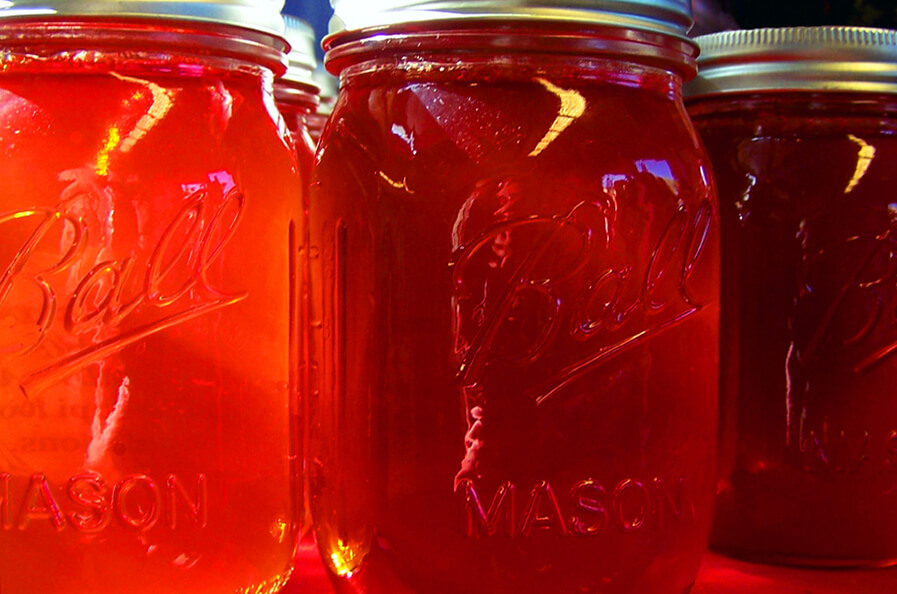
Bess’s Parched Peanuts

Aunt Bess was a woman of intrepid notions who did not let the world at large get in her way of doing what she knew was right. She found nothing wrong with locking Uncle Ewell in the corn crib to keep him from drinking and picking up loose women in his baby-blue 1954 Buick Skylark, and just because her brother-in-law was the sheriff did not stop her from chasing him out of her house with a fly swatter when he put ketchup on her fried chicken.

Bess lived in a big, ramshackle house with a wringer-washer on the back porch, and two swings out front. She kept a huge garden, almost an acre of corn and beans, okra and tomatoes, potatoes, cabbages, and two long rows of peanuts. When it came time to pull peanuts, her four nephews—niece Cindy was exempt because she was such a pampered little princess—would trudge up there on a weekend afternoon, and after Bess had used a garden fork to loosen them, we’d haul the plants out of the ground and hang them on the back porch. Later Bess would cut away the nuts and put them in a burlap tote sack.

This is how Bess parched peanuts. For a pound of very well-washed raw peanuts in the shell, dissolve a cup of salt in two quarts of water, bring to a rolling boil, and remove from heat. Add peanuts. Sink in the brine with a plate of a pie pan, and let them soak for a few hours. Drain and spread on sheet pan. Roast at 350, stirring a time or two. Serve warm when shells are brittle, and enjoy the beautiful.

Sweet Pepper Poppers

Stem, seed, and devein small sweet peppers. Season inside with salt, pepper, paprika, and granulated garlic. Stuff with slices of smoked Swiss or Gouda cheese wrapped in thinly-sliced ham or turkey. Arrange the peppers in lightly oiled muffin tins, and place in a very hot oven until cheese is melted through, about 15 mins.. Serve hot as a nosh or as a side with hefty pasta such as lasagna or cannoli.

The Bottle Tree

Joyce Sexton was proud of her garden. It occupied the edges of her back yard along the fences; broad beds of perennials punctuated by flowering shrubs whose Latin names she had memorized;  they sounded like an incantation as she recited them in her mind.

In the southwest corner was a short dead spruce stripped of twigs and leaves whose trimmed branches were adorned with brightly-colored glass bottles. Joyce enjoyed the way the glass caught the morning sun and reflected in the lights from the porch during the evenings. It had taken her months to find just the right bottles for the tree, and this morning she finally found the last one, a bright red bottle on top that seemed to glow from inside. She was admiring its light when she heard the front doorbell. She had invited her friend Sandra over for a drink.

“Well, it is pretty,” Sandra said later as they sat under the porch fans.

“At least you’ve got different bottles. I don’t like those with just one kind, especially those milk of magnesia models. They just send out the wrong signal, if you ask me.”

“I think it’s the best bottle tree in town,” Joyce said. “I know it sounds silly, but a bottle had to really say something to me before I put it on.” Sandra just stared at it with her arms crossed.

“You don’t like it?” Joyce said.

“Oh, like I said, it’s pretty, Joyce. And it looks good right next to the Lady Banks. But do you realize what those things are?’

Joyce laughed and said, “You mean that nonsense about trapping evil spirits? Cassandra June, your fanny hits a pew every time First Prez is open. And besides, you’re over-educated to boot. Surely you don’t believe that voodoo junk. ”

Sandra sipped her gin and tonic and smiled at her old friend. “Oh, you wouldn’t care if I were sacrificing stray cats in my basement, you’d still never get along without me.”

“If you were sacrificing stray cats, I’d bring you a few,” Joyce said.

“They kill the little birds, they yowl all night long and they beat up on poor Lucky.” A little terrier of dubious parentage under the table between them raised his head and thumped a raggedy tail.

“Okay, if you think its all stuff and nonsense, let me break one,” Sandra said. “Oh, don’t look so shocked. Admit you had fun looking for these bottles, and one of them’s bound to break sooner or later.”

Joyce thought about it. “Okay, you old witch,” she said. “But break one of the bottom ones. Use Glen’s putter. It’s over there on the corner.”

Sandra retrieved the putter, walked into the back yard and shattered a small green bottle on a lower branch. At the sound, Lucky jumped up and scrambled under the gate towards the street outside.

Before Joyce could gather the breath to summon her dog, she heard the screech of brakes and a choked, mournful howl.

. . . . . . . . . .

“Mother, it was just an accident,” Rachel said. “Sandra shouldn’t blame herself. That’s just silly.”

Joyce looked at her daughter. She and Glen had been surprised when her infant golden hair had not only remained gold, but had also matured into a mane that Rachel merely pretended to complain about. Today she had wrestled it back into a tawny mass that spilled in a shower over the back of her bright blue scrubs.

“I know,” she said. “But you know how Sandra loved Lucky. She brought him liver snaps every time she came over. I think she did it on purpose; they always gave him gas.”

Rachel brought her coffee to the table and sat next to her mother. “Mom, just ride it out. I know you loved Lucky, too. Hell, we all did; except Richard, of course.” They both made a face at each other and laughed. “Cliff Stevens told me he was still wearing an ankle bracelet in Chattanooga,” Rachel said.

Joyce sipped from her cup and wished Richard were much further away. She still ran into his parents at parties, his father formal, his mother always managing to snag Joyce away from the crowd and update his doleful story. (“He didn’t mean anything, Joyce. You know that.”)

Rachel glanced at her watch. “I’ve got to go, Mom. Joe Wright told me I could scrub in on a valve replacement this morning.”

Joyce kissed her daughter and took her coffee to the patio. She called Glen at his office, forgot he was in court that day and ended up talking to his secretary Cathy about the upcoming office party.

“Glen’s just a mess about it,” Cathy said. “And I do mean a mess. He can’t decide on a damn thing, and that puts me in charge of everything from food to felonies. Would you please try to sit him down for five minutes and nail something down for me?”

“Oh, just do what you did last year, Cathy. It’s not like he’s going to notice.”

“I know,” Cathy said. “He’s such an airhead.”

Joyce laughed and said goodbye, went and poured another cup and settled back on the porch to admire her garden. The azaleas had exhausted themselves long ago, and the Shastas were now coming into their own, as were the hostas she’d planted last October. Lucky’s grave by the holly was marked with a shaggy little stone dog and a weathered scattering of liver snaps.

The bottle tree glistened in the morning sun. One bottle caught the light extremely well, a beer bottle Joyce found behind the back fence that had a white and blue label. The light it caught dazzled. Joyce laughed, picked a hand spade from her garden shelf, walked up to the tree and shattered the bottle into hundreds of pieces. She was still smiling when she heard the phone ring.

. . . . . . . . . .

“Joyce?”

Glen knocked gently at the barely open door. Joyce lay on the bed, the golden afternoon light pouring onto the floor and casting shadows upon morning windows.

“Joyce?”

He moved into the room and sat on the edge of the bed. “Honey?”

“How did he get out?”

Glen turned, bowed and rubbed his hands together. “He’s been out.”

Joyce rolled over and looked at her husband’s back.

“It’s been eight years, Joyce. He was convicted as a juvenile. It was not a capital offense. He served five years, and then they put him in a rehabilitation unit. He was clean and sober; he had a job at a Walgreens. He was evaluated twice a month.”

“He just killed our daughter,” Joyce said.

Glen’s shoulders heaved and he began to sob. Joyce reached up and brought him to her and they lay there, crying, while the shadows grew on the wall.

. . . . . . . . . .

The summer office party was never conducted, but as the holidays approached, Glen suggested that the traditional year’s end celebration be held, and to his relief Joyce agreed. The firm had had a very good year, and Glen, as senior partner, always enjoyed giving out bonuses and promotions.

Predictably, it began on a muted note, but as the night progressed, the mood lifted and Joyce found herself enjoying being around friends. As they were driving home, she and Glen found themselves laughing about Cathy’s QVC jewelry and Jerry Wineman’s new toupee.

It was warm for a winter’s evening; wisps of fog were settling into the low places along the road, and the lights from the house glowed as they pulled into their drive.

Glen grabbed Joyce’s hand and said, “Let’s sit out on the back porch and have another drink.”

“No, Glen,” Joyce said, caressing his hand, “I’d rather not. Let’s just sit in the living room.”

Glen looked at her and said, “You used to love the porch. You used to love looking at the garden. What’s the matter?”

Then Joyce told him about the bottle tree, about Lucky, about Rachel. Glen sighed and said, “Oh, honey, you know that’s just ridiculous. What did they call it in college, synchronicity? Come on, let’s build a little fire in the fireplace and huddle up next to it on a blanket with a couple of beers.”

“I’d rather have a martini,” Joyce said.

After they’d changed, Glen settled Joyce in front of the fire with her drink. “Glen, I know it’s just a bunch of nonsense, coincidences, like you said.”

“Of course they were, and I know it, but I don’t believe you believe it.”

“I do,” Joyce said, “And I’ll prove it to you. Is your 12-gage in the hall closet?”

“Sure.”

Joyce retrieved the gun from the closet, along with a box of shells. “Show me how to load it again.” Once the gun was loaded, Joyce slung it over her shoulder and headed out the back door.

“If you stand back about ten yards, you ought to be able to get all of ‘em,” Glen shouted. He smiled, took off his shirt and sipped his beer. Then, with a smile, he slicked back his hair and lay down on the couch. A shot echoed from the backyard.

When Joyce came running back in, she said, “Glen, I got them all! And the trunk is in splinters. I’ll have a hell of a time cleaning up all the glass. Glen?”

GLEN!

Candy Corn Rice Krispie Cake

Rice Krispies Treats are the American version of marzipan, easily molded into such things as teddy bears, clowns, and the inevitable boobs and balls. This clever little innovation is fun to make, just cute as can be, and a great Halloween treat. Please read through this recipe first; you need to know what you’re doing before you make it.

For the outer yellow ring use 5 cups Rice Krispies, 5 cups miniature marshmallows, and a quarter stick butter with yellow food coloring; for the middle orange ring, 3 cups Rice Krispies, 3 cups miniature marshmallows, and a quarter stick of butter, with orange food coloring; and for the white center, 2 cups Rice Krispies, 2 cups miniature marshmallows, and a quarter stick of butter.

For each ring, combine marshmallows and butter, and microwave for about 3 minutes, stirring after a minute or so, until blended. Stir in food coloring; you don’t need much, only a few drops of yellow and a couple of yellow and red for the orange. Pour over the cereal, coat your hands with butter and mix the marshmallows into the cereal with your fingers until the color is uniform.

Working quickly, divide each color batch in two, then beginning on the outside of greased 8 in. cake tins, make your rings: yellow first, then orange, then the white center. Keep them an even width. Press the cereal/marshmallow mixture into the pan to ensure they stick together and make them a consistent thickness. Let the rings set for thirty minutes, then turn out on a cutting board and slice first in half, then into quarters, then into eight even wedges. Store with waxed paper between layers.

The Mississippi Mummy

Charlotte Capers, long-time director of the Mississippi Department of Archives and History was—in stark contrast to her current successor—a woman of integrity, intelligence, and wit. This is an excerpt from a speech given before the Mississippi Historical Society in March 1972.

After its creation in 1902, the Department remained in the basement of the New Capitol until 1940, when more commodious quarters, but not much more, were provided in the War Memorial Building. Since Dr. Rowland’s day, the Department has acted as a clearing-house historical agency, and the Museum function was included in this. However, when the Department moved into the War Memorial Building, the collection housed in the New Capitol was, of necessity, abandoned. Certainly, there was no space in the north wing of the new building for a full-fledged museum. Thus, we left in the basement of the New Capitol, a mysterious and miscellaneous collection including an Egyptian mummy, the hip-bone of a North Dakota dinosaur, a pair of size 20 shoes worn by an Alabama Negro in World War I, and a toy snake from the Philippines.

The star of this collection was the mummy, who had enchanted visitors to Jackson ever since she had been acquired as lagniappe in a collection of Indian artifacts many years ago. A real mummy mystique had developed, and grandfathers brought their toddling grandchildren in to see the mummy that they had seen as boys. When the board of trustees quite properly adopted pieces in the Old Capitol Restoration, the collection was limited to items associated with Mississippi history. The mummy, an Egyptian, was plainly out of place. It fell my lot to separate the little Egyptian, known variously to her public as ‘The Little Gypsy Lady,” or occasionally as ”The Dummy,” from her admirers. I knew that such a move was to court disaster, for my generation, too, had visited the mummy on our way to Central High School, and we considered her as much a part of our American heritage as George Washington, Robert E. Lee, or Theodore G. Bilbo.

But, in what may have been my finest hour, I saw my duty and I did it. And I firmly withdrew ”The Little Gypsy Lady” whose connection with Mississippi history was tenuous at best, from the Museum exhibits. She was relegated to a collection file room in the old Capitol to be seen only on demand by her most avid admirers. Her admirers all turned out to be avid, and they continued to demand her until the day when a staff member, annoyed by constant calls for our most popular tenant, stated in a speech that he would like to bury the mummy.

That blew it. The wire services picked up the story and the shot went round the world. The public from all over arose to defend “The Little Gypsy Lady.” We got insulting mail and insulting telephone calls; and one concerned gentle man wrote from Germany about “das mumi,” calling us bigots for some reason. Offers of adoption for the mummy flowed in. An undertaker from Ohio wanted “‘The Little Gypsy Lady” as an example of his art. An archaeologist said that when he examined her he found her to be a young female offered her a home provided that her esophagus came with her (translate: sarcophagus).

The strife went on, I held my ground, the story of Mississippi, as you will see, is told in thirty-three permanent exhibits in this Old Capitol Museum, and the small foreigner slept on in a collection file room. Way back in Dr. Rowland’s day he had a seal designed for the Department with the motto ‘Veritas,” or “Truth.” Seldom in our lifetime, however, are we justified for taking an unpopular stand on the side of the truth. The mummy proved to be a heartening exception. In the 1960s a young medical student at the University of Mississippi asked for permission to x-ray the mummy. In the interest of truth, permission was granted. The startling results of this scientific investigation were reported in The Mississippi History Newsletter as follows:

“Our mummy, who has been the star of our museum for as long as we can remember, was exposed as a fake when Gentry Yeatman, an enterprising Ole Miss medical student x-rayed the little Egyptian princess and found her heart was full of nails. Further, she had a German language newspaper in her left foot, and her right arm yielded a copy of The Milwaukee Journal, 1898. Again we note that things are not always what they seem, and the mummy is a dummy after all.”

(The mummy received a proper entombment in the Old Capitol, and comes on display every Halloween.)


Senate Bean Soup

Navy bean soup has been a fixture on the menu in the U.S. Senate restaurant as far back as the administration of Grover Cleveland. In 1903, Senator Fred T. Dubois of Idaho brought to passage a resolution–written by Senator Knute Nelson of Minnesota–requiring that the soup be served every day to sustain the distinguished members of that august body through the vigorous throes of contentious deliberation.

The official recipe printed on the back of the Senate restaurant menu calls for “Michigan navy beans”, though Craig Claiborne (never one to leave well enough alone) wrote that the best bean for the soup is “a pea bean from California.” The more perspicacious John Edgerton argues that this soup is a Southern recipe, pointing out the inclusion of smoked ham hocks as conclusive proof.

“Does that sound like Michigan? California? Minnesota? Idaho? Of course not!” he declares, adding that it sounds more like North Carolina, Alabama, or Arkansas, where cooking with pork is a 400-year-old tradition.

“Any fair and honest person seeking the creators of U.S. Senate bean soup would ask not who the senators were at the time the soup was given official status, but who the cooks were,” and in the District of Columbia the cooks in the Senate kitchen, as well as almost any other institutional kitchen in Washington, were black men and women from the South.

“There ought to be a plaque somewhere in the capitol to honor those skillful citizens, their names now forgotten, who cooked bean soup in the Southern style with such a masterful touch that even the solons of the North and West came to realize that they simply could not do without it,” Egerton claims.

Fortunately for us sans sans-culottes, you don’t have to lie, buy, or storm your way into the Capitol to enjoy navy bean soup. Here’s my recipe; it’s not official by any stretch, but it’s wonderful, all the same. Pick through and wash one pound white (navy) beans, place in a pot with two smoked hocks, cover with water by half, and place in a low oven for about 2 hours.

Remove the hocks and cool; throw away the rind, de-bone, chop the meat and add back to the beans along with one finely-chopped large onion sauteed in light oil with two minced cloves of garlic. You can throw in a stalk or two of minced/grated celery if you like. Add water if needed, simmer until creamy, season with pepper and salt to taste. If you don’t serve cornbread with this, you’ll die and go to hell.

Immediately.

A Savory Dutch Baby

Whip into a froth two large eggs and a half cup each flour and whole milk. Season with salt and pepper and stir in a scattering of shaved onion. Pour into a hot buttered skillet and pop into a very hot oven until puffed and browned. Top with sliced onion and ham or bacon. Serve with grated hard cheese and sour cream.

Leg of Wild Boar

If you live in the South you know a hunter, and sooner or later you’re likely to find yourself with game in your kitchen. Deer, duck, and dove are among the most typical, but the possibilities are only limited by state legislatures, and I have it on good authority-–actually a stentorian chorus thereof–-that Mississippi’s version of this august body politic is subject to circumvention.

Yet because feral hogs have become very much a nuisance in Mississippi, I’m also given to understand that hunting the beasts is encouraged; the only red tape involved is permit fees. (“Cross my palm with silver.”) Pig season stretches from October to May, but that, too, is (again, from what I understand) loosely enforced. So be advised: given a likely glut of hog carcasses, it’s a good bet that if you show the slightest interest in wild pork to anyone with a good gun, you’re liable to end up with a haunch of wild hog even if you don’t remember saying you wanted one at that kegger in Pelahatchie.

And, yes, I have a copy of Priscilla, Queen of the Desert on DVD, and yes, I know words to several Donna Summer songs, and during my salad days, I even wore Daisy Dukes (don’t say it). But unless you wear gear to bed, I am not what you would call delicate, much less fastidious, so when my buddy Raydale, a sure shot, showed up at my door with this huge haunch of meat dripping blood in his hands, I gratefully accepted it and sent him on his way with a jar of pear preserves and his promise that he’d be back the next day after work to take some of the cooked meat home.

Back in my college days I studied medieval literature, and the accounts of their gargantuan feasts, where great gobbets of meats were served and consumed with vast goblets of wine made a great impression, so the sight of this shoulder of boar sent a vicarious thrill through my little want-a-Garter mind. I longed to have an open hearth with a blazing fire and a turnspit dog to cook the meat evenly. Alas and alack, I had no such fire, not even a place to build one in the yard, and besides, my snooty neighbors would look askance on me roasting meat on anything less than a designer grill, which left me with my trusty little gas oven (c. 1964).

First I washed the shoulder, which thankfully had been skinned but still had a generous sprinkling of stiff, short black hairs. I knew this wild meat had to be marinated, and for a long time, so I dragged a cooler out and there I placed the leg, which I’d salted ever-so-lightly, while I made the marinade. Not being one to waste wine, I chose to use a big can of pineapple juice and apple vinegar (4:1) with about a half-dozen freshly-squeezed oranges, two tablespoons pickling spices, several branches of fresh rosemary and threw in a Zatarain’s sack out of sheer habit.

I let this simmer for a while on the stove, then poured it on the meat, added enough water to cover, closed the lid and placed the cooler in a corner. After the leg had marinated for about 12 hours, I drained it, stabbed it in the meaty parts with a short, sharp knife and stuffed sliced cloves of garlic into the cuts. I then brushed it with a light oil (NOT olive oil), and dusted it with a mixture of salt and pepper (50/50). It went into the oven about 8 a.m. on a rack at 400 for about an hour, then I reduced the heat to about 300, and there it cooked for the rest of the day.

I took it out around 4 to cool, and when Raydale came by around 5:30, we carved it up, Ray taking most of it as well as bones for his dog Terry, who is a friend of mine as well. The meat was quite good, not gamey at all, and just as tender as it could be.

Bobbie Gentry’s Cherry Cookie Bars

This recipe appeared in Bayou Cuisine (1970) and was credited to Edith Streetner of Greenwood, Gentry’s stepmother, who writes that it’s “Bobbie’s favorite recipe that she has loved since she was a little girl, and I always made them for her when she came home.”  These two-in one cookie bars have a rich, buttery cream-colored layer below and scarlet cherries, coconut, and nuts in the layer on top.

Sift together 1 cup plain flour and 1/4 cup confectioner’s sugar. Cut in 1/2 c. butter until mixture resembles coarse meal. Press mixture firmly into the bottom of an ungreased 11×7 or 9×9 inch pan. Bake in a moderate (350) oven for 10 minutes. Sift together 1/4 c. plain flour 1/2 tsp. baking powder 1/2 teaspoon salt and 3/4 c. sugar. Add 2 eggs lightly beaten, then fold in 1/2 c. maraschino cherries, finely cut, 1/2 c. grated coconut, and 1/2 c. chopped nuts (walnuts, pecans, or almonds). Spread over a blind crust and bake in a moderate (350) oven 30-40 minutes. Cool and cut into bars or squares.

Clara Curtis

“Clara bought another freezer.”

These words passed among the neighbors each time it happened, and they all nodded knowingly, having long ago concluded that Clara Curtis had indeed slipped over the edge into a comfortable sort of crazy that was perfectly harmless and acceptable.

It was simple enough, after all; they had all known people who had grown up in the Depression, when every penny, every scrap of cloth, every button or buckle was precious, and the food, well people would have shelves upon shelves of home-canned vegetables, pickles, even meats, and smokehouses were filled with hams and salted sides of beef. So it was only natural that Clara, who was born in Mississippi the very year Calvin Coolidge was elected president, would harbor the bitter memories of her early years and retain the habits of her childhood for a lifetime.

Why, those freezers were just full of frozen food—chops and steaks, bags of blanched limas, green peas and corn, stocks and soups—most of which, they said, were fed to the occasional homeless men who having heard of her soft touch would end up first at her front door, then on her back porch eating a hearty meal, usually with plenty of her homemade yeast refrigerator rolls, which were a highly-regarded addition to the pot luck suppers at St. John’s Methodist Church, where she was a devout attendee and tither. Her neighbors would see them stretched out in a post-prandial snooze on the white wicker settee on her back porch in the warm afternoons, but they were always gone by the morning.

Then there were the dogs. She couldn’t abide cats, Ms. Clara, but she loved dogs, all kinds of dogs, and if she found a stray she would take it home for caring. Those she fed from the heavy sacks of dry dog food she had Kenny the check-out man at the local grocery deliver to her house. Though home deliveries were long a thing of the past for most, Clara, being of such an age and means, was an exception to this rule, and nobody begrudged her the privilege. She was, after all, Mrs. Harvey Curtis, that same Harvey Curtis who was one of the founding fathers of a local oil exploration group that happened upon a rich field in a nearby rural county, resulting in a considerable fortune which the childless Widow Curtis held with formidable tenacity in the palms of her tiny immaculately-groomed hands.

And the flowers, let’s not forget the flowers. Clara’s house, an unpretentious two-storied brick affair with three awkward gables, stood in a space surrounded by a ring of trees that provided shade by degrees according to their nature, but around the building itself circled a ring of light that in the spring brought daffodils of every shape, size and color as well as what one local horticulturalist called “the most magnificent collection of heirloom azaleas in the state”. In the summer her marigolds and zinnias laid a golden/scarlet quilt across her south beds, and in the fall burgundy castor beans towered over crimson cockscomb. The coda of every year was a pirouette of the beautiful old mums that shared her name.

How many freezers did she have? Oh, at least three, some argued four and one or two knowledgeable observers just nodded sagely and whispered “five”. There really was no telling, since the house was old and after all did have a huge basement that was sure to be cluttered with God-knows-what else. But this was bound to be her last one, they nodded. After all, she was what? Nearing ninety? And sure, she got around just fine, called a cab when she needed to go anywhere. She’d had a string of regular drivers from the company over the years, the current one a wiry, sullen young man with a shaved head and tattoos who watched over her like a hawk and helped her in and out of the cab.

“I’m sure she tips him very well”, they’d say with more knowing nods. Her alone in that house without a soul in the world, but all the money! That church itself would have folded a long time ago if it hadn’t been for her. Mr. Curtis had that (much younger) half-brother, of course (a drunk, a wastrel, but handsome as Satan they said) who would probably lay claim to some money, but they knowing Clara and her tight fist knew he wouldn’t get a penny.

Still she was getting on, and it was in October, in the lingering heat of a clinging summer, she died. Her driver, who had to break through a window to enter the house, alerted the authorities. They found Clara downstairs in the basement with a dead puppy in her lap surrounded by not three, but five freezers.; written on the first were Cleatra, Rose, Milo and a dozen others; on the second Ophelia, Casper and Rue in the same number; on the third was Mr. Callahan, the fourth Mr. Jones, and in a far corner, Mr. Curtis.