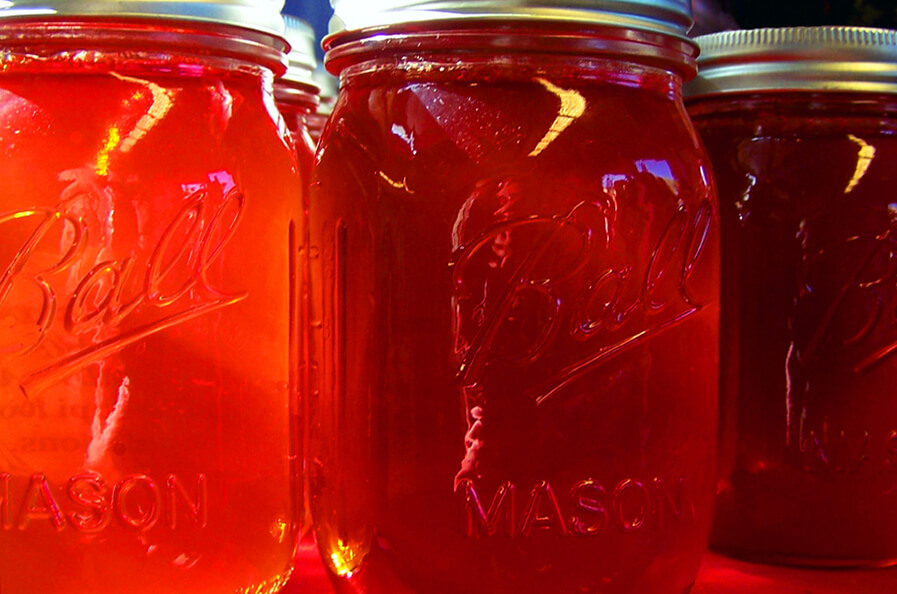
Our State Cake

It should come as no surprise to any of you that most states in our Union actually have official state foods, and it should be equally unsurprising that most are desserts.

Official state foods include Lane Cake, the State Dessert of Alabama, as well as the comparably famous Smith Island Cake, which is that of Maryland. Utah has a State Snack Food (Jell-O!?), and it’s quite telling that the State Snack of Texas is tortilla chips and salsa while that of New York is yogurt. California has all of four State Nuts (almond, pecan, walnut, and pistachio). By my reckoning, Oklahoma has won the state food contest hands down by officiating a State Meal: Chicken-fried steak, barbecued pork, fried okra, squash, cornbread, grits, corn, sausage with biscuits and gravy, black-eyed peas, strawberries, and pecan pie.

Unofficial state foods are often the subject articles assigned to some junior editor for filler/fodder in any given dozens of click-bait slide shows. On any given one of these fluff pieces, you’ll inevitably find a Mississippi mud cake, which is not our official state cake. In fact, unless you count large mouth bass, oysters, white tailed deer, or wood ducks, Mississippi doesn’t have a state food.

Mississippi mud cake is more fudge or a brownie than a cake, and that’s likely how it began, but around fifty years ago in the 70s when all sorts of craziness was going on (yes, I was there), marshmallows—inexplicably and unnecessarily—were introduced, likely because the resulting swirls are reminiscent of currents and eddies. Me, I think marshmallows are a vile alteration, and Australians seem to agree, since the Aussie mud cake—no, they do not call it Murrumbidgee mud cake—is marshmallow-free and smooth as silt.

One icon deserves another, so here’s Tammy Wynette’s recipe for Mississippi mud cake, which she says was taught to her by her mother, Mildred Lee.

2 sticks melted butter
4 eggs, slightly beaten
1 ½ cups plain flour
1 ½ cups pecans, chopped
½ cup cocoa
2 cups sugar
1 teaspoon vanilla
½ teaspoon salt
Mix together sugar, cocoa, and butter and eggs. Add flour, pecans, vanilla and salt to above. Bake 35 minutes at 350 degrees in a greased 9×13 oblong pan.
Topping:
Cover with miniature marshmallows and return to oven to melt.
Cream:
½ cup milk
1/3 cup cocoa
1 stick melted butter
1 box powdered sugar
Sift cocoa and powdered sugar, add milk and butter. Mix until smooth, then put on top of cake.

Mississippi Hill Country Stew

Brown lightly floured stew meat with chopped onions and a clove or so of minced garlic. Dust with a bit more flour, stir well, add coarsely diced potatoes, carrots, celery, and water to cover over by a half. Bring to a boil, cover, and cook–stirring occasionally–on low heat until meat and vegetables are tender. Reduce to consistency. Salt and pepper to taste. Serve with rice and/ or cornbread.

Red Rice

This is a very basic recipe, and it goes with almost anything, particularly barbecue and grilled meats. For four servings, fry three strips of thick bacon until crisp and set aside. Sauté about a half cup of chopped white onion and the same amount of chopped bell pepper in the bacon grease, add two and a half cups of water, an 6-oz. can of tomato paste, and one cup of long grain rice. Season with a little salt and pepper, bring to a boil, reduce heat, and cover. Cook until rice is tender. Stir in the cooked bacon before serving.

About Dried Beans

Rombauer writes that dried beans are “on the dull side and much like dull people respond readily to the right contacts.” In my experience, dull people rarely react to anything; once a schmuck, always a schmuck, I say. But dried beans respond beautifully to moisture and heat. With care, these wallflowers dance on the table. Dried beans are cheap and can be stored for a long time, but after a year they aren’t able to absorb enough moisture to be palatable. They’re also easy to cook, but it’s a matter of procedure.

On a sack of beans, you’ll find a warning stating something like, “Beans are a natural agricultural product. Despite use of modern cleaning equipment, it is not always possible to remove all foreign material. Sort and rinse beans before cooking.” This is a crucial step. Spread the beans in a single layer on a cookie sheet and pick out everything that isn’t a bean. You’re likely to find pebbles, little clods of dirt, sticks, and stems, none of which should find your way into your mouth. Put the sorted beans in a colander and rinse them twice, then pour into a container and cover with water. Remove any beans that float. Pour the cleaned, sorted beans back into the colander to drain.

Some people hydrate beans by soaking them overnight, it takes much less time if you cover beans with water, 3:1, bring to a hard boil for five minutes then shut off, cover, and soak for an hour. I always use a flame-buster and a moderate heat when cooking beans. If you scorch a pot of beans, throw them away and start over. Do not add salt. If you add salt in the cooking water before the beans are cooked, the skins will be tough. Salt when the beans are cooked through. This might not seem a big deal, but it is. Also do not add tomatoes until the beans are done; it takes much longer for the beans to cook if you do. Different types of beans cook differently, but generally speaking, a cup of dried peas or beans will make two to two and a half cups cooked.

Garlic Chicken Rolls

Fillet boneless chicken breasts, pound thinly, and spread with softened butter seasoned with white pepper and finely-minced garlic. Top with diced peppers and grated white cheese. Roll and secure with toothpicks. Beat 1 whole egg with 2 cups water, brush chicken rolls, and coat with seasoned bread crumbs. Freeze for about an hour. Roast in a medium (350) oven until lightly browned. Remove picks, slice and serve with a mustard chutney.

Chicken Livers Bourguignon

This is a wonderful buffet item, particularly for an after-event gathering. You could serve this with a buttery pasta, but I think a rice blend works better.

Drain and trim one pound chicken livers. Sauté in butter with a sprinkling of black pepper until just done through; you want them pink, not overcooked. Set aside. In another pan, sauté a finely-minced clove of garlic and two large diced shallots in a quarter stick or so of butter until shallots are cooked. Add a cup of thickly-sliced mushrooms, sift in two tablespoons of flour, and mix well.

Stir in enough stock to make a generous sauce, add a slosh or so of good red wine, season with thyme and rosemary, then reduce until thick and smooth. Add drained livers, coat well, salt to taste, and finish with another jolt of wine and a bit of butter.

Basic Beer Bread

A  breathtakingly fundamental recipe resulting in a light, evenly-textured, slightly sour, fragrant loaf.

Lightly mix three cups of self-rising flour with a 12-ounce can of beer. I used Miller Lite (I think). Pour half the beer in a bowl, then alternate flour and beer. Add a teaspoon each salt and sugar. Blend until just mixed, a little lumpy and bubbly.

Pour into a well-greased loaf pan lined with parchment paper and bake at 350 in a preheated oven for about an hour, until it thumps hollow.  Brush with melted butter while warm.

Another Rejection

Dear Mr. Yancy,

Thank you for submitting your work, The Existential Tomato, to the University Press of Missitucky.

Your book received a great deal of consideration. Our assistant senior editors, Mr. Pastel and Ms. Brawn, engaged in a lively debate on whether a vegetable can be considered “existential” with Mr. Pastel contending that it’s not the vegetable itself that is existential but rather the perception of the vegetable that is of an existential nature whereupon Ms. Brawn threatened to tear the rug off his head and shove it up his ass.

Ms. Ergot, who manages most of our culinary titles, said that while The Existential Tomato does have many farm-to-table aspects, the recipes for the most part seem to be more in the grandmère à petit enfant vein, which while a valid culinary movement, is little known and even less understood in this country.

Our graphics editor, Mr. Waters, was quite enthusiastic, and prepared no less than nine prospective covers, none of which depicted anything even remotely resembling a tomato. The copy editor, Mr. Yawn, said that your writing, while crisp, clean, and incisive, not only had too many semi-colons and long dashes, but was also peppered with such unfamiliar words as “macerate”.

While lucid, amusing, and informative of the state of mankind in the early 21st century, The Existential Tomato does not meet our criteria at the time.

Fuck off.

Sincerely,

Rupa Ganesh
Graduate Editorial Assistant

Fondue for the Masses

In the middle of the last century,, trendy America embraced fondue . The early recipes were startlingly elaborate—as were the fondue sets themselves—and included prescribed serving rituals as well as a warning that drinking cold beverages while eating causes constipation. (It doesn’t.)

Fashionable authors recommended using long two-tined forks to skewer the bread cubes, which is why colorful glazed fondue pots with matching spears were standard gifts at weddings. Many of you likely remember your mother’s fondue set in harvest gold and avocado green., with a little wire rack beneath for canned heat.

Fondues became quite popular because the ingredients were inexpensive and familiar; the equipment, however novel, was within reach, and while most of us consider a fondue about the gayest thing you can serve at a party, it ‘s actually quite good, and makes for a novel holiday dish (particularly New Year’s).

The following basic recipe is from Betty Crocker’s Dinner Parties: A Contemporary Guide to Easy Entertaining, [Golden Books: New York] 1970, 1974 (p. 55). Let me recommend you lightly toast the bread cubes.

Cut a French loaf into 1-inch cubes, and a pound of Swiss cheese into 1/4-inch cubes (about 4 cups). Sprinkle about two tablespoons AP flour over cheese and toss until is coated. Rub cut clove of garlic on bottom and side of quart ceramic fondue pot, heavy saucepan or chafing dish. Add 1 cup dry white wine (Rhine, Reisling, Chablis, Neuchatel); heat over medium until bubbles rise to surface (do not allow to boil). Gradually stir in cheese, adding only 1/2 cup at a time and stirring after each addition until cheese is melted and blended. (Do not allow mixture to become too hot.) Stir in 2 tablespoons kirsch or sherry liqueur and seasoning.

If fondue has been prepared on range, transfer fondue pot to source of heat at table and adjust heat to keep fondue just bubbling. Guests spear cubes of bread with long-handled forks and dip into cheese mixture. Stir fondue occasionally. (If fondue becomes too thick, mix in more warm white wine.) 4 servings.

A Cook from the Homeland

Calhoun County provides north Mississippi with a bucolic idyll between the burgeoning metro areas of Tupelo and Grenada. The Skuna and Yalobusha Rivers run east to west through Calhoun at equal distance into the Yazoo via the Tallahatchie, so geographically the county is divided into thirds. The land is typical of north central Mississippi: wooded hills creased by swampy bottoms.

Given the proximity to Oxford, the county provides a model (if not original) of Yoknapatawpha, but the county seat, Pittsboro, arguably the smallest county seat in the state, is a sleepy village, much the opposite of Faulkner’s bustling Jefferson. Pittsboro sits atop a ridge of hills that marks the southern edge of the Skuna River valley. To the south, the land slopes in a more leisurely manner to the Yalobusha just south of Vardaman, Derma, and Calhoun City.

Jo Brans is a member of the Reid family, who have lived in Pittsboro for time out of mind. Brans’ writings have explored many subjects, most in a much more scholarly vein, but Feast Here Awhile is a thoughtful examination of the changes in American cuisine from the 50s to the 90s. Feast Here Awhile (the title, by the way, is taken from Shakespeare’s Pericles, I,iv,107) is the story of her own culinary coming of age that takes her from the gentle hills of north Mississippi to Belhaven College in Jackson (which was strictly for young ladies until the year after she graduated, in 1955), to various locations in Texas, Minnesota and, finally, New York City as well as through two marriages, one to an American journalist, the other to a Dutch academic.

Brans moves from her mother’s kitchen through college cafeterias, Texas eateries and European fare on to DeNiro’s TriBeCa Grill. She also moves through (predictably, since the book has a pronounced literary bent) Child, Beard, and Rosso, managing to mention Proust, Welty, and Kerouac on the way. Indeed, Brans is somewhat of a compulsive name-dropper, both of the famous and the near-famous, but I was infinitely proud of her for managing to squeeze in Ernie Mickler and his wonderful White Trash Cooking.

In short, Feast Here Awhile is a personal encapsulation of the American culinary experience in the second half of the twentieth century, and a compelling read from any standpoint. It helps, of course, to be up on the literature, culinary and otherwise, but Brans is an excellent writer and rarely boring. I would recommend this book for any Southerner interested in food and cooking, more specifically Mississippians of that bent and particularly the good people of Calhoun County itself.

In preparation for this article on her, I attempted to get in touch with Brans for an interview, but countless attempts to discover her publisher or literary agent failed. Finally my friend Michelle Hudson, who heads up the reference department at the Welty Library asked, “Have you tried the phone book?”

Well, no. Sure enough, in minutes Michelle gave me a number to call. When I did, early on a Saturday evening, a polite young man answered the phone and said he’d pass my message on to Jo. Within an hour Ms. Brans called. After making sure I was from Calhoun County (that didn’t take long at all) we chatted. She said she’d think about my request and let me know. Some three days later, she replied:

Dear Jesse,

  After serious reflection, I have decided that the project you propose is not for me.  I enjoyed writing Feast Here Awhile. I am pleased to find that it has found favor with readers, including, especially, you. Many folks, over the years since its publication, have looked me up (“on purpose,” as we Southerners say) to offer thanks and to relate their own pleasures at the table. I would have had material for several sequels.

  But no, I thought, and think, not. Essentially I have said in Feast what I have to say about the changes in American eating over the last five or six decades. It’s all there, from  the joys of good home cooking and the family dinner table to the more complicated pleasures of Julia Child and those whom she terrified, taught, and liberated–usually all three–and beyond.

  Feast Here Awhile is also a personal odyssey, if that’s not too highfaluting a term for just growing up. I ate my way from childhood in a small Southern town through various stops along the road to life in New York City, and recorded the trip, hit or miss, in “The Food Book,” which became Feast. Though food was the focus, I was always aware as I typed away that I was recording the arc of my own life. No news for either of us there: that’s what writers do.

  Jesse, I’m flattered that you want to work with me, but don’t be content to retread. I really like your piece about Sambo Mockbee and I suspect, from our brief communication, that you want to be a writer, not an editor. If I’m right, cut loose. My way in was food. Maybe yours is food, too, but your food, not mine. Find your own way in. Tell your story. And send me a copy when the book comes out.
  Good luck and God bless,
  Jo Brans

Thanks, Jo. I will.