I call myself a painter; I paint, so I’m a painter. A teacher of mine, William Baggett, said, “Too many students call themselves artists, and they’re not artists; they’re students.” That stuck with me. I’m still learning, so I’m a student too, and I never want to get past that.
At USM, Jim Meade became my mentor. Meade steered us towards the formality of composition. He would talk about the Golden Mean, the Golden Rectangle, the Fibonacci sequence, and how all those tied into aesthetics. We would draw forms and divide them up, explore the geometry of formats just to get us geared into recognizing that this is the way things can be arranged so that your brain knows it’s there, even though it’s not drawn out. It was so boring! I often thought to myself, ‘What am I doing? I came here to become a good artist and to find something that nobody’s ever done before and become famous; that’s why I’m here!’ But it ended up becoming a completely different experience.
The first class I took I failed. The teacher said that I could render things okay, but that I didn’t know anything about drawing. At that point I realized that I either had to dump all my preconceived ideas about art and begin learning, or I’d have to find something else to do, and there was nothing else I wanted to do. I’d just gotten out of the military, I was 24, one of the “old guys” in the class. And these young kids were, well, drawing circles around me. I had to humble myself, tell myself that I had to learn, and if I want to discard it, I’d discard it. So we did gesture drawing, weight drawing, blind contour, taking the works of Renaissance painters, placing tracing paper on top and finding how they lined up their compositions, learning from masters of their art. When we were given more freedom to start making decisions, form was so ingrained it was natural. We didn’t even have to think about it. Then Jim came up with a great phrase, which I attribute to him because I’ve never heard anyone else use it except myself, but he called it cultivated intuition. You cultivate a visual idea so much that it becomes intuitive.
Meade would also tell me not to worry about coming out with my own style. He told me that style is either going to happen or it’s not; it’s going to be you coming out. He would tell me, “Miles Davis didn’t get a trumpet and start writing his own music and improvising; he learned the notes, he played the scales, he did the boring stuff over and over and over. Once he got good at the boring stuff, then he played other people’s music. Then, when he became proficient in other people’s music, people he admired, he took all those things and was able to push it further out than it had ever been pushed before.” That made complete sense to me. I wasn’t in college to make paintings, I wasn’t studying art to make paintings; I was studying to learn how to paint, the paintings would come later.
Visual strength is seeing something that connects deeper than ‘Wow, that’s a pretty horse in that painting.’ Or ‘That painting looks just like a photograph.’ It might be a great painting that looks just like a photograph, or it might be a shitty painting that looks like a photograph; but the fact that it looks like a photograph is irrelevant. It could simply consist of a few squiggly lines in the right place and it would be charged. Dali’s work is cool and interesting and psychological, but it relies so heavily on the subject matter being shocking that it’s a matter of diminishing returns: the more often you see his work it doesn’t grab you like it did the first time. I’m not sure if what he was doing defeated his purpose visually. Van Gogh’s Chair is powerful on both levels. I think good art engages with precariousness in balance between the linear composition and the color; you want unity, but you don’t want so much unity that it’s boring. You have to have some contrast. I guess I’ve allowed for this chaos and order by allowing all the chaos and accidental stuff to happen at first, so I’ve got to put it together. I don’t want to take away that spontaneity, but I want it to eventually look like a flat piece of art with everything fitting within the frame.
Every art professor in the world would probably cringe to hear someone say this, but art is something that you hang on your wall and you look at every day. If people didn’t have art hanging on their walls, then artists wouldn’t exist. I have a painting by Ellen Langford that see every day, and every time I look at it, it re-engages me. And I notice something different about it; either I’ll look at it formally, at the composition, the way she treats the negative space between the trees and around the house, or I’ll look at the expressions on the faces and see the animals in there. There’s a lot going on, but at the same time it’s simple; it’s got this juxtaposition, this push/pull, so what jumps out at me most often is what’s farthest away. Arnheim talks about this in his book, about flattening the space by making what’s farthest away in the painting come forward.
Even in my non-representational pieces, I’m very much concerned with the negative space and the picture plane. If everything doesn’t look like it belongs there, if everything doesn’t relate to that flat surface, then it doesn’t work. I try to put a sort of weird overlapping depth in there, but it also has to be flattened. So you’re tricking the minds of your viewers with this push/pull going on; it’s a visual element I use to re-engage the viewer. When people say ‘This artist is so talented,’ it’s almost an insult to the hard work it takes to be decent at something. That’s also what’s exciting about it. My work has continued to change and evolve, and I still learn things. They can refer to me as an artist when I’m good.
This letter comes from a descendant of the Bishop family in the tri-corner area of Calhoun-Lafayette-Pontotoc in Mississippi. It was written by Dock Bishop, who was convicted for the killing of a federal marshal and hanged in Pittsboro, Mississippi, on July3, 1886.
The circumstances of the crime and the atmosphere of the time and place were such that Bishop passed from outlawry into legend, and his story became a fireside tale in the area for generations. The letter is uneven and at times unintelligible, but those are likely for the most part due to my errors as a transcriber, and a sentence may be missing, since this is a poor copy of the original.
A few things to note are, first, the date, which Bishop gives as Oct. the __ 1850, cannot be correct, since Bishop murdered Detective Wise October 2, 1884. Why Bishop gave this date is unaccountable, but duress likely played a factor. The handwriting is in Spencerian script, a Copperplate-based style, widely used from approximately 1850 to 1925, the American de facto standard writing style for most correspondence prior to the typewriter. The use of this script, along with somewhat good—if uneven—spelling indicates some degree of education. The use of “verrie” for “very” is likely due to a familiarity with older versions of the King James Bible, composed when that variant was still in use. The letter does not mention his two co-defendants in the crime(s), Jim Bishop and Bob Lamar, but a certain G.D.A. comes in for condemnation, and the wording hints that Dock is trying to put the finger on him.
Finally, it seems to be that Dock signs the letter “Jeff Bishop,” and it seems reasonable to assume that Jeff/Jefferson may well have been Bishop’s actual given name.
Oxford, Miss Oct. the ___ 1850
Mr. Bill Bishop
My dear cousin, with pleasure I write you this leaves me well and hope this will find you and all the counsel. The same I wrote has as soon as I got back from Pittsboro tho have not heard from him, yet I will not have my trial the 26 of this month for the judge has called in his court and now I will have to say here until March. I think that my case will be misprocessed here and then they will send me to Coffeeville. I fear though I hope that I can stay here where I can be with my friends. I have not seen my counsel in time time cousin I am so troubled now I have a letter from my sister and ma is dead and it is verrie grevous to me to hear
I get my trial and want you to find out all you can for me so I still have no trouble when the time comes for my trial I want you all to write me for I am glad to hear from you all tell Jim that I want him to come to me soon would be glad to read a letter from him and learn all the news. I have been expecting some of you up for some time. I want you to bring me a bushel of potatoes when you come. I hear from my wife each week she is well and in good heart about my cast and has no fears but what I will come home when I have my trial she has some good evidence for me since court. Cousin, I want you to not forget to go to see
I will take it as a favor if you all will do this much for you and you shall never lose anything by it in the future. Give my love to Cousin Mallie and kiss the little ones for me. Tell them I will send them my picture when I go out to court so I can get one taken for them. Tell my little cousin that I got those peaches she sent me while I was at Pittsboro. Would be glad if you could bring them all with you at court here to see me. Tell Hal I don’t think that he has treated me right by not evidencing my card. Cousin, I have a heap to tell you when I have a chance. Tell Henry to not think hard of me for not writing him for I have so much writing to do. I want you all to come around to see me when you can
at Pittsboro this month that I think that I can demand a trial at any time and they are bound to give it to me if my liberties is debared on account of that case being against me there I want you to do all you can here on this case for I think that Jim will be present in his trial in this court and get up all you can in regards to evidence. Let me hear from you as soon as you get this with the news in the community. I hear that G.D.A. was gone and I think he is ashamed of himself and can not stand to face everybody that ever knew him after surviving such lies as he did. He is 8 miles (about) Pontotoc near Cedar Grove. I am your true cousin with love to all the connections.
This is a recording of Raymond Bailey performing “The Last Train through Vardaman” that Barbara Yancy made sometime in 1975-76. I lost the first part of Raymond’s narrative because the tape was so old and broke at both ends during recording, but I did hear it on the first playback. Raymond begins with saying, “This is ‘The Last Train through Vardaman.’ I remember we were loading the train that day, and my brother said, ‘Pile it high, boys, because this is the last train through Vardaman!’ So, we loaded her up (and away she went!)” The tape has him doing a couple of other songs, including ‘Nellie Gray’ and a version of ‘Casey Jones,’ but it’s too fragile for any further play. The locomotive is the OH&CC Number 9 at Okolona. Listen to Raymond here.
Like many towns in the upland South, Vardaman grew up around a timber railhead. Some of the lordliest white oaks that ever left the continent descended from the hills above Vardaman and were shipped across the Atlantic to construct the great barrels that held the finest wines of the 1925 Exposition of Paris. But after the lumber was gone, farmers in the area turned to the sweet potato and their intuitions were crowned with success. Vardaman is now the (admittedly self-proclaimed) Sweet Potato Capital of the World.
The distaff side of my family is from Vardaman, and I’ve been eating sweet potatoes my whole life, so for a long time I’ve been sailing along considering myself an expert on the subject. Then here comes this McGreger girl who blows my dinghy out of the water. April McGreger has chops; whereas my father was a lawyer from Sarepta (sue me), she is a sweet potato farmer’s daughter from Vardaman proper.
In her introduction to Sweet Potatoes, the tenth installment in the University of North Carolina Press’ “Savor the South” series, McGreger says, “By the time I was a teenager, I had worked at pulling slips, the shoots that densely bedded ‘seed’ sweet potatoes send up, and had spent a couple of summers riding the ‘setter’ that plants those sweet potato slips in expansive fields. I learned firsthand how eyes and ears and noses fill with dust from the warm, just-plowed earth and how the modern farmer’s schedule is set by nature and financial demands, often at odds with each other.”
People you have no idea how refreshing, how delightful it is to find a book about food written by a genuine human being who has a fundamental knowledge of “farm to table” and not by one of these pompous foodways pundits who don’t know a roux from a rutabaga or a kitchen flim-flam aristo whose closest connection to the earth is trying to grow weed on his daddy’s back forty before flunking out of college and entering culinary school. McGreger is a very fine writer (as we expect of Mississippi’s children) and a scholar to boot, so she takes an appropriately schoolmarmish tone when it comes to sweet potatoes. In her own rhetoric, she poses the question “Is there any food more central to our southern identity than sweet potatoes?”
The short answer is no, and perhaps for that very reason the sweet potato demands definition, particularly as a botanical and linguistic entity. I’ll leave that explanation to April, who does a thorough job of sorting out the Latin as well as the vernacular. She spends some time on the history of this important foodstuff, pointing out the antiquity of its use and cultivation in the New World as well as its introduction to the Old. Central to her narrative is the role of the sweet potato in the culinary history of the American South where it’s been keeping body and soul together throughout the region’s tumultuous history.
McGreger laments, “Once such a prominent food in the southern diet, the sweet potato is now eaten by many only on Thanksgiving in the form of sweet potato casserole or sweet potato pie”, and her selection of recipes is designed to illustrate the versatility of the sweet potato and to provide cooks at every level of proficiency with a means of making them more of a staple in the kitchen”, as well they should be. She chafes at being restricted to only fifty recipes, but to her credit she offers a spectacular variety “aimed to help you refine techniques to develop your own repertoire.” These are arranged in four categories: “Breakfast: Morning Pastries, Grits, Gravy, and Hash”; “Sides and Salads: Vintage Classics and Fresh, Modern Twists”; “Mains, Soups, Stews, and In-Betweens: A World of Flavor”; and “Desserts: A Little Something Sweet”.
Before getting to the recipes proper, McGreger includes a crucial section concerning the selection, storage and preparation of sweet potatoes as well as a description of a few of the most essential culinary varieties (some have been developed as a garden ornamental) and what sorts of dishes they are best suited. Granted most of us have access only to the traditional “moist, orange-fleshed, and sweet” types, but it’s worth knowing other varieties are out there, and if the trend to greater diversity in the marketplace and the proliferation of farmers’ markets continues, finding whites, yellows, purples and heirloom varieties is something to look forward to.
Equally important is her section on selection and storage, since while she recommends buying sweet potatoes “dirty by the bushel, directly from a farmer”, the roots must be cured in a warm, humid environment for a few weeks in order to fully develop their flavor. Most essential is McGreger’s advice on the preparation of sweet potatoes, and since she is clearly the final court of authority when it comes to cooking these vegetables (roots and leaves, it’s worth noting), this section is the heart of her work.
April wryly regrets never winning the Little Miss Sweet Potato crown, but a lot of thought, a lot of time, and a lot of love went into this wonderful work, and in my less-than-humble opinion it establishes April McGreger as not merely a Little Miss, nor even a Queen, but as the Empress of Sweet Potatoes.
Mississippi is famous as home to many of the most celebrated musical artists of the last century, but few know that Mississippi—and more specifically Jackson—was home to at least three renowned recording companies: Trumpet, Ace and Malaco Records. The Trumpet and Ace labels have long since passed into legend, but Malaco Records, founded by Tommy Couch, Mitchell Malouf, and Gerald “Wolf” Stephenson, is still making music on Northside Drive in Jackson.
“The basic story for Malaco was that we loved R&B music,” Wolf said. “Tommy is from the Muscle Shoals area, and he grew up with all those guys who became big in the recording industry there. When he came to Ole Miss, he started booking bands for the fraternity parties to make extra money. He graduated the semester ahead of me, moved to Jackson and talked his brother-in-law Mitch Malouf into continuing the booking agency. The name Campus Attractions was what he had used, but someone else was using that name, so he and Mitch tossed various names around until his mother-in-law suggested they combine the two names Malouf and Couch into Malaco.”
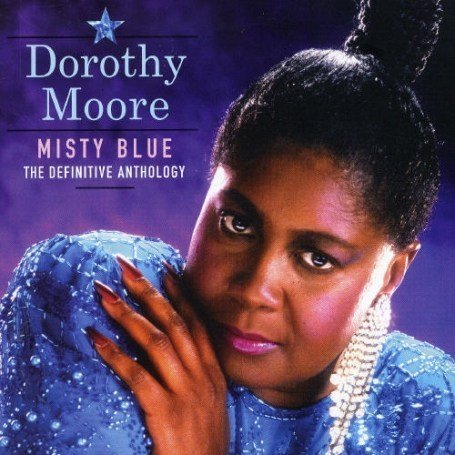
“I moved to Jackson and we continued our friendship,” Wolf said. “Tommy wanted to open a recording studio, so it started out here in 1967. The first success that we had was with Groove Me by King Floyd out of New Orleans in 1970. The next thing we had was Misty Blue with Dorothy Moore in 1976. In the early 80s, we were the beneficiary of a big downturn in the music business; Stax went out of business, Columbia Records pared back their artist roster,” Wolf said. “TK Distributors in Miami, who distributed our products, went out of business and all of a sudden we had to become an independent record company to get our records out. At the same time, lots of other labels cut back their roster. The artists who were doing blues and R&B didn’t have anywhere else to go, so they showed up here. We could record a record, get it manufactured and get it out, and they could call up anytime day or night. We were a small, close-knit group, so it worked.”
“Z.Z. Hill was our first big hit with Down Home Blues (1982). That was probably the biggest blues/soul album that had ever been released to that date, and here we were, a little bitty company and it cost us $8,000 to do the whole project. That song just exploded. That was like a magnet to all those other folks who were out there. His success brought Johnnie Taylor, Little Milton, Latimore (stage name of Benny Latimore), Bobby “Blue” Bland, Tyrone Davis and Denise LaSalle. We were at the right place when everybody else was cutting back.”
“We started with gospel in 1975,” Wolf said. “The Jackson Southernaires were a very hot group nationally. The thing about gospel groups back then and now, too, is that they had to be able to take some of their records when they went out on the road to sell them off the stage. And for the Southernaires, being with ABC Records, headquartered at that time in LA, it was hard for them to get the records on a timely basis. Again, they got caught in the cut-backs, too, and we were close by, they showed up, and that put us on the road to being successful in gospel music for a number of years.” But a dramatic downturn followed. “I never expected the record industry to get this bad,” Wolf said. “Piracy and counterfeiting have destroyed the industry. The computer has been a double-edged sword; we’re able to do so many things we couldn’t do before, but it also allows people to devastate your intellectual property rights.”
Burton Doss, Director of Information Technology at Malaco, said, “We had a bad time with the bootleggers; not so much the downloaders, who have hurt us some, but the bootleggers, in our industry, are really hurting us, but Malaco is adapting. Instead of fighting change, we have to embrace it by reaching out with new ventures, anything we can possibly do to reach our audience. We are signing a lot of P&D (pressing and distribution) deals in which the artists themselves do all the marketing and promotion, and we manufacture the product and place it in the major chains. A lot of the larger record labels won’t sign these artists who might only sell 250,000 to 500,000 units; well, we’ll have a party if we sell that much. So we’re signing these P&D deals in urban music,” Burton said. “We also have a lot of gospel artists who are unhappy with their labels who are coming to us to manufacture their product and get it out for them.”
“We have just signed a deal with Heavy D, from Heavy D & the Boyz, who was a big rapper in the 80s and 90s. He has a new album out called Vibes, a reggae album that was nominated for a Grammy Award this year. Lionel Ridenour, who has come to us from Arista Records, knew Heavy D and has a lot of good connections in the music industry. He called up Heavy D, who told him he wasn’t happy where he was at and wanted to look into something else, so Lionel said why don’t you come over to Malaco? We’ve also signed this guy named Ludy out of St. Louis, a rapper in the 90s. And we’ve signed a deal with B-Hamp. He’s got this song called Do the Ricky Bobby which was written up by Entertainment Weekly. When you think of Malaco, you think of the Mississippi Mass Choir, Johnny Taylor, Bobby Bland, so this is different, it’s new territory for us, but we’re excited.”
“We have the largest gospel music catalogue in the world, very good traditional gospel and new artists as well,” Burton said. “We have the Mississippi Mass Choir, Dorothy Norwood, the Georgia Mass Choir, a lot of quartets; we just did an album on the Soul Stirrers, who back in the day were the Soul Stirrers with Sam Cooke. Our catalogue business, meaning our repertoire of copyrighted songs, is very strong. We license a lot of songs to movies and other venues. We continue to grow the new business into new avenues. One avenue that we’ve started is that we’ve started an online radio station. Chances are, if you were to turn on the radio, you’re not going to hear blues or Southern soul. So we’ve started our own station, which is 24 hours a day, world-wide, southernsoulradio.com. You can hear the song, download it from iTunes and click to buy the album from our Malaco website. We want to make Malaco the one-stop shop when you think of blues, gospel or Southern soul.”
Academics often deride local history as poorly-researched, ill-written, and insular.
This criticism can and is levelled at history written on any level, but who can scorn local research as insufficient when so little material is in place? As to poorly-written, hell, even Gibbon can go on like he’s working with an empty bottle of port at his elbow. As to insularity, who can say that the storming of the Bastille isn’t local history to Parisians or the Beer Hall Putsch isn’t to Munich?
The least motes of history forge the narrative, and in the smallest arenas of mankind we find a locus of the whole. Let us treasure those who compelled by their love of place put before us a likeness of how it was before our time, helping us learn who we are, revealing how this part of the world shapes our lives.
A History of Greater Belhaven is available at the Greater Belhaven Neighborhood Foundation in Jackson, Mississippi.
During the Great Depression, the Federal Writer’s Project assigned many unemployed writers (unemployment being a chronic condition among writers no matter the economic climate is, trust me) to collect information for a work that was to be called “America Eats”.
Pearl Harbor halted work on the project, but Pat Willard found the materials and fashioned them into America Eats!: On the Road with the WPA – the Fish Fries, Box Supper Socials, and Chitlin’ Feasts That Define Real American Food (2008).
This chronicle of America’s regional cuisine focused on events–church suppers, harvest festivals, state fairs, political rallies, lodge suppers–where food was a primary element.
Eudora Welty threw in a julep recipe, and Ralph Ellison chronicled the chant of the Harlem “sweet pertater man.” Recipes for such staples as pickles, breads, stews, and barbecue abound.
This baste is from Pinky Langley, a white man from Jackson. He instructs readers to mix the ingredients, cook for 30 minutes, and to turn and baste the meat frequently.
3 lemons sliced 1 pint vinegar 3 heaping tablespoons sugar 1 heaping tablespoon prepared mustard 3/4 pound melted oleo (margarine) 1 small bottle tomato catsup 1 small bottle Lea & Perrins Sauce 3 chopped onions enough water to make 3/4 gallons salt, black and red pepper to taste
Mississippi stretches from the foothills of the Appalachians to the Gulf of Mexico, and her western border, her namesake, is one of the greatest rivers in the world. The state provides both residents and visitors with a wide range of natural environments: shady alluvial swamps, sunny beaches and barrier islands, rolling wooded hills, spacious piney woods and open prairies, all the home of a rich spectrum of living creatures. While this selection of materials does not claim to be definitive, it was created by Mary Stripling, who is uniquely qualified to make such a list of guides to identifying plants and animals in Mississippi.
Mary is now enjoying retirement, but as the librarian at the Mississippi Museum of Natural Science in Jackson from 1978-2010, she interacted with biologists in every realm of nature. Mary has been an avid birder and leader in the Jackson Audubon Society since the mid 1980’s, and has traveled extensively on birding ecotourism trips to destinations like New Zealand, Kenya, the Amazon and Central America, as well as to birding hot spots in North America. In each case she has used a field guide appropriate for each area. She has also utilized most of the other guides on the list while pursuing butterflies, dragonflies, turtles, freshwater mussels, insects, etc. and by helping museum guests identify all the various critters they find in the field or their backyards.
“Over the years there has been an explosion of nature field guides for North America, the eastern United States, Mississippi and surrounding states,” Mary says. “I’ve consulted with the biologists and botanists at the museum regarding the most accurate guides for each discipline. Some books included in the list are not field guide size such as Sibley’s Tree Guide, Fishes of Inland Mississippi and Birds of Mississippi, but all serious naturalists should study guides at home; you should be prepared to know what you might encounter before going into your own backyard.”
Mary includes asterisks by the titles most necessary for a Mississippi nature library. “These books will give you the most bang for your buck; for the most part the list is of selected general field guides, is not inclusive and does not include specialty guides such as guides for tiger beetles, wasps, warblers, hummingbirds, hawks, etc. I’ve included a few animal sound CDs for learning bird and frog songs and two are unique to Mississippi (the Mississippi bird and frog songs recorded by Bill Turcotte).” Mary was responsible for updating the original Mississippi bird and frog cassettes to CDs and revising the accompanying booklets. “No attempt has been made to include mobile digital apps for plant and animal identification, even though in the past few years apps have made a huge impact on nature watching. They are wonderful devices to take to the field especially for compactness, ease of use and for accessing sounds.”
But, she adds, “It is always great to curl up in your easy chair and enjoy a good read with your favorite field guide to get ready for your next outing.”
For a fuller appreciation of our state’s natural environments and their denizens, the Mississippi Museum of Natural Science in Jackson offers an absorbing collection of informative displays as well as exhibits of living plants and animals. As a center for research and support, the Museum helps to preserve and protect the swamps, the barrier islands, piney woods, prairies and living things that Mississippi calls her own.
VENOMOUS ANIMALS AND POISONOUS PLANTS
Common Poisonous Plants and Mushrooms of North America Turner, Nancy J. and Szczawinski, Adam F. Timber Press; 1991
A Field Guide to Venomous Animals and Poisonous Plants, North America, North of Mexico Foster, Steven; Caras, Roger A.; National Audubon Society; National Wildlife Federation, and Roger Tory Peterson Institute. Houghton Mifflin; 1994 (Peterson field guide series).
*Poisonous Plants and Venomous Animals of Alabama and Adjoining States Gibbons, Whit; Haynes, Robert; and Thomas, Joab L. University of Alabama Press; 1990
Poisonous Plants of the Southeastern United States Everest, John W.; Powe, Thomas A., and Freeman, John Daniel. University of Florida, Florida Cooperative Extension Services, Institute of Food and Agricultural Sciences; 1996
*Venomous Snakes of Mississippi, [pamphlet] Terry L. Vandeventer Mississippi Museum of Natural Science, 1994 (free)
BIRDS
Birds and Birding on the Mississippi Coast Toups, Judith A.; Jackson, Jerome A., and King, Dalton Shourds University Press of Mississippi; 1987; 303 p.
*Birds of Mississippi William H. Turcotte and David L. Watts University Press of Mississippi, 1999
*A Field Guide to the Birds of Eastern and Central North America, 6th ed. Roger Tory Peterson & Virginia Marie Peterson Houghton Mifflin, 2010. (Peterson Field Guide Series)
Guide to Birding Coastal Mississippi and Adjacent Counties Toups, Judith A.; Bird, Jerry L., and Peterson, Stacy Jon. Stackpole Books; 2004; 168 p.
Mississippi Bird Watching: A Year-Round Guide Thompson, Bill. Cool Springs Press; 2004; 165 p.
*National Geographic Field Guide to the Birds of North America Dunn, Jon L. and Jonathan Alderfer. National Geographic; 6th Rev Updated edition, 2011; 576 pages.
*Peterson Field Guide to Birds of North America Lee Peterson and Roger Tory Peterson (Peterson Field Guide Series) Houghton Mifflin, 2008
*The Sibley Field Guide to Birds of Eastern North America David Allen Sibley Knopf, 2003
*The Sibley Guide to Birds, 2nd ed. David Allen Sibley Knopf; 2014
BIRD SOUNDS
*Backyard Bird Song [CD] Richard K. Walton and R. W. Lawson (Peterson Field Guide) Houghton Mifflin Co, 1991
*Birding by Ear: A Guide to Bird-Song Identification – Eastern and Central North America [CD] R. K. Walton and R. W. Lawson (Peterson Field Guide Series) Houghton Mifflin Co, 1989
Prothonotory warbler (photo by Bill Stripling)
Mississippi Bird Songs [CD] William H. Turcotte Mississippi Museum of Natural Science, Mississippi Department of Wildlife, Fisheries and Parks, 1985, 2008
TREES
A Field Guide to Eastern Trees: Eastern United States and Canada Petrides, George A.; Wehr, Janet, and Petrides, George A. Houghton Mifflin; 1988; 272 p.
Identification of Southeastern Trees in Winter Preston, Richard Joseph North Carolina Agricultural Extension Service; 1976; 113 p.
Mississippi Trees Hodges, John D.; Evans, David L.; Garnett, Linda W., and Mississippi Forestry Commission. Mississippi Forestry Commission; [200-?].(This book is free and updated every few years.)
Native Trees for Urban Landscapes in the Gulf South Brzuszek, Robert F. Crosby Arboretum; 1993; 11 p.
*Native Trees of the Southeast : an identification guide Kirkman, L. Katherine; Brown, Claud L., and Leopold, Donald Joseph. Timber Press; 2007; 370 p.
*The Sibley Guide to Trees Sibley, David. Knopf, 2009; 426p
*Trees, Shrubs, and Woody Vines of Louisiana Charles M. Allen, Dawn Allen Newman, and Harry H. Winters. Allen’s Native Ventures, 2002
*Trees of the Southeastern U. S. Wilbur H. Duncan and Marion B. Duncan University of Georgia Press, 1988. Reprinted, 1992.
Trees of Mississippi : and other woody plants Dukes, George H. and Stribling, Bob. Poplar Petal Pub; [1997?]
WILDFLOWERS, MUSHROOMS, FERNS AND OTHER PLANTS
Common Poisonous Plants and Mushrooms of North America Turner, Nancy J. and Szczawinski, Adam F. Timber Press; 1991; 311 p.
*A Field Guide to Southern Mushrooms Nancy S. Weber and A. H. Smith University of Michigan, 1985
An Illustrated Guide to Tidal Marsh Plants of Mississippi and Adjacent States Lionel Eleuterius Pelican Press, 1990
Louisiana Ferns and Fern Allies (out of print) John W. Thieret University of Southwestern Louisiana, 1980
*Louisiana Wildflower Guide Charles Allen, Ken Wilson, Harry Winters Allen Native Ventures, 2011
A Mississippi Woodland Fern Portfolio George H. Dukes, Jr. Poplar Petal Publishers, 2002
Mushrooms of Mississippi: and Other Fungi and Protists George H. Dukes, Jr. Poplar Petal Publishers, 2000
*Native Shrubs and Woody Vines of the Southeast : Landscaping Uses and Identification Leonard E. Foote and Samuel B. Jones Timber Press, 1989
*Trees, Shrubs, and Woody Vines of Louisiana Charles M. Allen, Dawn Allen Newman, and Harry H. Winters. Allen’s Native Ventures, 2002
Southeastern Flora www.southeasternflora.com A superior, searchable website done by John Gwaltney, Southeastern Flora is an online resource to assist you in identifying native or naturalized wildflowers you may find in the southeastern United States. Currently there are over 1,980 species listed on this site and over 41,400 pictures to help you identify what you’re looking for. You can easily identify trees, shrubs, vines, and herbaceous plants without knowing how to read a plant identification key. Simply define a few traits about your specimen, and the visual photo search results will help you narrow your selection to the exact species. Note the Plant Picks List, which is a valuable aid.
*Wildflowers of Mississippi S. Lee Timme University Press of Mississippi, 1989
Wildflowers of the Natchez Trace S. Lee Timme and Cale C. Timme University Press of Mississippi, 2000
REPTILES AND AMPHIBIANS
The Amphibians and Reptiles of Louisiana Dundee, Harold A. and Rossman, Douglas A. Louisiana State University Press; 1989; 300 p.
*A Field Guide to Reptiles and Amphibians of Eastern and Central North America Roger Conant and Joseph T. Collins (Peterson Field Guide) Houghton Mifflin, 1998
*A Guide to Mississippi Frog Songs, [CD] William H. Turcotte MS Depart of Wildlife, Fisheries and Parks, 1988
Mississippi Herpetology Ren Lohoefener MS State University Research Center, 1983 (Out of Print)
*Salamanders of the United States and Canada Petranka, James W. Smithsonian Institution Press; 1998, 587 p.
*Snakes of eastern North America Ernst, Carl H. and Barbour, Roger William. George Mason University Press; 1989; 282 p.
Snakes of North America: Eastern and Central Regions Alan Tennant and R. D. Bartlett Gulf Publishing Company, 2000
*Snakes of the Southeast Whit Gibbons and Mick Dorcas University of Georgia Press, 2005
*Turtles of the United States and Canada Ernst, Carl H. and Lovich, Jeffrey E. 2nd ed. Johns Hopkins University Press; 2009; 827 p.
*Venomous Snakes of Mississippi, [pamphlet] Terry L. Vandeventer Mississippi Museum of Natural Science, 1994 (free)
FISH
*A Field Guide to Freshwater Fishes : North America North of Mexico. 2nd ed. Brooks M. Burr, John Sherrod, Lawrence Page, E. Beckham, Justin Sipiorski, Joseph Tomelleri (Peterson Field Guide) Houghton Mifflin, 2011
*Fishes of the Gulf of Mexico, Texas, Louisiana, and Adjacent Waters H. Dickson Hoese and Richard H. Moore Texas A&M University Press, 1998
*Inland Fishes of Mississippi Stephen T. Ross University Press of Mississippi, 2001
MAMMALS
A Field Guide to Mammals of North America Fiona A. Reid (Peterson Field Guide) Houghton Mifflin, 4th ed., 2006
Black bears
*Handbook of Mammals of the South-Central States Jerry R. Choate, J. Knox Jones, Jr., and Clyde Jones Louisiana State University Press, 1994
Mammal Tracks and Sign: A Guide to North American Species Mark Elbroch Stackpole Books, 2003
The Marine Mammals of the Gulf of Mexico Bernd Wursig, Thomas A. Jefferson and David J. Schmidly Texas A & M University Press, 2000
Mississippi Land Mammals: Distribution, Identification, Ecological Notes James L. Wolfe Mississippi Museum of Natural Science, Mississippi Game and Fish Commission, 1971 (free)
*The Wild Mammals of Missouri C. W. Schwartz and Elizabeth R. Schwartz University of Missouri Press, 2001
INVERTEBRATES (divided into categories)
»Beetles
*Beetles of Eastern North America Arthur Evans Princeton University Press, 2014
»Butterflies & Moths
Butterflies and Moths. 2nd ed. Carter, David J. and Greenaway, Frank. (Smithsonian handbooks series) New York: Dorling Kindersley; 2002; 304p.
*Butterflies and Moths : a guide to the more common American species Mitchell, Robert T.; Zim, Herbert Spencer; Latimer, Jonathan P., and Nolting, Karen Stray. Rev. and updated ed. St. Martin’s Press; 2002; 160 p.
*Butterflies of Mississippi: a field checklist Mather, Bryant and Dingus, Eve. Mississippi Museum of Natural Science; 1994. (free)
Butterflies of the East Coast : an observer’s guide Cech, Rick and Tudor, Guy. Princeton University Press; 2005; 345 p.
Butterflies Through Binoculars Jeffery Glassberg Oxford University Press, 1993
*Caterpillars of Eastern North America: A Guide to Identification and Natural History David Wagner (Princeton Field Guide series) Princeton University Press, 2005
The Common Names of North American Butterflies Miller, Jacqueline Y. Washington: Smithsonian Institution Press; 1992; 177 p.
*A Field Guide to Eastern Butterflies Paul Opler, Vichai Malikul, Roger Tory Peterson (Peterson Field Guide Series) Houghton Mifflin, 1998
*Peterson Field Guide to Moths of Northeastern North America David Beadle and Seabrooke Leckie (Peterson Field Guide Series) Houghton Mifflin, 2012
*Peterson First Guide to Caterpillars of North America Amy Bartlett Wright (Peterson First Guides) Houghton Mifflin, 1998
»Dragonfiles And Damselflies Dragonflies and Damselflies of the East Dennis Paulson (Princeton Field Guide Series) Princeton University Press, 2012
*Dragonflies Through Binoculars: A Field and Finding Guide to Dragonflies of North America Sidney W. Dunkle Oxford University Press, 2000
Stokes Beginner’s Guide to Dragonflies and Damselflies Blair Nikula and Jackie Sones Little, Brown and Company, 2002
»Insects *A Field Guide to Insects: America North of Mexico Richard White, Richard White, Donald Borror, Donald Borror. (Peterson Field Guide Series) Houghton Mifflin, 1998
*National Audubon Society Field Guide to Insects and Spiders Milne and Milne Knopf, 1980, 1996 992p.
*National Wildlife Federation Field Guide to Insects and Spiders of North America Arthur V. Evans Chanticleer Press, 2007, 496p.
»Spiders Common Spiders of North America Richard A. Bradley University of California Press, 2012
*A Guide to Spiders and Their Kin Herbert W. Levi, Lorna R. Levi, Nicholas Strekalovsky. Golden Guides from St. Martin’s Press, 2001