Thanksgiving has a uniquely American song, not the sort that Lincoln might have imagined when he inaugurated the holiday in 1863, but “Alice’s Restaurant Massacree” is revolutionary, irreverent, and earthy, just as American as pumpkin pie.
“Now it all started two years ago on Thanksgiving, when my friend and I went up to visit Alice at the Restaurant, but Alice doesn’t live in the restaurant, she lives in the church nearby the restaurant, in the bell-tower, with her husband Ray and Fasha the dog. This song is called Alice’s Restaurant, and it’s about Alice, and the Restaurant, but Alice’s Restaurant is not the name of the restaurant, that’s just the name of the song, and that’s why I called the song ‘Alice’s Restaurant’.”
“I think a lot of people who are interested in food fantasize about having a restaurant,” Alice Brock writes in My Life As a Restaurant (1975). “I never did. I was twenty-five, married and crazy. I was a captive in a situation I had very little control over other than the role of cook and nag—being a hippy housewife was not satisfying. I had a world of fantasies; none included a restaurant, but all were based on the assumption that I would be my own person, on my own trip.”
Alice’s mother, who was a real estate broker in Stockbridge and determined to get her daughter out of her “situation”, called her one day and asked her to go with her and look at a little luncheonette for sale down an alley in the middle of town. “It had a counter down one side and three or four booths on the other side, and a tiny ill-equipped kitchen in the back,” Alice remembers. “It was painted two-tone institutional green, and it was definitely not the kind of place where I would eat, much less own. But it was a chance, a chance to escape. Before we left, I was hooked. I was already creating a menu, I was already free. Those moments, when suddenly an opportunity appears, a door opens—they are what life is all about.”
Alice called her restaurant “The Back Room”. “I knew nothing, absolutely nothing,” she admits. “I can’t believe how innocent I was. But it didn’t matter.” Opening night was a near-disaster, “a nightmare”, but she persevered, and soon she and her sister, who was also in a “situation”, were staying up all night cooking things she later wouldn’t consider for hundred-dollar-a-plate dinners and working five hours making thirty portions of some exotic soup that would vanish in twenty minutes the next day. “I was crazy, she said, “but I know that for all our unprofessionalism, we cooked some pretty wonderful dishes, and I established a reputation as a cook.”
The summer of 1966 was a magical time for Stockbridge; the Berkshire Playhouse had reorganized with an eye to becoming more than just a summer stock theater, attracting stars and would-be stars to the town. “Dustin Hoffman and Gene Hackman liked hamburgers with onion, green peppers, and an egg in them,” Alice writes. “Frank Langella was called ‘Mr. Mushroom Omelet’. Ann Bancroft was wonderful, and when her whole family came, I cooked giant meals; when they stayed late, she helped me clear the table.”
One spring morning a year after opening, Alice says that she walked through the front door and freaked out. “I felt that instead of owning it, it owned me. The plates were out to get me, the pots were planning an attack, the stove was laughing at me. I had a terrible urge to smash everything.” Instead, she called Eastern Airlines and booked a midnight flight to Puerto Rico, emptied the cash box and gave away all the food. “It was a wonderful restaurant. It was a success. I ran it for one year. It turned me into a madwoman. I made enemies of old friends. I broke up with my husband. I left my home. I had actually broken free and become my own person. I didn’t know what I was going to do, but I knew I would never have another restaurant. Never say never.”
Alice Brock went on to open not one but several more restaurants; she now lives in Provincetown, Massachusetts, where she owns an art gallery. After Arlo premiered “Alice’s Restaurant Massacree” before a captivated crowd of over ten thousand at the Newport Jazz Festival in July, 1967, he performed it live on non-commercial New York City radio station WBAI one night later that summer. The song became so popular that for months afterward WBAI rebroadcast it only when listeners pledged to donate a large amount of money. The eponymous (less the massacree) album was released that same year, with the song (at 18:20) taking up the entire first side, the other filled with a selection of bluesy folk tunes. The ballad has become a Thanksgiving tradition not only for classic rock stations, but for thousands of households across the nation.
This letter comes from a descendant of the Bishop family in the tri-corner area of Calhoun-Lafayette-Pontotoc in Mississippi. It was written by Dock Bishop, who was convicted for the killing of a federal marshal and hanged in Pittsboro, Mississippi, on July3, 1886.
The circumstances of the crime and the atmosphere of the time and place were such that Bishop passed from outlawry into legend, and his story became a fireside tale in the area for generations. The letter is uneven and at times unintelligible, but those are likely for the most part due to my errors as a transcriber, and a sentence may be missing, since this is a poor copy of the original.
A few things to note are, first, the date, which Bishop gives as Oct. the __ 1850, cannot be correct, since Bishop murdered Detective Wise October 2, 1884. Why Bishop gave this date is unaccountable, but duress likely played a factor. The handwriting is in Spencerian script, a Copperplate-based style, widely used from approximately 1850 to 1925, the American de facto standard writing style for most correspondence prior to the typewriter. The use of this script, along with somewhat good—if uneven—spelling indicates some degree of education. The use of “verrie” for “very” is likely due to a familiarity with older versions of the King James Bible, composed when that variant was still in use. The letter does not mention his two co-defendants in the crime(s), Jim Bishop and Bob Lamar, but a certain G.D.A. comes in for condemnation, and the wording hints that Dock is trying to put the finger on him.
Finally, it seems to be that Dock signs the letter “Jeff Bishop,” and it seems reasonable to assume that Jeff/Jefferson may well have been Bishop’s actual given name.
Oxford, Miss Oct. the ___ 1850
Mr. Bill Bishop
My dear cousin, with pleasure I write you this leaves me well and hope this will find you and all the counsel. The same I wrote has as soon as I got back from Pittsboro tho have not heard from him, yet I will not have my trial the 26 of this month for the judge has called in his court and now I will have to say here until March. I think that my case will be misprocessed here and then they will send me to Coffeeville. I fear though I hope that I can stay here where I can be with my friends. I have not seen my counsel in time time cousin I am so troubled now I have a letter from my sister and ma is dead and it is verrie grevous to me to hear
I get my trial and want you to find out all you can for me so I still have no trouble when the time comes for my trial I want you all to write me for I am glad to hear from you all tell Jim that I want him to come to me soon would be glad to read a letter from him and learn all the news. I have been expecting some of you up for some time. I want you to bring me a bushel of potatoes when you come. I hear from my wife each week she is well and in good heart about my cast and has no fears but what I will come home when I have my trial she has some good evidence for me since court. Cousin, I want you to not forget to go to see
I will take it as a favor if you all will do this much for you and you shall never lose anything by it in the future. Give my love to Cousin Mallie and kiss the little ones for me. Tell them I will send them my picture when I go out to court so I can get one taken for them. Tell my little cousin that I got those peaches she sent me while I was at Pittsboro. Would be glad if you could bring them all with you at court here to see me. Tell Hal I don’t think that he has treated me right by not evidencing my card. Cousin, I have a heap to tell you when I have a chance. Tell Henry to not think hard of me for not writing him for I have so much writing to do. I want you all to come around to see me when you can
at Pittsboro this month that I think that I can demand a trial at any time and they are bound to give it to me if my liberties is debared on account of that case being against me there I want you to do all you can here on this case for I think that Jim will be present in his trial in this court and get up all you can in regards to evidence. Let me hear from you as soon as you get this with the news in the community. I hear that G.D.A. was gone and I think he is ashamed of himself and can not stand to face everybody that ever knew him after surviving such lies as he did. He is 8 miles (about) Pontotoc near Cedar Grove. I am your true cousin with love to all the connections.
In The Taste of America, John and Karen Hess refer to an article by Harriet Van Horne, “Edunt et Vomant” (“They have eaten and let them vomit.”), commenting on a 1975 fluff piece in the New York Times describing a dinner Craig Claiborne and his partner Pierre Franey had in Paris, a $4000 meal for two that featured 31 dishes and 9 wines. As Claiborne and Franey were licking their decadent fingers, the fringes of their world hungered and starved.
Van Horne wrote, “No journalistic caprice has, in my memory, set off such a shudder of distaste. This calculated evening of high-class piggery offends an average American’s sense of decency. It seems wrong, morally, esthetically and in every other way.” The Hesses included Van Horne’s quote to further elaborate on the gourmet absurdities of the time which elevated overpriced, tasteless food, (canned foie gras, canned truffles, cottony chicken breasts in a floury velouté sauce) that were championed by those like Claiborne who lauded expense as a barometer of taste. The Vatican newspaper echoed, deploring the display while millions were starving. Paul VI “as a humble servant for a suffering humanity” demanded significant changes of the rich in America and Europe in favor of the poor, a plea the affluent either ignored or atoned with in pittances.
In the most general terms gluttony involves an over-indulgence and/or over-consumption of food, drink or intoxicants to the point of waste, particularly in terms of a misplaced desire of food or its withholding from the needy, an excess that’s damned by every spiritual path in the world in every quarter of the globe. European theologists from the Middle Ages took a more expansive view of gluttony, arguing that it also consists of an anticipation of meals, the eating of delicacies and costly foods, seeking after sauces and seasonings, and eating too eagerly. Gregory the Great described five ways by which one can commit the sin of gluttony, and corresponding biblical examples:
Eating before the time of meals in order to satisfy the palate. Example: Jonathan eating a little honey when his father Saul commanded no food to be taken before the evening. [1Sa 14:29]
Seeking delicacies and better quality of food to gratify the “vile sense of taste.” Example: When Israelites escaping from Egypt complained, “Who shall give us flesh to eat? We remember the fish which we did eat in Egypt freely; the cucumbers and the melons, and the leeks and the onions and the garlic,” God rained fowls for them to eat but punished them 500 years later. [Num 11:4]
Seeking after sauces and seasonings for the enjoyment of the palate. Example: Two sons of Eli the high priest made the sacrificial meat to be cooked in one manner rather than another. They were met with death. [1Sa 4:11]
Exceeding the necessary amount of food. Example: One of the sins of Sodom was “fullness of bread.” [Eze 16:49]
Taking food with too much eagerness, even when eating the proper amount and even if the food is not luxurious. Example: Esau selling his birthright for ordinary food of bread and pottage of lentils. His punishment was that the “profane person . . . who, for a morsel of meat sold his birthright,” we learn that “he found no place for repentance, though he sought it carefully, with tears.” [Gen 25:30]
In his Summa Theologica (Part 2-2, Question 148, Article 4), Thomas Aquinas revised the list of five ways to commit gluttony:
* Laute – eating food that is too luxurious, exotic, or costly * Nimis – eating food that is excessive in quantity * Studiose – eating food that is too daintily or elaborately prepared * Praepropere – eating too soon, or at an inappropriate time * Ardenter – eating too eagerly.
Aquinas notes that the first three ways are related to the nature of the food itself, while the last two have to do with the time or manner in which it is consumed.
Even to the exclusion of these examples, which are admittedly rather fastidious themselves, we are all guilty of gluttony in our complacency as citizens of one of the most affluent nations in the history of human civilization. We quaff fine wines, stuff ourselves with costly foods, and watch celebrity chefs preparing dishes in a gladiatorial setting. Some wretched sinners sneer at those who eat off-cut chops, misshapen homegrown vegetables, or don’t use Zanzibar cinnamon. In our current moral implosion, hunger itself has come to be seen as a sin, almost as an illness that needs treatment, instead of a type of self-discipline for we who have grown too indulgent.
So far, I have written hardly anything to make you smile, which I certainly like to do, so I will tell a story featuring our late pal L.W. Thomas, one of the funniest boys who ever lived and a very nervous character who owned many peculiar phobias. For example, he was afraid of milk in any form. Also, when he bought a six-pack of beer at the Jitney Jungle, he would not touch the can with the price-tag on it (this, of course, was when things had price-tags). You could be sure L.W. would have a beer for you at his house, because there were always fifteen or so cans with the price-tag in his icebox. For Thomas, flying in an airplane was out of the question. Once, when he and Randy Cross and I flew on Delta Airlines to Washington, D.C., we had to render him comatose with three Ativan tablets before he would even get in the taxi to the airport.
Capt. Jung and his trusty Taylorcraft
Another late friend of ours, Captain R.A. Jung, owned a 1943 Taylorcraft tail-dragger (an old Army spotter plane) he named “The Yellow Peril.” She was canvas-covered (painted bright yellow) and could accommodate two persons in tandem seating. For instruments, she had an altimeter, an air-speed indicator, a horizon bubble, and a compass. That was it. We all enjoyed flying in this antique crate (sometimes we’d buy two or three bags of flour, then go hunting along the Illinois Central for a train to bomb), but, as you might expect, L.W. steadfastly refused to have anything to do with her. Finally, one evening at the local tavern, Captain R.A. Jung beguiled Thomas with the news that he had just installed a radio in the cockpit of “The Yellow Peril.” (Heretofore, the ship had been incommunicado, which meant the Captain could only land at strips without a tower.) This apparatus, claimed Captain R.A. Jung, made the old bird safe as a Chevrolet station wagon. L.W., girded with the bravado of a half-dozen draft beers, and no doubt embarrassed by his legendary reluctance, uttered the fatal words, “Why, there ain’t nothin’ I’d rather do than scale the airy heights with my old pal, Captain R.A. Jung. Excelsior!” After that, there was no turning back.
Next afternoon, a Sunday, the boys gathered at the Oxford airfield to see L.W. Thomas off on his maiden flight in the Taylorcraft. Having steeled himself beforehand with a half-pint of Cabin Still (no Ativan or Xanax in those days, and, at the moment, none of us had any reefer), Thomas squeezed into the cockpit and buckled himself in the rear seat, clutching to his chest a Gideon Bible he had swiped from some fleabag motel back down the line. Present as observers were Frank Walker, John Schorfheide, Steve Cook, Tommy Freeland, and I, each man enjoying the balmy day, each man uttering words of comfort and encouragement to our jittery comrade:
“C’mon, L.W.–if you crash, it won’t hurt–you’ll be killed instantly.” “Don’t listen to him, pard–you’re back aft and may only be injured for life–” “If that happens, man, try to keep your arms and fingers so you can play the the guitar on the sidewalk by the bus station.” “But . . . what if he’s only injured and the wreckage catches fire?” “Good point! Lotsa guys survive a crash, only to perish in the flames.”
Meanwhile, Captain Jung ran through the pre-flight checklist:
Flaps: OK Horizontal Stabilizer: OK Rudder: OK Brakes: OK Fuel: OK Loaded Revolver Under Seat: OK Peach Brandy: OK Cigars: OK L.W. Thomas : Sitting quietly hating the Wright Brothers; hating Mr. Taylor who designed the Taylorcraft; hating all of us who, safely on Terra Firma, could afford to make light of hideous injury and death; most of all hating Captain R.A. Jung who, when satisfied of the craft’s readiness spoke up as follows:
“Awright, girls–knock it off and pay attention.” He rummaged around under his feet and produced a mare’s nest of wiring from which, after a few minutes of muted invective, he extracted two sets of headphones fitted with throat mics. The leather earpads were cracked and dry, like the antique Bakelite mics and the confusion of black wires that connected one apparatus to the other, then disappeared beneath the instrument panel where, presumably, they were somehow connected to the generator[1]. Captain Jung explained that, while the device was not exactly a radio, it was a revolutionary, if makeshift[2], intercom system assembled from genuine WWII Naval Aviation components he’d discovered in a surplus store in East St. Louis, Illinois. As a result, the Captain pointed out, those in the cockpit would no longer have to scream at one another over the clattering of the engine and the wind howling through the wires and wing struts. L.W. Thomas–lucky boy!–was the first passenger to show up since the installation, and this flight would be the intercom’s initial trial.
Thomas revealed later that, in that moment, he did not feel lucky; his confidence was further eroded by the knowledge that Captain Jung had installed the rig himself. Not that the Captain wasn’t handy! It was he who built a muzzle-loading black-powder cannon from a length of steel pipe, so effective it could fire a dirt-packed tomato sauce can clear across the Mississippi River. His work with plunger-activated black-powder aerial bombs was pure genius.[3] However, the Captain’s craftsmanship was generally applied to automobile repair, heavy machinery, and crude explosive devices; his experience with electricity was limited to hot-wiring cars in his youth. Thomas was aware of this deficiency, but his thought was, What could possibly go wrong with an intercom?
Now, to start the motor of the Taylorcraft, a ground crewman had to turn the propeller until he felt pressure on the pistons, whereupon that person would announce “Contact!” whereupon Captain Jung would flip the magneto and reply “Switch on!” whereupon the ground crewman would grasp the propeller blade and give it a heave counterclockwise. This is a very old-timey way to start an airplane, but she was a very old-timey airplane. After the engine was started and the prop spinning, pilot and ground crewman would exchange a hearty thumbs-up and “Cheerio!” (see illustration below), Captain Jung would take a draught from his flask of peach brandy, and off he’d go.
Capt. Jung in the cockpit, the author giving him a thumbs up.
So it went on the day of L.W.’s first flight. We watched the little machine trundle onto the grass runway–in a moment, she began to roll forward–Captain R.A. Jung opened the throttle–the mighty sixty-five HP engine began to buzz–the tail came up–and in a moment “The Yellow Peril” was gracefully aloft and disappearing southward over the trees. Meanwhile, the boys walked back to the office to drink coffee and listen as the airfield manager, the late Mr. Jeff White, told us tales of flying in World War II.
Well, I started out with the intention of telling about the time our friend S. Cragin Knox beguiled L.W. Thomas into accompanying him to Texas to work on an oil exploration crew, and the foreman out there gave Thomas the job of driving the dynamite truck, which made Thomas very nervous indeed, especially when, one day, and without thinking, L.W. Thomas flicked his cigarette out the open window of the truck cab–but now I am all tangled up in the story of L.W. Thomas and the Taylorcraft. However, as I think about it, the two stories have a similar narrative thread. As a modern person (no offense), and especially a modern person (no offense) married to an Air Force fireman, you might question the wisdom of L.W. Thomas smoking a cigarette while driving a dynamite truck. Also, you might contemplate the photo above and ask yourself, “Should Captain R.A. Jung really be smoking a cigar in the cabin of a fabric-covered airplane swirling with gasoline fumes that is about to sail into the Wild Blue Yonder?” This behavior was perfectly routine in those times; today, it would most likely be considered poor judgment, if not moronic.
(At this point, I should insert an apologetic parenthetical. Beloved niece, you could not be blamed for assuming our gallant band were naught but a crowd of dissipated low-lifes and scoundrels. In fact, we were all in college at Ole Miss, save Schorfheide [a railroad detective on the Cotton Belt RR in Memphis] and Captain Jung, who, when he was not adventuring, worked as a millwright at a steel mill in Granite City, Illinois. Walker was an ex-Marine, Schorfheide and I were Vietnam veterans; Jung had served his Army time in Alaska as a ski-trooper; Steve Cook would become chairman of the graduate art program at Mississippi College. Tommy Freeland was a poet and intellectual from an old Mississippi family; he would grow up to become an excellent attorney, marry my ex-wife, and die of a heart attack at a tragically young age. S. Cragin Knox, in spite of his lowly beginnings slinging cable on an exploration crew, eventually became the State Geologist of Mississippi. As for L.W., he was a graduate student in theatre at Ole Miss, a musician, a restaurateur, and a fine writer. He died in his sleep at age fifty-two in ’02 as his beloved wife Jeanne watched by the bedside. Life was never the same for us after L.W. Thomas crossed the river, and I do not believe a man can own a higher accolade. The same can be said of Captain R.A. Jung, who was killed in the crash of “The Yellow Peril” on [fittingly] November 11th, 1976, just seven months after the events recorded here. These were lads who lived authentic lives, and I am proud to have been one among them, and I miss them greatly. Thus, though sometimes we were dissipated low-lifes and scoundrels, misbehavior was only part of the adventure.)
Anyway, since I am thus far into the airplane story, I will stick with it.
Time and again, we hear persons complain that Life is Unfair, and certainly it seems so at times. Some point to Fate; the Calvinist attributes every misfortune to God’s Inscrutable Plan; sensible people have no other recourse than to mutter the well-worn phrase, “Shit just happens.” Whatever one’s philosophy, it does seem patently unfair that events surrounding “The Yellow Peril” on that balmy April morning in ‘75 came to pass with poor ol’ L.W. Thomas, of all people, in the catbird seat. (As a writer, you will recognize this paragraph as intended to “stretch out the story” and “build up suspense” in order to delay the climax of the tragedy, so I will mention the wholly superfluous fact that, like old-timey barnstormers, Captain R.A. Jung always carried a number of wooden tomato stakes and a rolled-up bundle of cord affixed with colorful pennants like you might see at the state fair, a used-car lot, &c. so that, should he land in a cow pasture, as he often did, he could stake out a perimeter of wavy little flags around the ship. Remember that cows, though not very bright, are curious creatures; remember also that Captain Jung’s Taylorcraft was covered in a fabric treated with sealant [pilots call it “dope”]. Naturally, the local bovines would saunter over to investigate the big yellow insect that had buzzed down into their pasture; if Captain R.A. Jung neglected to set out a perimeter of wavy little flags to confuse them, the cows would commence to snack on the tasty, dope-covered fabric so that when Captain Jung returned from the nearby grocery with his sack lunch, he might well find a more or less portion of his fuselage gnawed down the the ribs[4]. I always wanted to use this arcane fact in a novel, but never found the opportunity.)
In any event, but a few minutes after takeoff found our intrepid aviators at a thousand feet and crossing over the Yokona River[5]. L.W. Thomas, of course, was not feeling intrepid. Below him lay the thin brown thread of the river, the greening woods, the checkerboard of cotton fields soon to know disc and plow, a sprinkling of white houses and, here and there, a wisp of cloud: truly a magical scene stretching to the blue hills and the world beyond. Alas, these aesthetic delights were not for Thomas. Later, he would freely admit that, from the moment the tail wheel lifted off the grass strip in Oxford, he shut his eyes tight and kept them shut. He white-knuckled the Gideon Bible and felt the rapid beating of his heart. He listened keenly to every variation in the motor’s rhythm and waited for the moment when it must surely quit altogether, all the while painfully aware that only a bit of wood and fabric lay between him and a thousand feet of empty air. Meanwhile, Captain Jung’s voice chattered amiably through the headphones clamped over Thomas’s Baltimore Orioles cap. Heretofore, L.W. had ignored the Captain’s observations, thinking them no more than the utterance of a madman indifferent to his own mortality. Now, high over the fields of Lafayette County, the Captain said something that made L.W. open his eyes and take notice: “Hey, man,” spake the Captain, “whatever you’re smoking back there smells like shit!”
This remark was an eye-opener for Thomas–first, because he wasn’t smoking at all, and, second, because he, too, all at once detected an unwelcome odor; i.e., the acrid smell peculiar to electrical fires. As the cabin began to fill with blue smoke, Thomas understood that the moment he’d feared was arrived at last, a realization confirmed by the Captain’s next announcement: “Well, hell, Thomas–we are on fire. Help me look for a place to set her down.”
Looking “for a place to set her down” was not among L.W. Thomas’s various array of skills. He’d never needed to “set down” from anyplace higher than his own bed, nor supposed he ever would. In addition, obeying the Captain’s order meant L.W. would actually have to look out the window! This he tried manfully to do, but the attempt was cut short when he realized (as he would later remark) that the distant ground, scary as it was from the sealed double-paned window of an airliner, was a hundredfold more so viewed through a vibrating half inch of cracked and oil-smeared plexiglass howling with wind. Thomas, heart palpitating, closed his eyes again and exclaimed “Oh, Jesus!” just as “The Yellow Peril” made a sudden stomach-churning drop. The Captain had chosen a field of broomsage nigh the river, and toward this he descended with dispatch, at the same time banking the ship hard over on her starboard wing in order to land into the wind, which direction he perceived by the smoke of a burning brush pile. The little machine hit hard, bounced high, hit and bounced again, and at last found her footing among the muddy ruts of the field. In a moment, she had rolled to a stop, whereupon Captain Jung shut off the engine and bailed out of the cabin door, pulling after him the still-smoldering remains of the intercom system, including L.W.’s headset. To say that Thomas was not far behind is to diminish the speed and agility of his exit.
Later, L.W. would admit that, once free of the cabin, he fell to his knees, pressed his cheek to Mother Earth’s welcoming bosom, and promised never again to leave her. It was, he said, not one of his finer moments.
For a time, Thomas and the Captain lounged under the wing, sipped peach brandy, and basked in the warmth of danger passed, peril overcome. Luckily, the Taylorcraft suffered no damage beyond a little bubbling of paint on the instrument panel; the intercom system, however, was hors de combat. One can imagine how, in that field to this very day, fragments of wire and Bakelite are turned up by harrow or plow, unseen and unlamented, their history lost to time like artifacts from a remote civilization. Here we must leave them, and here we must leave our tale of two gallant flyers–save for a final contemplation. When you feel safe, when the world seems in order at last and the Almighty has apparently wrapped you in His protecting arms–then look out, for the Cosmos is about to slap you up side the head. L.W. Thomas was still congratulating himself on his narrow escape when Captain R.A. Jung stood up, brushed off the seat of his pants, lit a fresh cigar, and said, “Awright, buddy–you ready to go?” Only then did Thomas comprehend that “The Yellow Peril,” having landed, must now take off again. With him aboard. True courage means that, when you’re scared shitless, you go ahead anyhow. This Thomas did, clutching his Gideon Bible as the ship bounced across the muddy broomsage field and struggled aloft. The last thing Thomas heard before he fell asleep was the brush of the landing gear through the greening branches of the trees.
The author with the irrepressible L.W. Thomas
[1] The generator was fixed under the starboard wing and had its own little red propeller. In flight, the wind spun the little red prop, and the generator generated. [2] When he told the story later, L.W. Thomas used a more colorful synonym for “makeshift,” i.e. “nigger-rigged.” Regrettably, the term has since fallen out of common usage. [3] In fact, we only had one; it was stoppered by a wooden plug so wouldn’t disintegrate; It made a most satisfying thump when dropped on an empty field, but when we landed, we had to get in the car and go retrieve it. The bomb in its experimental form wouldn’t hurt anyone, unless it hit him on the head. However, should any bad guys–Russians, Yankees, &c.–invade North Mississippi, we were ready to provide air support. Today, we’d be arrested as terrorists. [4] When I was a little boy in Primary School, certain children from poor families (known as “clay-eaters”) would eat library paste and even dirt from the playground to satisfy the cravings of vitamin deficiency. Perhaps this helps to explain cows’ tendency to chew on airplanes. [5] Originally called the Yoknapatawpha and so named in Faulkner’s novels and stories.
This is a recording of Raymond Bailey performing “The Last Train through Vardaman” that Barbara Yancy made sometime in 1975-76. I lost the first part of Raymond’s narrative because the tape was so old and broke at both ends during recording, but I did hear it on the first playback. Raymond begins with saying, “This is ‘The Last Train through Vardaman.’ I remember we were loading the train that day, and my brother said, ‘Pile it high, boys, because this is the last train through Vardaman!’ So, we loaded her up (and away she went!)” The tape has him doing a couple of other songs, including ‘Nellie Gray’ and a version of ‘Casey Jones,’ but it’s too fragile for any further play. The locomotive is the OH&CC Number 9 at Okolona. Listen to Raymond here.
While Shoney’s menu claims the pie is baked, only the pie shell is baked. The filling is cooked and cooled, the strawberries simply washed and sliced.
Combine 2 tablespoons of cornstarch with a cup of sugar and a half a package of strawberry gelatin. Mix in a cup of water and heat, stir until thick, and cool.
Bake a 9-inch pie crust until lightly browned. Cool, blend strawberries into the gelatin, spoon into pie shell, and refrigerate until firm. Overnight is best.
George H. Lowery, Jr., (1913-1978) was founder and director of the Museum of Natural Science at Louisiana State University, and one of the most respected ornithologists in the nation. This account of his sighting of ivory-bills near Tallulah, Louisiana, is from his Louisiana Birds (1955; LSU Press).
One of the most exciting ornithological experiences of my life occurred on the rainy Christmas morning of 1935. On the previous evening my father and I, with two companions, had entered the Singer Preserve, near Tallulah.
This area was at the time a great virgin hardwood bottom land forest. We were in quest of America’s rarest bird, a species that few living ornithologists had ever seen except as a museum specimen. Indeed, until the year before, ornithologists had come to believe that this, the largest of all woodpeckers in the United States (total length twenty-one inches), had joined the ranks of the Dodo, Labrador Duck, and Passenger Pigeon.
It was a comment to this effect in the offices of the Louisiana Wild Life and Fisheries Commission that prompted a quick denial from Mr. Mason Spencer, a resident of Tallulah, who happened to be present. So incredulous was everyone of his assertion that Ivory- bills still lived near Tallulah that a permit was immediately issued to him to shoot one this with the certainty that he would produce nothing more than a “log-god,” or Pileated Woodpecker. Mr. Spencer, however, promptly vindicated himself, to everyone’s amazement, by securing a male Ivory-bill. The specimen was mounted and is still on display in the main foyer of the Louisiana State Museum in New Orleans.
After several unsuccessful attempts to see this great woodpecker myself in the Singer Preserve in the summer of 1934, I was still trying on the Christmas Day mentioned above. My companions and I were out at daybreak, quietly stalking through that magnificent hardwood forest with our ears strained for only one sound-the high-pitched nasal yamp, yamp, or as some people interpret it, kent, kent, of an Ivory-bill. We saw flock after flock of Wild Turkeys, dozens of deer, and scores of “log-gods,” but no sign of the bird that we really sought.
A slow drizzling rain that began to fall did not seem to better our prospects, but suddenly, far in the distance through the great wood, a telltale sound reached our ears. Approaching cautiously in the direction indicated by the calls, we soon beheld not one but four Ivory-bills feeding on a tall dead snag! There were two males and two females, which, with their powerful bills, were proceeding to demolish the bark on this dead tree, in search, no doubt, for flat-headed beetles, or “betsy-bugs.”
I went back several times to this place, once when Drs. A. A. Allen and Paul Kellogg took motion pictures and sound recordings of an Ivory-bill at its nest. Once I even caught, before it hit the ground, a piece of wood that an Ivory-bill, in the tree above me, chipped off with a vigorous chisel-like blow of its beak.
But, at least in the Tallulah forest, and maybe everywhere in Louisiana, all that is something of the past. The great forests where Ivory-bills were struggling to survive from 1935 to 1938 are now gone. The last virgin hardwood bottom land swamp on the North American continent fell to the ax because not enough sentiment could be raised to save it! The last authenticated report of the bird in the state is of a lone female that lingered in this area in the spring of 1943 after the felling that same year of a tree that contained a nest and eggs.
It is possible that no future generation of Americans will be able to spend a Christmas morning, or any morning, watching four Ivory-billed Woodpeckers go about their daily routine amid huge redgums whose diameters are greater than the distance a man can stretch his arms. I wonder what natural beauties we shall have, aside from the mountains and the sky, a hundred years from now!
(The video below was shot by Arthur Allen in 1935, very near where Lowery and his companions saw them the same year. This video, along with Allen’s photographs, and audio recordings, constitute the last documented, definite sighting of the ivory-billed woodpecker. The last uncontested sighting was in 1944, but on October 16, 2023, the U.S. Fish and Wildlife Service officials said they are giving themselves more time to consider all the evidence before declaring the ivory-bill extinct.)
Like many towns in the upland South, Vardaman grew up around a timber railhead. Some of the lordliest white oaks that ever left the continent descended from the hills above Vardaman and were shipped across the Atlantic to construct the great barrels that held the finest wines of the 1925 Exposition of Paris. But after the lumber was gone, farmers in the area turned to the sweet potato and their intuitions were crowned with success. Vardaman is now the (admittedly self-proclaimed) Sweet Potato Capital of the World.
The distaff side of my family is from Vardaman, and I’ve been eating sweet potatoes my whole life, so for a long time I’ve been sailing along considering myself an expert on the subject. Then here comes this McGreger girl who blows my dinghy out of the water. April McGreger has chops; whereas my father was a lawyer from Sarepta (sue me), she is a sweet potato farmer’s daughter from Vardaman proper.
In her introduction to Sweet Potatoes, the tenth installment in the University of North Carolina Press’ “Savor the South” series, McGreger says, “By the time I was a teenager, I had worked at pulling slips, the shoots that densely bedded ‘seed’ sweet potatoes send up, and had spent a couple of summers riding the ‘setter’ that plants those sweet potato slips in expansive fields. I learned firsthand how eyes and ears and noses fill with dust from the warm, just-plowed earth and how the modern farmer’s schedule is set by nature and financial demands, often at odds with each other.”
People you have no idea how refreshing, how delightful it is to find a book about food written by a genuine human being who has a fundamental knowledge of “farm to table” and not by one of these pompous foodways pundits who don’t know a roux from a rutabaga or a kitchen flim-flam aristo whose closest connection to the earth is trying to grow weed on his daddy’s back forty before flunking out of college and entering culinary school. McGreger is a very fine writer (as we expect of Mississippi’s children) and a scholar to boot, so she takes an appropriately schoolmarmish tone when it comes to sweet potatoes. In her own rhetoric, she poses the question “Is there any food more central to our southern identity than sweet potatoes?”
The short answer is no, and perhaps for that very reason the sweet potato demands definition, particularly as a botanical and linguistic entity. I’ll leave that explanation to April, who does a thorough job of sorting out the Latin as well as the vernacular. She spends some time on the history of this important foodstuff, pointing out the antiquity of its use and cultivation in the New World as well as its introduction to the Old. Central to her narrative is the role of the sweet potato in the culinary history of the American South where it’s been keeping body and soul together throughout the region’s tumultuous history.
McGreger laments, “Once such a prominent food in the southern diet, the sweet potato is now eaten by many only on Thanksgiving in the form of sweet potato casserole or sweet potato pie”, and her selection of recipes is designed to illustrate the versatility of the sweet potato and to provide cooks at every level of proficiency with a means of making them more of a staple in the kitchen”, as well they should be. She chafes at being restricted to only fifty recipes, but to her credit she offers a spectacular variety “aimed to help you refine techniques to develop your own repertoire.” These are arranged in four categories: “Breakfast: Morning Pastries, Grits, Gravy, and Hash”; “Sides and Salads: Vintage Classics and Fresh, Modern Twists”; “Mains, Soups, Stews, and In-Betweens: A World of Flavor”; and “Desserts: A Little Something Sweet”.
Before getting to the recipes proper, McGreger includes a crucial section concerning the selection, storage and preparation of sweet potatoes as well as a description of a few of the most essential culinary varieties (some have been developed as a garden ornamental) and what sorts of dishes they are best suited. Granted most of us have access only to the traditional “moist, orange-fleshed, and sweet” types, but it’s worth knowing other varieties are out there, and if the trend to greater diversity in the marketplace and the proliferation of farmers’ markets continues, finding whites, yellows, purples and heirloom varieties is something to look forward to.
Equally important is her section on selection and storage, since while she recommends buying sweet potatoes “dirty by the bushel, directly from a farmer”, the roots must be cured in a warm, humid environment for a few weeks in order to fully develop their flavor. Most essential is McGreger’s advice on the preparation of sweet potatoes, and since she is clearly the final court of authority when it comes to cooking these vegetables (roots and leaves, it’s worth noting), this section is the heart of her work.
April wryly regrets never winning the Little Miss Sweet Potato crown, but a lot of thought, a lot of time, and a lot of love went into this wonderful work, and in my less-than-humble opinion it establishes April McGreger as not merely a Little Miss, nor even a Queen, but as the Empress of Sweet Potatoes.
Mississippi is famous as home to many of the most celebrated musical artists of the last century, but few know that Mississippi—and more specifically Jackson—was home to at least three renowned recording companies: Trumpet, Ace and Malaco Records. The Trumpet and Ace labels have long since passed into legend, but Malaco Records, founded by Tommy Couch, Mitchell Malouf, and Gerald “Wolf” Stephenson, is still making music on Northside Drive in Jackson.
“The basic story for Malaco was that we loved R&B music,” Wolf said. “Tommy is from the Muscle Shoals area, and he grew up with all those guys who became big in the recording industry there. When he came to Ole Miss, he started booking bands for the fraternity parties to make extra money. He graduated the semester ahead of me, moved to Jackson and talked his brother-in-law Mitch Malouf into continuing the booking agency. The name Campus Attractions was what he had used, but someone else was using that name, so he and Mitch tossed various names around until his mother-in-law suggested they combine the two names Malouf and Couch into Malaco.”
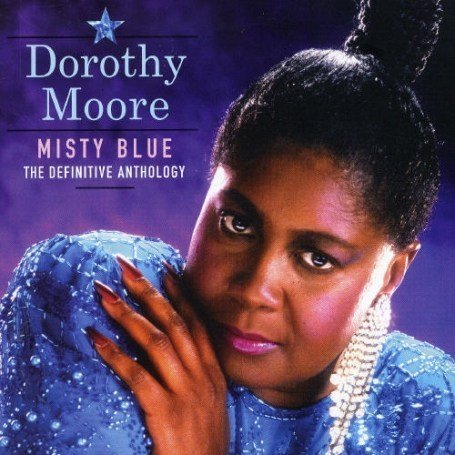
“I moved to Jackson and we continued our friendship,” Wolf said. “Tommy wanted to open a recording studio, so it started out here in 1967. The first success that we had was with Groove Me by King Floyd out of New Orleans in 1970. The next thing we had was Misty Blue with Dorothy Moore in 1976. In the early 80s, we were the beneficiary of a big downturn in the music business; Stax went out of business, Columbia Records pared back their artist roster,” Wolf said. “TK Distributors in Miami, who distributed our products, went out of business and all of a sudden we had to become an independent record company to get our records out. At the same time, lots of other labels cut back their roster. The artists who were doing blues and R&B didn’t have anywhere else to go, so they showed up here. We could record a record, get it manufactured and get it out, and they could call up anytime day or night. We were a small, close-knit group, so it worked.”
“Z.Z. Hill was our first big hit with Down Home Blues (1982). That was probably the biggest blues/soul album that had ever been released to that date, and here we were, a little bitty company and it cost us $8,000 to do the whole project. That song just exploded. That was like a magnet to all those other folks who were out there. His success brought Johnnie Taylor, Little Milton, Latimore (stage name of Benny Latimore), Bobby “Blue” Bland, Tyrone Davis and Denise LaSalle. We were at the right place when everybody else was cutting back.”
“We started with gospel in 1975,” Wolf said. “The Jackson Southernaires were a very hot group nationally. The thing about gospel groups back then and now, too, is that they had to be able to take some of their records when they went out on the road to sell them off the stage. And for the Southernaires, being with ABC Records, headquartered at that time in LA, it was hard for them to get the records on a timely basis. Again, they got caught in the cut-backs, too, and we were close by, they showed up, and that put us on the road to being successful in gospel music for a number of years.” But a dramatic downturn followed. “I never expected the record industry to get this bad,” Wolf said. “Piracy and counterfeiting have destroyed the industry. The computer has been a double-edged sword; we’re able to do so many things we couldn’t do before, but it also allows people to devastate your intellectual property rights.”
Burton Doss, Director of Information Technology at Malaco, said, “We had a bad time with the bootleggers; not so much the downloaders, who have hurt us some, but the bootleggers, in our industry, are really hurting us, but Malaco is adapting. Instead of fighting change, we have to embrace it by reaching out with new ventures, anything we can possibly do to reach our audience. We are signing a lot of P&D (pressing and distribution) deals in which the artists themselves do all the marketing and promotion, and we manufacture the product and place it in the major chains. A lot of the larger record labels won’t sign these artists who might only sell 250,000 to 500,000 units; well, we’ll have a party if we sell that much. So we’re signing these P&D deals in urban music,” Burton said. “We also have a lot of gospel artists who are unhappy with their labels who are coming to us to manufacture their product and get it out for them.”
“We have just signed a deal with Heavy D, from Heavy D & the Boyz, who was a big rapper in the 80s and 90s. He has a new album out called Vibes, a reggae album that was nominated for a Grammy Award this year. Lionel Ridenour, who has come to us from Arista Records, knew Heavy D and has a lot of good connections in the music industry. He called up Heavy D, who told him he wasn’t happy where he was at and wanted to look into something else, so Lionel said why don’t you come over to Malaco? We’ve also signed this guy named Ludy out of St. Louis, a rapper in the 90s. And we’ve signed a deal with B-Hamp. He’s got this song called Do the Ricky Bobby which was written up by Entertainment Weekly. When you think of Malaco, you think of the Mississippi Mass Choir, Johnny Taylor, Bobby Bland, so this is different, it’s new territory for us, but we’re excited.”
“We have the largest gospel music catalogue in the world, very good traditional gospel and new artists as well,” Burton said. “We have the Mississippi Mass Choir, Dorothy Norwood, the Georgia Mass Choir, a lot of quartets; we just did an album on the Soul Stirrers, who back in the day were the Soul Stirrers with Sam Cooke. Our catalogue business, meaning our repertoire of copyrighted songs, is very strong. We license a lot of songs to movies and other venues. We continue to grow the new business into new avenues. One avenue that we’ve started is that we’ve started an online radio station. Chances are, if you were to turn on the radio, you’re not going to hear blues or Southern soul. So we’ve started our own station, which is 24 hours a day, world-wide, southernsoulradio.com. You can hear the song, download it from iTunes and click to buy the album from our Malaco website. We want to make Malaco the one-stop shop when you think of blues, gospel or Southern soul.”
 The summer of 1966 was a magical time for Stockbridge; the Berkshire Playhouse had reorganized with an eye to becoming more than just a summer stock theater, attracting stars and would-be stars to the town. “Dustin Hoffman and Gene Hackman liked hamburgers with onion, green peppers, and an egg in them,” Alice writes. “Frank Langella was called ‘Mr. Mushroom Omelet’. Ann Bancroft was wonderful, and when her whole family came, I cooked giant meals; when they stayed late, she helped me clear the table.”