Pride and Potatoes

One day as a boy, a friend and I dared to enter his father’s tool shed, where among implements such as hammers, saws, screwdrivers, and girly magazines, we found a cabinet stocked with canned potato soup. When I asked why his daddy kept potato soup next to his chop saw, he said, “Momma won’t let him have it in the house.”

I was puzzled at the time, but now I understand. You see, a man’s house may be his castle, but his tool shed is his home, a sanctuary for the masculine spirit and as inviolate to intrusion as a nunnery. A man may keep things there which have no place in the house, even something as seemingly innocuous as potato soup.

Potato soup is neither good nor bad in itself; like Prince Hal, it is poor only in the company it keeps, and as is the case for so many of our foods, its company is often poverty itself. Memories of hard times survived among the men and women of my parents’ generation; after the hard years had ended and victory in the Good War made them members of the most affluent society on earth, they found themselves living in a world that stretched far beyond the dirt roads many grew up on, and they were obliged to learn the difficult lessons a newly-acquired middle-class life required of them.

For many, that meant ridding themselves of aspects of their lives that in this new world were not quite picture-perfect. Potato soup, to my friend’s mother, was not part of her perfect picture; it was Depression food, something people ate when they were poor and down on their luck. Now that they lived in town in a new brick house, had two cars in the garage, and she was secretary of the Twentieth-Century Club, potato soup —so simple, so basic, so very good—had been banished.

Others hearkened back, as my friend’s father did, to those days when a family’s existence was dependent upon making do. They also remembered—even as they trod the carpeted floors of the air-conditioned homes where their difficult children were growing into strangers in their midst—the foods they knew and loved, even if it were biscuits folded over a piece of fried streak-`o-lean they took to school, red-rind cheese and saltines from the store down the road, or chicken and dumplings made to stretch an old hen between ten people.

The foods you love best are often those of your childhood, and my friend’s father found the warmth of potato soup irresistible. I can still conjure up an image of this man sitting out in his shed and opening a can of soup, heating it on a little electric eye, eating it and thinking about his own Momma standing at her wood stove in a pair of old slippers, her hair limp with sweat and tied up with a penny piece of ribbon, cooking the only thing she had to cook—potatoes—into a soup for her family. I can also imagine this man reminiscing upon this while his wife teetered around the kitchen in high heels, her hair lacquered into a $5 hair-do she had redone twice a week cooking store-bought stuff on an electric range.

His wife herself probably remembered her Momma in much the same way as her husband did his, but for my friend’s mother it was a bitter memory, and her efforts to obliterate that—to her mind painful—image of poverty extended to those around her. Bound and determined to eradicate whatever she felt was coarse or common about her and others, she sacrificed upon the altar of her misguided pride the very foods that she secretly loved and learned to make at her mother’s side.

Daisy Duke Can’t Cook

Making quick breads is such a basic culinary skill that at one time those persistent legions of people who spend their time minding other people’s business sniffed their disapproval of a newly-wed husband’s bride by saying, “He married a woman who can’t even make biscuits.”

This specific example of cattiness carries with it a tacit understanding that mister didn’t marry his missus because she was a domestic diva, but for prurient reasons which were grounds for disapproval among matrons who could cook up a storm yet were inept or unwilling in arts which keep a man from taking up what was then referred to as “light housekeeping” with another woman.

Those were more genteel times. Nowadays, of course, those same people would just say he hooked up with a slut and be done with it, but there’s something to be said for polite prevarication: What it lacks in forthrightness is more than made up for in vicious subtlety.

Believe it or not, being able to cook was once a commodity on the marriage market, so much so that disgruntled husbands who settled for less than a buxom bimbo comforted themselves and others like them (honest, hardworking men, every one of them) by claiming that the cooking lasted longer than the loving. And while that might be true, there’s still something to be said for marrying a total tramp-in-training; after all, that’s what mothers-in-law are for.

Like many short bread recipes, the one for biscuits is more technique than ingredients. Getting the biscuits to rise well is key, and if you don’t follow a reasonable procedure, you’re going to end up throwing away a pan of hockey pucks. Biscuits shouldn’t be worked a lot; excess kneading makes the dough so dense that it won’t rise. Biscuits should also be cut out quickly while the dough is cool, and with a clean, sharp edge that will not pinch. Crowding the biscuits a bit also helps them to rise, but if you get them too close together the centers won’t bake through. Also make sure the oven is hot (450/475) before you put them on a rack in the upper third of the oven.

So, for all you floozies out there who need a bonus the morning after, here’s how to make biscuits. And if you don’t carry a skillet with you, well, you’re on your own.

Buttermilk Biscuits

Take two cups of self-rising flour and sift in dry a scant teaspoon of baking soda. Work thoroughly into this about 1/3 a cup of cold vegetable shortening. Mix with the fingers until it has an almost granular texture. Working quickly, stir in enough cold buttermilk (about a cup) to make a sticky dough. Throw dough on a generously-floured surface, sprinkle with a scant more flour and roll out very thick, almost half an inch, and cut into biscuits. Again, work quickly so that the dough stays cool(ish). Place biscuits just touching in a lightly greased skillet and pop them on the top rack of a hot oven for about a quarter an hour. You want them golden-brown and fragrant; brush lightly with butter while still hot and serve immediately.

Pearl Potatoes

Wash and clean two pounds very small potatoes. Blot dry, toss with oil seasoned with three cloves minced garlic and a tablespoon each of onion powder, salt, and pepper. Spread in a deep pan and roast at 350, stirring every five minutes or so until the larger ones are soft through. Toss with a light vinaigrette before serving.

Stuffed Peppers

Select mild thick-skin peppers that are globular rather than oblong, slice off the top, and remove whites and seeds; a lot of people parboil the peppers, but don’t. For a stuffing mixture, use a 50/50 blend of rice/meat or beans in a light tomato sauce seasoned with black pepper, sage, and basil. Crowd into a casserole, baste with more sauce and place in a medium (300) oven until peppers are cooked through. Baste again with sauce, top with dry white cheese and toast.

Dixie Kim Chee

Wash fresh turnips with greens well and shake dry. Peel roots and cut into chunks or wedges. Chop leaves and stems coarsely. Toss roots and greens with minced garlic, spring onions cut on the bias, and kosher salt. Let this sit for about half an hour, then sprinkle with a heaping teaspoon of ground cayenne pepper, red pepper flakes, or chopped fresh hot peppers for punch.

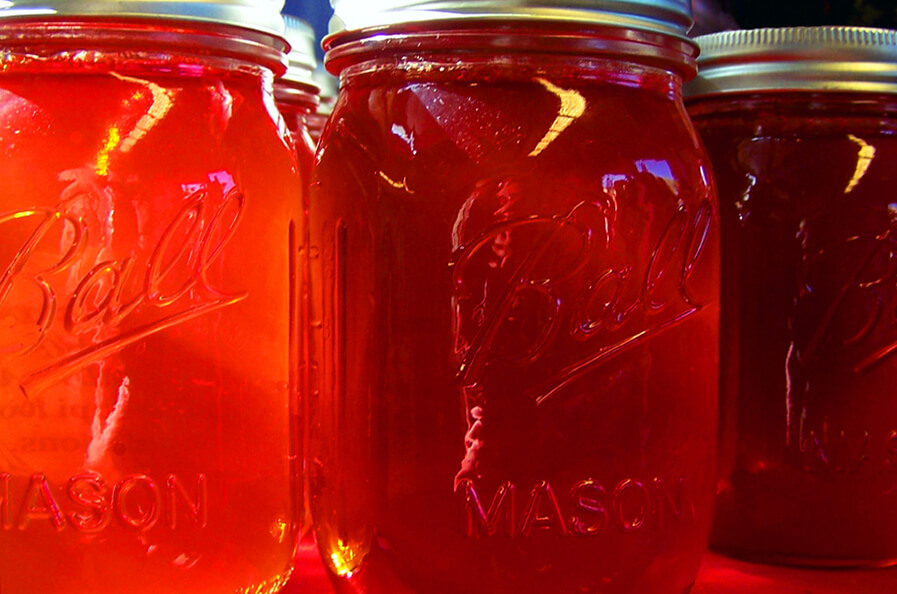
Toss again, then stuff mixture into clean glass jars, topping off with liquid from the bowl. Seal jars tightly, and set them in a cool dark place. In a few days, check to see if it’s fermenting; look for bubbles.  If bubbling, open the jar very carefully over a sink to let a little bit of the gas escape. Take care; if you’re rash about opening the jar, you might end up covered in juice. (This, children, is the the voice of experience speaking.) Reseal the jar, and let it sit for another day or so. Repeat the gas release and refrigerate for a week before serving.

Our Appalachian Table

Travis Milton, a native of Russell County, Virginia, high in the Alleghenys, became a chef on the East Coast. In 2010, at a New York restaurant, Milton was part of a group planning dishes that would “tell about who we are.” He wondered aloud about sourcing leather britches and greasy-backs, a type of beans common in mountain gardens.

The following afternoon, the head chef slapped a copy of Ernest Matthew Mickler’s White Trash Cooking onto Milton’s station. “He got in my face,” says Milton, “and started barking, ‘If this is what you wanna do in my kitchen then you can get the fuck out!’”

Having White Trash Cooking slammed in his face was a turning point. To overcome the stereotypes, Milton realized, he’d need to be able to tell the story of Appalachian food, but writing on the region’s cuisine was mostly focused on single mothers dressing up SPAM in a sugary sauce and other relatively recent ways that Appalachian cooks respond to the poverty that is, for most, coal’s legacy in Appalachia.

Then in 2016, Ronni Lundy published Victuals: An Appalachian Journey, with Recipes. Her work won the James Beard Foundation Book of the Year and Best Book, American Cooking awards. In Victuals, Lundy claims that European settlers adopted native Cherokee foods almost wholesale. Wild game, wild herbs and greens, nuts, and berries augmented produce from small gardens of beans, corn, and squash using the “Three Sisters” method.

Appalachians let animals range freely, keeping prized breeds adapted to the landscape. Settlers raised pigs on acorns, berries, and chestnuts, which produced the famous hams of Virginia, Kentucky and Tennessee. After the Civil War decimated the region, residents of isolated Appalachia embraced their gardening traditions, developing thousands of hybridized varieties of apples and pears, squash, tomatoes, collard greens, and other foodstuffs.

While Victuals established a benchmark, the font and source for Appalachian food writing is The Foxfire Book of Appalachian Cookery: Regional Memorabilia and Recipes. First published in 1984, Appalachian Cookery has little resemblance to any other publication involving Southern foods.

The Foxfire Project was the brain-child of Eliot Wigginton, a man from West Virginia who received an advanced education in the north and began teaching at a rural school in northeastern Georgia during the late 1960s. Called “foxfire” after a will-o’-the-wisp in mountain woods, his students collected folklore and customs in a series of oral histories that were first published in a 1972 anthology. Many more editions have followed as well as other volumes documenting Appalachian culture.

According to the text, some of the research and the photographic essays included in Appalachian Cookery were gathered for previous Foxfire books but were not selected for inclusion into an earlier volume. Appalachian Cookery stands out as the most complete and comprehensive record we have of the food, cooking and home life of southern Appalachia in early to mid-20th century. Most of the recipes are very simple; pound cake has four ingredients in equal measure. The book is also a primer on how to use homegrown or wild-gathered foods.

Appalachian Cookery opens a door to a world far away from arugula and alien to star anise, a world where cooking was simple but not coarse, having a balance and symmetry all its own, dictated by the lessons of long-ago voices set in concert with the rhythm of the seasons. For those of us from the upland South, these are our roots.

CRY-BABY COOKIES

Cream 1 cup plus 2 tablespoons shortening with an equal amount of sugar. Add one cup molasses and two beaten eggs. Sift together 4 ¾ cups plain flour with 1 tablespoon baking powder, 1 teaspoon salt and 1 ½ teaspoons soda. Then combine with 2 cups grated coconut, 2 cups chopped walnuts and 1 ½ cups raisins. Add dry ingredients alternately with 1 cup milk to creamed egg mixture. Drop by spoonfuls onto a greased baking sheet. Bake in a moderate (350) oven for 10 minutes. YIELD: approx. 7 dozen cookies.

Take a Leek

Before my ancestors were shipped off to Virginia for lampooning the local gentry and skipping out on enormous bar tabs, they lived in a beautiful country on the west coast of Britain known as Wales. After prolonged contention, Wales–like Scotland and Ireland–has been assimilated into the United Kingdom, but like her sister subjugates, Wales observes its own saint’s day, the Feast of St. David, on March 1.

It’s a crying shame that the blessed David’s feast has been eclipsed in this country by that humbug Patrick’s on the 17th; after all, compared to David, Patrick was second-rate. David was able to make the earth beneath him shift and rise, a truly impressive feat, whereas Patrick’s most notable claim to fame is the single-handed extinction of Ireland’s indigenous snakes. Not only that, but David was a true Welshman, a native of Cardigan, while Patrick himself was actually from Wales. His abduction by the Irish can be interpreted on many levels, none of which are remotely spiritual.

The Irish praise the potato (a 17th century import from America), but the Welsh glory in the leek, which has been cultivated in Britain for millennia. Welsh soldiers wore leeks to distinguish themselves into battle as early as the days of King Arthur, himself a Welshman. As a parting shot, let me add that daffodils, the national flower of Wales, strike a  brighter, more noble note in a vase than a bunch of tufted clover ever will.

Leeks are basically big-ass green onions, which place them in the important botanical family Alliaceae; all onions, as well as garlic, chives, shallots and their ilk, belong to this group of herbs. Leeks are a cool-season crop, which goes a long way to explain why they’re not a familiar item on the Southern sideboard, but I can usually grab a bunch (about three stalks) of leeks for about that many dollars any time of the year at my local supermarket. My Scots ancestors used chicken and leeks with barley in their jauntily-named cock-a-leekie soup. Leeks make a beautiful addition to any stir-fry (working well with peppers), and thin slices of leek in a quiche look nice and taste great.

Leeks also take exceptionally well to braising and are great in a gratin. Use about a half cup prepared leek per person. Cut away the roots and all but the last inch or so of the green away and wash very well. Slice and layer slices in a gratin or baking dish. Keep the seasonings simple, just a bit of salt and pepper, nothing more.  Cover with a cream sauce, a béchamel or better yet a Mornay. Place in a hot oven (375) until bubbling; fifteen minutes should do it. Serve hot with a liberal grating of good hard cheese.

Beth Ann’s Banana Bread

Cream a stick of butter with a cup of brown sugar. Blend in two beaten eggs, a teaspoon each vanilla and almond extract, and two very ripe mashed bananas. Using a whip, stir in a mix of 2 cups plain flour sifted with 2 teaspoons baking powder, and a teaspoon each baking soda and salt. Mix and add enough almond milk to make a smooth batter, a little on the thin side. Pour into a lined and oiled 9×5 loaf pan, and bake at 350 until the loaf pulls away.

Roast Hen

Those boulder hens in the supermarket freezer bins don’t take that long to cook and give a lot of good meat and drippings. Once you get one home and thawed, preheat your oven to 350. Pat the bird dry and season the cavity generously with salt and pepper. Rub the skin well with vegetable oil seasoned with salt, pepper, and a commercial herbal blend. Place chicken breast up on an oiled rack above a pan with enough water to cover the first knuckle of your thumb. Cover loosely with foil and cook until thigh is loose

Claiborne on Catfish

In 1981 catfish farming was booming, nowhere more so than right around Craig Claiborne’s hometown of Indianola, Mississippi. Claiborne was invited home to take a look at the catfish farms by Turner Arant, who built his first catfish pond in 1962. Arant helped organize Delta Pride Catfish Processors, Delta Western, Farmers Grain Terminal, Community Bank, and served on the board of each of these companies.

“(Claiborne) visited here in my home and I got my wife (Sybil) to prepare catfish for him four different ways,” Arant said. Claiborne returned to his home in East Hampton, where in addition to good ol’ fried catfish and hushpuppies, he and Pierre Franey worked up recipes for catfish meunière, catfish au vin blanc, and catfish Grenobloise.

Before he left Mississippi, Claiborne visited the Cock of the Walk in Ridgeland, Mississippi, which had opened the previous year. Claiborne mentioned the restaurant in a November column, declaring, “During my recent visit to Mississippi, I ate in what might be the best catfish restaurant in the state, and therefore the nation.” 

INDIANOLA, Miss.—Like most Southerners, I adore catfish. I remember that half a century and more ago my family would drive to the banks of Four Mile Lake near here and unload a picnic hamper. Gliding about on the water were small pleasure boats, many of whose passengers dangled fishing lines from cane poles, hoping a catfish would nibble. In the crystal-clear water, the lines could be seen all the way to the bottom. Many of the men word white linen suits and black string ties, and some wore white straw hats or boaters with wide brims. Some of the women carried parasols to guard their skin against that burning Mississippi sun.

Over the years catfish has remained a Southern regional specialty. But lately, thanks in large part to the abundant supply produced by catfish farms,” it has become more widely available. (Catfish will be available later this work at Shopwell Food Emporiums at 1331 First Avenue (71st Street), 1458 York Avenue (79th Street) and 1052 First Avenue (57th Street) in New York and 261 Ridge Street in Rye.)

I’m not certain that my mother, who was a marvelous cook, ever prepared catfish at home: she was too aristocratic for that. Red snapper, yes, it was basted for an hour or longer with a Creole tomato sauce made with chopped green peppers, chopped onion and celery (a friend of mine once called the combination of chopped peppers, onion and celery the holy trinity of Creole cocking). But catfish was too common, something to be enjoyed outdoors, as at those Sunday outings.

Eating deep-fried catfish was a ritual. The cooking was done in large metal kettles that were heated with long-burning logs. When the fat in the vats was extremely hot, the pieces of catfish were dredged in a blend of com meal (always white, never yellow). salt and pepper. When they were dropped into the fat, the vessel be. came a bubbling caldron until the fish were ready to be removed with perforated spoons and set to drain A catfish menu was and is today always the same: the com-meal coated catfish with its golden-brown crusty exterior and moist white inner flesh; deep-fried hush puppies, deep-fried potatoes and coleslaw. And tomato ketchup. Deep-fried catfish without ketchup is like a hot dog without mustard.

In the course of a recent visit to my hometown here, deep in the heart of the Mississippi Delta about 100 miles south of Memphis, I discovered that many of the farmers in the region are moving into the field of pisciculture converting their cotton and soybean acres into ponds that produce some of the sweetest-fleshed catfish in America. I would go so far as to say that it is the finest freshwater fish in America, including pike and carp. It is the equal of most saltwater fish, including lemon or gray sole. Fillets of catfish can be used in almost any recipe calling for a white nonoily fish.

In days gone by, the catfish that was eaten in this country was channel catfish that had spawned and thrived in muddy river waters. It was said that the catfish smacked of the waters in which it had swum, and this was true. The catfish that is raised in freshwater ponds is wholly different, remarkable not only for its flavor and texture but also for its non-fishy characteristics. Even after it is frozen and de frosted it remains snow white and as firm as when taken from the water.

During a visit to a fish-raising enterprise known as Delta Catfish, I was taken to numerous ponds for a look at the product known as Delta Pride. The ponds, which measure 20 acres square and are four or five feet deep, are filled with the fresh water for which the Mississippi Delta is famous.

The fish get a commercially prepared feed that is about 35 percent protein and no longer feed on the bottom. They are taken from the ponds directly to a surgically clean processing plant where they are skinned by machine. They are shipped around the country either fresh or frozen-whole, cut into steaks or as fillets. A Delta Catfish spokesman estimated that his company would produce 100 million pounds this year. Though Mississippi is by far the longest producer for the retail market, there are also farms in Alabama, Arkansas, Tennessee and Texas.

When I returned from Mississippi, I brought with me about 30 pounds of frozen catfish filets.  After they were defrosted overnight, Pierre Franey and I experimented over the next few days. converting them into many appetizing creations, from deep-fried catfish with hush puppies to catfish meunière and Grenobloise, and catfish in a white wine sauce. We also duplicated a dish I had dined on in a country home near Sunflower: catfish baked with cheese, the recipe of Sybil Arant.

Catfish Meunière

4 catfish fillets, about 2 pounds
¼ cup milk 4 cup flour
Salt to taste, If desired
Freshly ground pepper to taste y cup peanut, vegetable or com oll
tablespoons butter
Juice of ½ lemon
4 seeded lemon slices
2 tablespoons finely chopped parsley.

  1. Dredge the fillets in milk. Lift the fillets one at a time from the milk and immediately dredge on all sides in flour seasoned with salt and pepper to taste.
  2. Heat the oil in a skillet until quite hot. Add the fillets in one layer and cook about three minutes on one side or until golden brown. Turn and cook, basting often and liberally with oil, about six minutes.
  3. Transfer the fillets to a warm serving dish. Pour off the oil from the skillet. Wipe out the pan.
  4. Add the butter to the skillet and when it is foaming and starting to brown, swirl it around and pour it over the fish. Sprinkle with the lemon juice. Garnish the fish with lemon slices and sprinkle with parsley. Yield: 4 servings.

Catfish Grenobloise

Follow the recipe for catfish meunière, but add one quarter cup drained capers to the butter as it is being heated to pour over the fish.

Catfish Filets in White Wine Sauce

6 catfish fillets, about 2 pounds
5 tablespoons butter
½ cup dry white wine
½ pound mushrooms, thinly sliced, about 2 cups
Salt to taste, If desired
Freshly ground pepper to taste
2 tablespoons flour cup milk
Juice of a lemon
2 tablespoons grated Parmesan cheese
2 tablespoons finely chopped parsley

  1. Preheat the oven to 400 degrees.
  2. Pat the catfish pieces dry. Rub a baking dish (a dish measuring about 2 by 13 by 8 inches is ideal) with one tablespoon of the butter. Arrange the fillets over the buttered dish in one layer.
  3. Add the wine. Scatter the mushrooms over all and sprinkle with salt and pepper to taste. Place in the oven and bake 10 minutes.
  4. Meanwhile, melt the remaining butter in a saucepan and add the flour, stirring with a wire whisk. Add the milk, stirring with the whisk. When blended and smooth, remove from the heat.
  5. Pour the liquid from the baked fish into the sauce, stirring. Bring to the boil and cook, stirring often, about five minutes. Stir in the lemon juice. Pour the sauce over the fish and bake 10 minutes longer. Sprinkle with Parmesan cheese and parsley. Serve hot. Yield: 6 servings.

Deep-Fried Catfish

3 catfish fillets, about 1 pound
Fresh corn oil to cover cup white cornmeal
Salt to taste, if desired
Freshly ground pepper to taste
Lemon halves
Tomato ketchup
Hush Puppies (see recipe).

  1. Heat the oil for deep frying. 2. Cut each fillet in half crosswise.
  2. Combine the cornmeal, salt and pepper.
  3. Dredge the fillets in the cornmeal. Pat to make the cornmeal adhere. Drop the fillets in the oil and cook five to 10 minutes or until crisp and brown. Serve with lemon halves, ketchup and hush puppies. Yield: 2 to 4 servings.

Mustard-Fried Catfish

Follow the recipe for deep-fried catfish, but brush the pieces on all sides with mustard before dredging in cornmeal.

Hush Puppies

1½ cups white cornmeal 4 teaspoons flour 2 teaspoons baking powder
Salt to taste, if desired 1 tablespoon sugar ½ cup grated onion
1 egg, lightly beaten
1 cup rapidly boiling water
Fresh corn oil to cover.

  1. Combine the cornmeal, flour. baking powder, salt, sugar, grated onion and egg and blend well. Add the water rapidly while stirring. The water must be boiling when added.
  2. Heat the oil to 370 degrees. Drop the mixture by rounded spoonfuls into the oil. Cook until golden brown. Drain on paper towels. Yield: About 36.

Sybil Arant’s Catfish Baked with Cheese

6 to 8 cattish fillets, about 2 pounds
1 cup freshly grated Parmesan cheese
½ cup flour
Salt to taste, if desired
Freshly ground pepper to taste
1 teaspoon paprika
1 egg, lightly beaten
1 tablespoon milk
½ cup melted butter, sliced almonds.

  1. Preheat the oven to 350 degrees.
  2. Wipe the catfish dry.
  3. Blend together the cheese, flour, salt, pepper and paprika.
  4. Combine the egg and milk in a flat dish.
  5. Dip the fillets in the egg mixture and then coat with the cheese mixture. Arrange the fillets in one layer in a biking dish and pour the butter over al. Sprinkle with the almonds. Place in the oven and bake 20 minutes. Yield: 6 to 8 servings