
Raymond Courthouse
A Southern Gallimaufry
Ever since the Fall, no food has sparked more controversy than meat: some eschew it and even more restrict it, but meat, for most people, is what’s for dinner. By meat we mean red meat. The USDA considers all meat from livestock red because they contain more myoglobin (aka “red stuff”) than poultry or fish. For most people, this means beef or pork (yes, “the other white meat” is red), though sheep and goat as well game such as venison—and for that matter, whale—fall into the same category. Beef and pork in their various incarnations constitute a significant portion of our diets. An average American consumes 67 lbs. of beef and 51 lbs. of pork annually, most of it at home, meaning that the majority of people buy meat raw and cook it themselves.
 Most people do this without a great deal of fuss or bother. A cursory glance at the label is often all that the average shopper needs for a selection. But given the expense and importance of meats, care and discrimination is warranted when it comes to their purchase and preparation. A description of meats demands a language of its own, one based on cuts and quality. While the vocabulary of cuts requires a basic knowledge of quadruped anatomy (leg, back, etc.) in addition to an arcane phraseology stitched largely from antique versions of French and English (brisket and loin, for instance), quality descriptions of meats derive from strict, precise government standards imposed by the United States Department of Agriculture.
 Understanding this language requires instruction. Paul Koury, owner and operator of Paul Anthony’s Markets, says, “This business has been a huge teaching process from day one. When I first opened up, almost every customer was looking for a solid red piece of meat with no marbling, and that’s probably going to be your lowest grade,” Paul says. When it comes to the quality of meats, marbling is the key factor. Marbling describes those small streaks of white fat within the red lean muscle that are essential towards making any cut of meat tender and juicy. The degree of marbling is the primary determination of quality grade. A prime cut will have abundant marbling and a choice cut moderate, while a select cut (the lowest marketed grade) will have only slight marbling, making the meat tough and dry.
“I have a few pieces of choice rib eye that I’ve prepared in a display tray with a prime rib eye to educate people in the difference between the marbling. Less than 3% of all beef in the United States rates a prime grading.” Paul says that supermarket chains are not an ideal place to shop for the best cuts of meat. “Most supermarkets aren’t even cutting their own products locally. Kroger, for instance, has most of their meats cut in Cincinnati and then shipped out.” Paul explains that their reasoning behind this is the liability factor in using saws and other cutting instruments in their stores.
The practice of aging beef is another factor contributing to flavor and tenderness. “All of my prime beef is wet aged, vacuum-sealed in a package in its natural juices. Wet packaged beef will have a stamp that tells me how many days it has been aging since the slaughter. Dry aging is a whole different process,” Paul says. ”Humidity and temperature are keys. Every product is out of the bag with no liquid around it, and the enzymes are breaking down the meat, making for a really rich flavor.” Paul explains that quality pork is the product of a nationwide program in which farmers are raising heirloom breeds of swine without using hormones or strong antibiotics. Sometimes referred to as heirloom or heritage breeds, examples in the marketplace today include Berkshire (also known as Kurobuta, meaning “black pig”), Duroc, and Tamworth “There’s an amazing difference in the taste and tenderness between this pork and what you’d find in most supermarkets,” Paul says. .
 Pork has become a “foodie” fad. Dan Blumenthal, chef at Bravo! Restaurant, says, “It’s interesting. I really don’t understand why pork is trendy now. But there’s a lot of pork meat that doesn’t have a lot of fat on it and can be used like veal or chicken; the tenderloin, for example.” Dan points out that some bone-in cuts of meat are also coming back. “They’re introducing cuts with the bone in it, for various reasons. Meat really does taste better if it’s cooked with the bone, and if you cut it right, there’s not that much work to do. I also serve a chicken breast, called the airline breast, with the wing bone still in it,” Dan says. “It’s essentially the drumette once you take the breast off.” When it comes to cooking methods, “You’re going to get the best flavor out of grilling,” Dan says, “but unless your grill is really hot, I’d prefer pan-searing, dry-rubbing the meat and almost “Pittsburgh-ing” it (meat cooked “Pittsburgh style” is charred on the outside and juicy on the inside). I don’t use a dry skillet; you need oil in the skillet to conduct the heat.”
 As to a meat sauce, Dan says, “Here is where it gets a little bit tougher. One of the easiest things to do if you’re cooking meat is to take the pan juices and reduce them with a little red wine if it’s a dark meat or white wine if it’s a light meat, then finish with butter. Short of that, if you’re grilling, for instance, you’re going to need some sort of stock,” Dan says, “and unless you can get veal bones and you know how to make a beef stock, most people can use a lighter or darker chicken stock and get away with it, and chicken bones are pretty easy to come by. Brown the bones in the oven with seasonings and aromatic vegetables, then add liquids to complete the stock. You’re not going to get something that’s as rich and dark (as a veal stock), but it might suffice, especially if you cook it down and add red wine or a little tomato paste.”
Then there are marinades and dry rubs. “Marinades flavor and tenderize meat,” Dan says. “A marinade normally incorporates an acid, which is a natural tenderizer, whether the acid is wine or vinegar, lemon juice or lime juice. For a tougher piece of meat you’d want the marinade to penetrate more. But if you’re cooking a rare piece of meat, and the marinade penetrates too far, the acid will cook the meat, and it will soak up the marinade like a sponge, giving the meat a different texture. Dry rubs are another excellent way to flavor meat,” Dan says. “You always want salt and pepper; something with a little heat, like different types of peppers, then some dried herbs like rosemary, oregano or fennel as well as powdered onion, garlic and paprika.” Dan recommends that any cut of meat, once cooked, should rest for a few minutes before carving or cutting.
Pork Saltimbocca
12 oz. pork tenderloin, sliced into 6 medallions and pounded thinly
6 thin slices prosciutto
6 large fresh sage leaves
Dredge pork in all-purpose flour seasoned with salt and black pepper. Arrange 1 prosciutto slice over pork. Top with 1 sage leaf and spear with a wooden pick. Heat about 1/4 cup extra virgin olive oil in a sauté pan, add pork and brown lightly. Remove pork; add about a tablespoon of finely chopped shallots and a teaspoon of garlic. Add about 1/4 cup each white wine and chicken stock to pan, cook until reduced by about half, finish with about a tablespoon unsalted butter. Arrange pork on a warm plate and drizzle with pan juices. Serve immediately.


The end of the world is stone,
pitted with little bones, waves
going this way and that, a moon
on a pole, and Africa in the distance,
afire. I have come a fur piece.

This is kin to borscht, but a lot more accessible to people like me for whom a little bit of beet goes a long way. I’ve always been taken aback that cucumbers are so popular in northern Eurasia, which is typically all cabbage and turnips to me, but you’ll find okroshka in cuisines from the Baltic to the Black Sea. Despite its humble origins, okroshka is a colorful, appealing way to serve fresh summer vegetables.
Combine 2 cups diced lean cold meat (chicken, ham, beef, or fish), 2 cups diced cucumbers—use farmers’ market or “English” cucumbers, not those bloated, watery things in the supermarket—2 cups diced boiled potatoes, a small bunch of minced fresh dill, and one chopped bunch of bruised green onion. I usually peel the cucumbers but not the potatoes Add a diced boiled carrot and a couple of chopped or very thinly sliced radishes. If you have a beautiful right-out-of-the-garden tomato, slice it, drain it, dice it and throw it in. Everything should be in small pieces; think of a Nordic gazpacho. Boil six eggs, chop the whites, and add to the mix. Mash the yolks with a half cup of sour cream or yogurt, and mix with a cup of buttermilk. Add dairy mix to other ingredients along with two or three tablespoons of a Dijon or brown mustard. Add more buttermilk—kefir, if you happen to have some on hand—or rich (preferably jellied) broth and sour cream in parts to make a thick soup. Salt to taste, stir in the juice of half a lemon, and refrigerate for at least an hour or longer. Longer is better. Serve with garlic toast and sour cream. Keeps in the refrigerator for 3 days.

Monette and Tom Young named me James Morgan: James, after both my uncles; and Morgan, my Mother’s maiden name. My parents and my two sisters and I grew up in Calhoun county in north central Mississippi where our ancestors have lived for almost 200 years. I went to three different high schools in the county since Mother had to move about to work as a nurse after my father died unexpectedly in 1946. After earning an engineering degree at Mississippi State and a commission through the Air Force ROTC program, I was called to active duty immediately and became a career officer, spending 28 years before retiring as a Lt. Colonel. My last active assignment was in northwest Florida, and I have lived here ever since.
Mother was born in 1915 and was a lonely only child, her little brother having died shortly after he was born. She grew up on her parents’ isolated small farm in the hills on the edge of the Reid Community in northeast Calhoun county. An early settlement in this area had been called Cherry Hill but it had vanished by the time Mother was born. This area included rich farmland in the Skuna River bottom area and smaller farms in the hills south of the river. The white settlers here were primarily of Scots, Irish, Welsh, and English heritage, coming mainly from Virginia and the Carolinas and traveling through Alabama and Tennessee to get here as the Chickasaw Indians were forced to move to Oklahoma in the 1830s. Most of these arriving families were large, as were needed to raise the crops and cattle needed for basic living. As the number of settlers increased, churches were organized and the small amount of community social life here revolved around Rocky Mount and Poplar Springs Baptist Churches organized in the mid-1800s. Schools were small, one-roomed, one teacher, even in the early 1900s. Monette’s mother Eula was one such teacher at whatever school in the area needed her. During the school months she and Monette often boarded with a local family and got back to their home only on weekends.
Mother loved to read and to listen to older family and friends tell their stories about their growing up days in the 1800s. High schools were beginning to be established and she attended one year at the county Agricultural High School at Derma and then finished her high school at Vardaman, boarding with a local family there. Vardaman High School is where she met Tom Young and they married while both of them were still teenagers. They began their married life in Vardaman and their three children were born there. Tom died unexpectedly in his sleep in 1946 shortly after returning from WWII service and Monette began working to support her children. She became a Licensed Practical Nurse in a small local clinic and eventually moved to Memphis to get a better position.
Her interest in the community and people of her youth continued and was intensified in her middle years. Some of her older kinfolk were also living in Memphis and she began to work with them to learn and document all that they remembered about Reid and the families there. She used the library facilities in Memphis for her research and corresponded widely by phone and mail with folks who had lived in the Reid area or who had information about that area that they would share. She, her cousin Clarence Morgan, and her grandson Jesse Yancy III walked through many of the graveyards where ancestors, kinfolk, and childhood friends were buried. She taught herself to do genealogical research and was one of the charter members of the national Murphree Genealogical Association, her mother’s family line.
Her handwriting was hard to read (she said it was because her mind was so much faster than her writing), so she bought a typewriter and taught herself to type. However, most of the letters she sent me were handwritten because she knew that I could easily read them. Over the years she had occasionally sent me information about our family history and genealogy, but in the 1980s she began to send much more. She said that I might not be all that interested in the history of our family and the community where she grew up, but that my children or grandchildren might. I was impressed by what she was sending and, as my interest grew, I realized that, with a little editing, this material would make a great book.
I began that task as a surprise for her next birthday. It took a while for me to type all that she had sent. I used an early early form of word processor that was available in my job and worked at this after hours and on weekends. After I got it all typed, I went through and rearranged the material into logical groupings and added a few photos and maps and a comprehensive index. I also included a census of the Poplar Springs Cemetery which had been created by her cousin Clarence and his family. She had added a significant amount of genealogical information to this census and it seemed to fit perfectly as an appendix to the book.
I put the information about the families of the Reid area, the history of the community itself, the importance of the Poplar Springs church, and her memories of the community life in the first part of the book. In the second half, I put her detailed memories of her daily life as she was growing up on the small farm during the time of World War I and shortly afterwards.
She was delighted with the book and said that if she had known what I was going to do she would have added this or that and she would not have said this or that. So I revised the book to make those changes and gave her the original and several copies, keeping a couple for myself. She suggested that it be titled “The Cherry Hill – Poplar Springs – Reid Community in Calhoun County, Mississippi”.
Over the following years as people heard about the book, she made about 100 photocopies of it which were provided, for the cost of copying, to anyone who asked for one.
Mother died in February 2000 in Jackson, MS, where she had moved to be near her daughter Barbara. Her funeral was in Vardaman, and I was surprised at the number of people who attended. Many told me that they had not known her, but loved her book and wanted to pay their respects.
A few months later, I updated the book into a second edition to include a few additional changes and a few corrections that she had mentioned, and had 200 copies professionally printed. Copies were donated to the libraries in Calhoun County and to the Mississippi collections at Mississippi State and Ole Miss. The other copies were sold for the cost of the printing. When those had been sold and I found that people were still asking for copies, I made it available through Amazon.com for the price of printing plus a small royalty fee which is donated to the Calhoun County Historical and Genealogical Society. I also made it available for download at no charge as a PDF from several places on the internet.
From reviews and comments that I’ve received from librarians and readers, this book has become a unique and well-regarded resource for information about the history of this part of north Mississippi, of the Reid and Poplar Springs area, and of the people who settled there. It turned out to unusual in the amount of detail it provided about those times and places. One person who bought the book from Amazon wrote: “If you come from this area, it is a must have. I often use this book for reference. Many references to my ancestors among the area. The writing is very easy to read and enjoyable. It is like sitting listening to my grandmother or mom tell stories of the past.”

This recipe comes from my friend Jerry Bullard. He is among the few people in north Mississippi who not only appreciate the culinary heritage of our area, but are preserving and practicing it as well. This recipe is from his great-grandmother, Tempie Mills.
Chili Sauce by Mama Mills
This is a long cook recipe (8 hours). I cheated and ran the ingredients through a meat grinder, but Mama Mills had to do this by hand with a knife.
24 ripe tomatoes washed and decored
12 large onions peeled and quartered
10 hot peppers
1 cup sugar
1 cup vinegar
1 tsp salt
1 tsp black pepper
4-5 cloves garlic mashed
1 tsp cinnamon or nutmeg
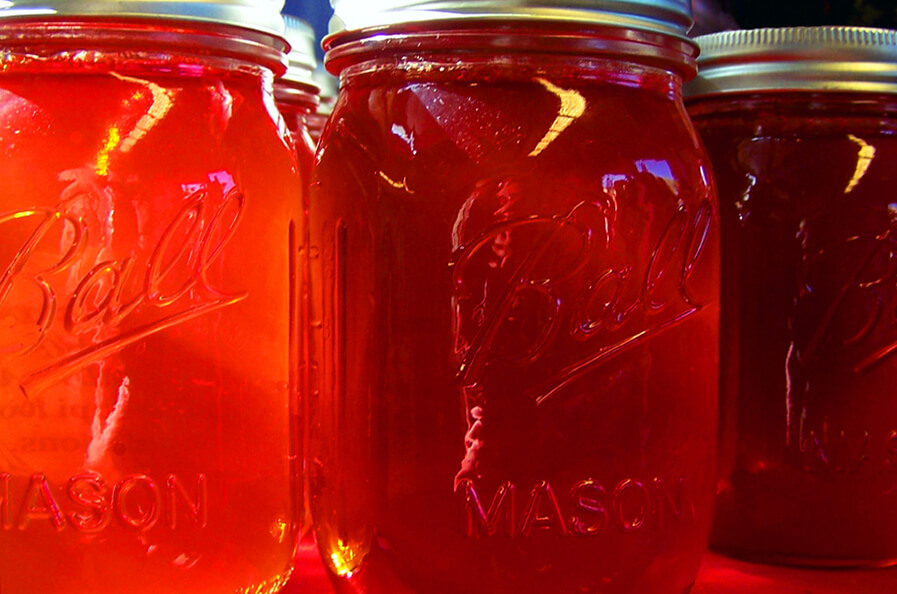
Add all ingredients to a large heavy bottom or cast iron pot and bring to a boil. Now the work begins; simmer until very thick, stirring most of the time. This will take several hours. If you burn this it is junk. When cooked, have sterile canning jars and lids ready, fill jars and process in boiling water canner for 15 minutes. Good stuff!

Dear Janice,
It’s been just hot as hell here lately, and the tomatoes have been making like I’ve never seen. Hugh says it’s because you gave us those hose to tie up the plants. He said they’re flexible and they don’t cut into the stem like string would. He doesn’t know I found some in the bottom dresser drawer in the spare bedroom, but I wanted you to.
Your devoted sister,
Doris

In this short excerpt from his Journals, artist and naturalist John James Audubon, who knew the older cities of the state on the Mississippi well, describes his only visit to Mississippi’s new capital city on the Pearl.
May 1, 1823 – “I left the bayou on a visit to Jackson, which I found to be a mean place. The hotel atop the bluff was the lowest sort of dive, a rendezvous for gamblers and vagabonds. Disgusted with the place and the people, I left and returned to my wife in Natchez.”
Contemporary visitors echo Audubon’s impressions; Anthony Bourdain called it a “ghost town.” Jackson is still a mean place, in every sense of the word, crippled by petty avarice and racial tension.
