Edwardian Jackson

I am not from Jackson, nor (even worse) am I from Belhaven. This relegates me to troglodyte status as far as the city’s natives are concerned, but before you begin casting aspersions (or something sharper and heavier) let me assure you that Seta Sancton’s The World from Gillespie Place goes a very long way towards explaining why I and others love it so.

Given my primeval ignorance, of course I had to find out who Mrs. Sancton was, and given that I know so few people here, I decided to simply do what I do best and research the matter. This eventually led me to contact Tom Sancton, who among other things is former Paris bureau chief for TIME magazine, professor of journalism at the American University of Paris, Andrew Mellon Professor in the Humanities at Tulane, and a jazz clarinetist to boot. He’s also likely to be one of those irritating people who complete the NYTimes crossword even before they finish their second cup of coffee. In response to my query, Mr. Sancton wrote:

Dear Jesse,

Seta Alexander Sancton (1915-2007) was my mother. She was born in Jackson, on North State Street, into a prominent local family (Whartons on mother’s side, Alexanders on father’s side). Her father was Julian P. Alexander, a graduate of Princeton and Ole Miss law school, and an associate justice on the Mississippi Supreme Court. She graduated from Millsaps College, where she was a member of Chi Omega. She was a close personal friend of Eudora Welty, a neighbor from childhood. (My mother’s family lived first on Gillespie Place, then at 1616 Poplar Blvd; Eudora was on Pinehurst.) Seta married my father, New Orleans journalist and novelist Thomas Sancton, in 1941. They lived mostly in New Orleans and had three children of which I am the youngest. When my mother was in her 70s, she decided to write down some family stories and memories for her children and grandchildren. She started jotting down stories on notepaper, the back of envelopes, whatever she had at hand, adding stick figure illustrations as she went along. The result was the book you have in hand. In the 1990s she recorded readings of some of the stories.
Best regards,

Tom Sancton

Seta’s book is the memoir of city full of “sugar and spice and everything nice”, of June bugs and fig trees, lavender crepe myrtels and magnolia musk, braided biscuits, sidewalk parades, and ragtime on the Victrolas. “Though Edward VII was no longer on the throne,” Seta writes, “the temper of the times remained Edwardian for our mothers, our grandmothers and for us children.”

The World from Gillespie is a world where maids took children to Smith Park for play on the swings and slides, feed the swan, and eat sugar cookies in the miniature Greek pagoda. Home libraries offered volumes of Dickens, Thackeray, Tennyson and the best-selling works of Zane Gray. Gillespie Place itself was a new subdivision off State Street, and having a mother who was Episcopal and a father who was a Presbyterian was awkward. Going to the state fair was a landmark event as was going downtown to eat at the Bon Ton, the Pantaze, or the Edwards House.

Seta’s eyes are filled with the genteel character of Jackson during the 1920s. Yes, of course poverty and oppression were rife at the time, but those and other unpleasantries such as war and epidemics are set aside for bridge luncheons, birthday parties, dragonflies, and swimming in Livingston Lake.

I’m charmed by this picture of Jackson’s past, watch for glimpses of it now, and see it every day. Memory, my children, is a living thing.

Malaco: Goin’ with the Flow

Mississippi is famous as home to many of the most celebrated musical artists of the last century, but few know that Mississippi—and more specifically Jackson—was home to at least three  renowned recording companies: Trumpet, Ace and Malaco Records. The Trumpet and Ace labels have long since passed into legend, but Malaco Records, founded by Tommy Couch, Mitchell Malouf, and Gerald “Wolf” Stephenson, is still making music on Northside Drive in Jackson.

“The basic story for Malaco was that we loved R&B music,” Wolf said. “Tommy is from the Muscle Shoals area, and he grew up with all those guys who became big in the recording industry there. When he came to Ole Miss, he started booking bands for the fraternity parties to make extra money. He graduated the semester ahead of me, moved to Jackson and talked his brother-in-law Mitch Malouf into continuing the booking agency. The name Campus Attractions was what he had used, but someone else was using that name, so he and Mitch tossed various names around until his mother-in-law suggested they combine the two names Malouf and Couch into Malaco.”

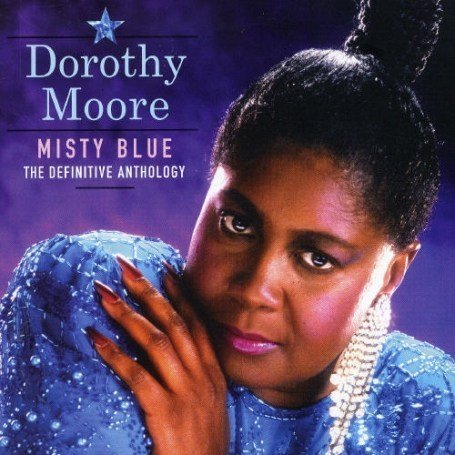
“I moved to Jackson and we continued our friendship,” Wolf said. “Tommy wanted to open a recording studio, so it started out here in 1967. The first success that we had was with Groove Me by King Floyd out of New Orleans in 1970. The next thing we had was Misty Blue with Dorothy Moore in 1976. In the early 80s, we were the beneficiary of a big downturn in the music business; Stax went out of business, Columbia Records pared back their artist roster,” Wolf said. “TK Distributors in Miami, who distributed our products, went out of business and all of a sudden we had to become an independent record company to get our records out. At the same time, lots of other labels cut back their roster. The artists who were doing blues and R&B didn’t have anywhere else to go, so they showed up here. We could record a record, get it manufactured and get it out, and they could call up anytime day or night. We were a small, close-knit group, so it worked.”

“Z.Z. Hill was our first big hit with Down Home Blues (1982). That was probably the biggest blues/soul album that had ever been released to that date, and here we were, a little bitty company and it cost us $8,000 to do the whole project. That song just exploded. That was like a magnet to all those other folks who were out there. His success brought Johnnie Taylor, Little Milton, Latimore (stage name of Benny Latimore), Bobby “Blue” Bland, Tyrone Davis and Denise LaSalle. We were at the right place when everybody else was cutting back.”

“We started with gospel in 1975,” Wolf said. “The Jackson Southernaires were a very hot group nationally. The thing about gospel groups back then and now, too, is that they had to be able to take some of their records when they went out on the road to sell them off the stage. And for the Southernaires, being with ABC Records, headquartered at that time in LA, it was hard for them to get the records on a timely basis. Again, they got caught in the cut-backs, too, and we were close by, they showed up, and that put us on the road to being successful in gospel music for a number of years.” But a dramatic downturn followed. “I never expected the record industry to get this bad,” Wolf said. “Piracy and counterfeiting have destroyed the industry. The computer has been a double-edged sword; we’re able to do so many things we couldn’t do before, but it also allows people to devastate your intellectual property rights.”

Burton Doss, Director of Information Technology at Malaco, said, “We had a bad time with the bootleggers; not so much the downloaders, who have hurt us some, but the bootleggers, in our industry, are really hurting us, but Malaco is adapting. Instead of fighting change, we have to embrace it by reaching out with new ventures, anything we can possibly do to reach our audience. We are signing a lot of P&D (pressing and distribution) deals in which the artists themselves do all the marketing and promotion, and we manufacture the product and place it in the major chains. A lot of the larger record labels won’t sign these artists who might only sell 250,000 to 500,000 units; well, we’ll have a party if we sell that much. So we’re signing these P&D deals in urban music,” Burton said. “We also have a lot of gospel artists who are unhappy with their labels who are coming to us to manufacture their product and get it out for them.”

“We have just signed a deal with Heavy D, from Heavy D & the Boyz, who was a big rapper in the 80s and 90s. He has a new album out called Vibes, a reggae album that was nominated for a Grammy Award this year. Lionel Ridenour, who has come to us from Arista Records, knew Heavy D and has a lot of good connections in the music industry. He called up Heavy D, who told him he wasn’t happy where he was at and wanted to look into something else, so Lionel said why don’t you come over to Malaco? We’ve also signed this guy named Ludy out of St. Louis, a rapper in the 90s. And we’ve signed a deal with B-Hamp. He’s got this song called Do the Ricky Bobby which was written up by Entertainment Weekly. When you think of Malaco, you think of the Mississippi Mass Choir, Johnny Taylor, Bobby Bland, so this is different, it’s new territory for us, but we’re excited.”

“We have the largest gospel music catalogue in the world, very good traditional gospel and new artists as well,” Burton said. “We have the Mississippi Mass Choir, Dorothy Norwood, the Georgia Mass Choir, a lot of quartets; we just did an album on the Soul Stirrers, who back in the day were the Soul Stirrers with Sam Cooke. Our catalogue business, meaning our repertoire of copyrighted songs, is very strong. We license a lot of songs to movies and other venues. We continue to grow the new business into new avenues. One avenue that we’ve started is that we’ve started an online radio station. Chances are, if you were to turn on the radio, you’re not going to hear blues or Southern soul. So we’ve started our own station, which is 24 hours a day, world-wide, southernsoulradio.com.  You can hear the song, download it from iTunes and click to buy the album from our Malaco website. We want to make Malaco the one-stop shop when you think of blues, gospel or Southern soul.”

Bridge of Tears

These guys across from the train station were listening to MLK’s last speech, the part that mentions the parable of the Good Samaritan. As I sat on a bench, King’s voice ringing in my ears, a man sat next to me. “Haven’t had a job in seven years,” he said. “My whole family is gone now; momma, daddy, sister and brother. I just keep going. I don’t know why, but I do.” I gave him one of my two dollars, went and sat under the rail bridge and cried my eyes out. I don’t know why, but I did.

One Direction Home

“South Jackson as a place begins at 2155 Terry Road, the address of the city’s oldest home. It is the last remaining plantation house in the area. Today, an anomaly, a handsome Greek revival structure with Doric columns standing near Interstate 20’s cloverleaf, commercial enterprises and the decay of the Highway 80 Corridor.”

And so begins One Direction Home: A History of South Jackson, by Dr. Vincent Venturini and former city commissioner Doug Shanks. Shanks recounts that the work began with a question: Were his fond memories of growing up in south Jackson just nostalgia, or was south Jackson truly a special place? The answer is, of course, yes and yes. There’s nothing wrong with nostalgia, particularly that of the sort leading to such a wonderful work as this. At once scholarly and informal, poignant and piercing, One Direction Home entertains and informs on many levels.

U.S. Highway 51 splits in Jackson, ending on South State Street to the east, and starting again on Terry Road some two miles to the west. When Terry Road emerges from the cloverleaf south of Highway 81, atop a broad ridge sits the Carmelite monastery housed in the aforementioned Greek revival home formerly owned by the Myrant family. The Myrant/Lester home is a focus for an early history of south Jackson, which is integral to that of the city and of Hinds County. Terry Road (Hwy. 51) provides an axis for the geography of the area, which Venturini describes as, “somewhat porous, but we largely see south Jackson as beginning at Highway 80 and extending south to Lake Catherine and west to Mississippi Highway 18.”

“The eastern boundary is the Pearl River,” he added. We are also including Provine High School from its beginning until 1968. Although Wingfield High School opened in 1966 for students in the city’s southern section, those already enrolled in Provine were allowed to finish there. As pointed out in Doug’s Preface, Shoney’s is included as a south Jackson institution given the role it played in the lives of our contemporaries.”

And the time? While an early history is presented, Shanks claims, “What follows in the coming pages is a largely nostalgic visit to south Jackson as it existed between 1945 and 1975.” All Jacksonians will recall landmarks such as the Alamo Plaza, the “Chuc-Wagun”, the Frost Top, the Green Derby, Leavell Woods Park, Cook Center, Mart 51 and the Zodiac. They will also recall, among the many prominent south Jacksonians mentioned, Farmer Jim Neal of WSLI, Woodie Assaf of WLBT, “Skipper” Dick Miller of WJTV, Andrew Mattiache, and Walter Bivins.”

“The neighborhoods, the churches, the schools, the streets, parks, and other elements that compose a city are part of this wonderful weave,” he adds.

The book has scores of wonderful photographs, and has a reassuringly extensive and detailed bibliography with notes. One thing, though; Shanks and Venturini spend an inordinate time mentioning the proletarian reputation of south Jackson. This apologia is distracting, superfluous, and, most importantly, unnecessary. Let’s bear in mind that this is not Natchez, nor Vicksburg, but Jackson, Mississippi, a city no less a cosmopolitan than Audubon described in 1823 as “a mean place.” Sure, you’ll find people who will tell you one Jackson neighborhood is “better” than another, but many an outsider has found the entire city déclassé if not to say destitute.

While no doubt many former and current south Jacksonians will find flaws and omissions (that assuredly only they could detect) all can celebrate this loving portal to backyard barbecues, high school football games, and drive-ins.

From Frontier Capital to Modern City: A History of Jackson, Mississippi 1865-1950

“When were Jackson’s historic neighborhoods developed?” “How did the city grow during different historic periods?” “What did Jackson look like as it evolved from the nineteenth to the twentieth century?”

The answers to these and thousands of other questions are found here, in From Frontier Capital to Modern City: A History of Jackson, Mississippi’s 1 Built Environment, 1865-1950. While the document is not dated, it was likely published sometime in 2000.

This project must have taken several years, drawing upon the resources of the Mississippi State Archives, Mississippi Department of Archives and History (MDAH); the Records Management Division of the City of Jackson; and private collections of photographs from local citizens.

A key player in this effort was Helene Ascher Rotwein—whose job in Jackson’s Department of Planning and Development was no doubt instrumental—and other members of the LeFleur’s Bluff Historic Foundation.

Though there is no index, the table of contents is incredibly detailed, as are the references cited, and the voluminous footnotes are incredibly precise. Click on the map below to access the work.

Genius Loci

Academics often deride local history as poorly-researched, ill-written, and insular.

This criticism can and is levelled at history written on any level, but who can scorn local research as insufficient when so little material is in place? As to poorly-written, hell, even Gibbon can go on like he’s working with an empty bottle of port at his elbow. As to insularity, who can say that the storming of the Bastille isn’t local history to Parisians or the Beer Hall Putsch isn’t to Munich?

The least motes of history forge the narrative, and in the smallest arenas of mankind we find a locus of the whole. Let us treasure those who compelled by their love of place put before us a likeness of how it was before our time, helping us learn who we are, revealing how this part of the world shapes our lives.

A History of Greater Belhaven is available at the Greater Belhaven Neighborhood Foundation in Jackson, Mississippi.