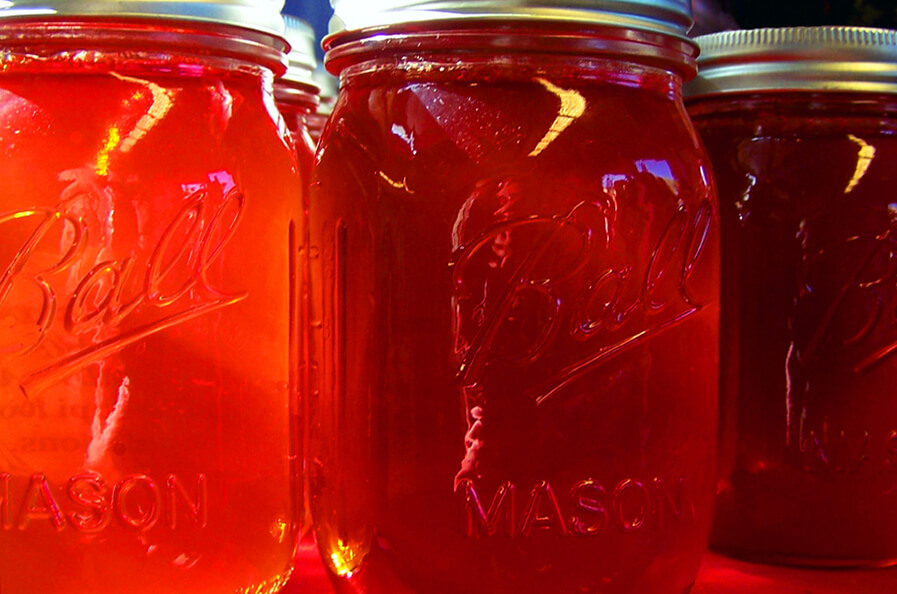
This delightfully warm and rambunctious account of a political barbecue in Mississippi was submitted to the Federal Writer’s Project in the early 1940s. It’s not such a stretch to imagine that the excoriating political jargon may well have been patterned after one of T.G. Bilbo’s more vituperative speeches. Finding that the cook and I share a surname was a pleasant surprise, but entirely coincidental.
Just as sure as taxes come due before the year is out, politics comes of age in Mississippi ere fall settles down. Our crop has been made and, plow-weary as the soil itself, we take to politics like some folks take to drink. It’s the only sure-fire emotional outlet we know.
An office seeker with his nose to the wind senses that this is the time to ply his trade. Being one of us he knows that the voting fruit is now growing in bunches and ready for the plucking. ware, too, that the common run of old-time picnics is as dead as last year’s boll weevil, he gathers his, cohorts about the conference table, calls for a pooling of resources, and schemes up a barbecue. For, voting year or not, Mississippi politics takes on the nature of an epidemic and we rely on the mass eating of barbecued meat as a counter-irritant.
Even the novice candidates are invited to show what they can do, but the cook and the principal speaker should be old hands, famous for miles around, for we have a long way to come and the fare must be to our liking. Certainly, if the candidate for high office is one of our most famous and able villifiers, and if the pit artist is Bluebill Yancy, we’ll be there.
Bluebill is a black man with a head like a cypress knee. They call him blood brother to the Ugly Man, but if he’s short on looks, he’s long on cooking, and barbecue meat is his specialty. Bluebill and his henchmen are hard at work when we arrive on the grounds so we know that the weather, at least, is favoring the candidates. For Blue bill works according to the stages of the moon and has been known to call the whole thing off at the slightest show of thunder on cooking night. We pass the time of day with Dicey, Bluebill’s wife, who isn’t allowed within smelling distance of the pit until she sees Bluebill sharpen up his knives for the carving; the meat can’t “breathe freely” with a woman cook around.
We pay our respects to Uncle Si Curtis who has already nailed a plank between two trees for his lemonade stand. Uncle Si is one of the best singing school leaders in the county, and when he swings into “Mercy’s Free,” where it says “Swell, oh, swell, the heavenly chorus,” he can be heard as far away as the old burnt schoolhouse. Using the same technique to drum up trade for his spring-water lemonade, he leans against a tree and opens up:
“Ice cold lemonade! Made in the shade, Stirred with a spade, Good enough for any old maid!”
Uncle Si’s crowd thins out as the preliminary speaking begins. We listen to the soaring oratory with one ear and the sizzling of Bluebill’s meat The beef has been cooking all night over the embers of green hickory wood and its peppery odor has had our nose twitching since we first drove up. Bluebill’s pit is a ten-footer with wire mesh stretched over a fire coaxed down to smokeless coals. We pace the pit with him on one of his endless rounds — up one side to turn the meat, down the other to baste it with his mopping sauce. As the moist, brown hunks of beef approach perfection, Bluebill continues his rounds, proud as a monkey with a tin tail.
While the main speaker is warming up, we move from one group of friends to another. The sonorous voice damns the tariff and the Republican party. We nod our head. He touches on the sacredness of the ballot, the virtues of Southern womanhood, and we are in accord. He promised to fight, bleed and die to keep the ship of state a float and we say “amen.”
He pauses for dramatic effect, and after mopping his perspiring brow, starts in to rant, abuse, belittle and attack the opposition. We edge closer because this is what we came to hear. The speaker describes his opponent as a “shallow-brained, slack-jawed liar; a bull ape of Mississippi politics; a grave baboon cavorting like a fat pony in high oats.” We push a bit nearer the speaker’s stand, anxious to hear every word, hoping he’ll let the hide go with the horns and the tallow.
“Like a parasite of the highest rank,” the candidate roars, “he has been feeding from the public trough for twenty years, fattening the bosom of his trousers. It is time that the voters of this commonwealth rise up in indignation and turn him out to pasture and elevate to office men who won’t jump down their throats and gallop their insides out.”
Whether we agree with the speaker or not, we admit it’s pretty pert language, We figure maybe he is right, but for the moment the mention of feeding has suggested something and soon we take ourselves over to the pits to see how Bluebill is getting along with the beef, which has been roasting over the hickory fire for fourteen hours. Taking his cue from the orator, Bluebill dabs on more hot stuff, dressing it down with the same vigor the candidate uses on his opponent.
There is always an outsider who doesn’t know any better than to ask Blue bill for his mopping sauce recipe. His answer is as evasive as it is voluble. He recites it like a grocery list: vinegar, bay leaves, lemon, paprika, pickling spice, onions and garlic. To make it “good and delicious” Bluebill says go heavy on the garlic and paprika. If he is really annoyed by the questioning, he will recommend the generous use of a butter substitute as the base for his concoction. If only mildly so he will suggest cow butter. Catch him off guard when things are going well in the pits, and Bluebill will admit that he, himself, uses nothing but chicken fat.
Bluebill, having made what he calls his “politeness” turns to mopping his beef, and the bewildered recipe-seeker has to listen once more to the politician who, at this time, is working up to the climax punch. In a moment he will let us have it with both fists and leave us groggy and hanging on the ropes. Recoiling from the political punches, a neighbor asks us to have a drink of his best corn liquor, and we don’t care if we do. The candidates, wilted and weary from their efforts on the speakers’ stand, likewise have a good stiff one back in the bushes.
Meanwhile there is a mass movement toward the long table. Dicey paddles over from the edge of the clearing and gets there just as Bluebill draws a blade across the first outside piece. Some of our own women lay off cooing at the babies and line up behind the table to make the same woman-noise over the cakes and potato salad. For our part, we pass up all such trimmings. Armed with a slice of bread and a hand quicker than Bluebill’s knife, we aim for the outside piece, and make it.
The crowd gives way a little for the speakers to be served. After having bethumped each other with hard words, the candidates chat over their food as though it had miraculously brought them to terms. We ourselves share a dipper of spring water with a man we never liked and politics for the moment is forgotten. Even a Mississippi man just can’t keep on devouring barbecued beat and political speeches without gradually losing appetite. But we sorta have to stick around in the afternoon to hear our neighbors who are running for local office. We sit back to watch their antics and stay ready to have a good time if they work up a spat about something. Actually, what’s on our minds is the need for getting along home to see about the stock. It’s a far piece and we want to be there before first dark.
Most state flags were adopted between 1893 and World War I. Texas is an exception, her flag a holdover from the Republic of Texas (1836-46), but the Lone Star was itself adopted from an earlier flag, the Bonnie Blue flag of the Republic of West Florida. After a failed rebellion against Spain in 1802, American settlers in the coastal South revolted successfully in 1810. The Republic of West Florida was organized, a constitution adopted, officials were elected and application was made to President Madison for admission to the Union. Madison declared the republic a part of the Louisiana Purchase and ordered Louisiana Governor Claiborne to take possession. The Republic of West Florida’s flag had a blue background bearing a single white star that in time became known as the Bonnie Blue Flag. This flag flew over Baton Rouge, Pass Christian and Pascagoula for a short time and reappeared as the Lone Star in the flag of Texas.
When Mississippi seceded from the Union on January 9, 1861, the Bonnie Blue was widely recognized as the unofficial flag of the Confederacy; it was raised over Ft. Sumter as well as the capitol building in Jackson. On January 26, Mississippi officially adopted a state flag which included a canton with the Bonnie Blue star and a magnolia tree in a white center field with a red border. This flag, usually depicted without the red border but with a red bar on the right, is now widely known as the Magnolia Flag. The Bonnie Blue remains an icon of the Confederacy, an image that while lesser-known in our day was just as emblematic as the battle flag to contemporaries. Take note that Scarlett and Rhett had their daughter baptized as “Eugenia Victoria Butler”, but she was called “Bonnie Blue”.
In November 1861 the Confederacy adopted an official flag, the “Stars and Bars”, a flag so closely resembling the Union flag that in the Battle of Manassas in July, 1861, Confederate forces fired on their own troops. General Beauregard, commander of the Army of Northern Virginia, decided that a change must be made and in cooperation with General Johnston and Quartermaster General Cabell, they issued a flag designed by William Porcher Miles, a broad blue saltire on a red field, bordered with white and emblazoned with thirteen five-pointed stars. This design became known as the battle flag, and was later incorporated in flags adopted by the Confederacy in 1863 and 1865. The Magnolia Flag remained in use as the state flag of Mississippi until 1894, when a new one with the Confederate battle flag in the canton and a field of blue, white and red bars was adopted by the Mississippi Legislature. The only change since then has been the addition of a white border separating the canton from the blue and red bars; the original specifications were vague, and the flag was made in versions with and without the border until Governor Fordice issued an executive order requiring its use in 1995.
In 2000, the Supreme Court of Mississippi ruled that state legislation in 1906 had repealed the adoption of the flag in 1894, so what was considered to be the official flag was only so through “custom and usage”. Governor Musgrove appointed an independent commission that developed a design replacing the Confederate battle flag with a blue canton containing 20 stars representing Mississippi’s status as the 20th state admitted to the Union. The proposed flag, with the exception of a single undistinguished star in the inner circle of six signifying the state’s membership in the Confederacy among five other sovereign nations (the others representing France, the Republic of Mississippi, Spain, the United Kingdom and the United States), had no outstanding symbolic reference to the Confederate States of America. On April 17, 2001, a non-binding state referendum to change the flag was put before Mississippi voters. The new design was defeated in a vote of 64% (488,630 votes) to 36% (267,812).
Among the most distinguished and elegant writers in the Mississippi canon, Howard Bahr writes compelling novels of the American Civil War. Bahr is the winner of the 2007 Michael Shaara Prize for Excellence in Civil War Fiction for his book The Judas Field. His novel The Black Flower: A Novel of the Civil War received the W.Y. Boyd Literary Award for Excellence in Military Fiction in 1998, and in 2011 Bahr was the winner of the Mississippi Governor’s Award for Excellence in the Literary Arts. Between 1968 and 1973, Bahr worked in various positions for the Illinois Central Railroad, the Alabama, Tennessee, and Northern Railway, Missouri Pacific Railroad, the Southern Railway, and the CB&Q Railroad. A friend and neighbor, he kindly consented to interpret this old schedule for the Mississippi & Skuna Valley Railroad.
The Mississippi & Skuna Valley Railroad was constructed between May 1925, and September 1926. The M&SV came off the Illinois Central main line at Bryant, just south of Coffeeville. The road was twenty-one miles long running slightly northeast; at its terminus, the town of Bruce, Mississippi, was built around the E. L. Bruce Co. lumber mill. Original motive power was one Prairie Class (2-6-2) steam engine. Sometime before 1952, the road obtained at least three seventy-ton GE diesel switch engines. The M&SV also operated a motor rail car (named “Bruce”) for express and passenger service. The car was a coach body set on a Reo truck chassis.
The M&SV timetable is from the August, 1952, edition of The Official Guide of the Railways. Among the common symbols on railroad time tables are found the following:
§ indicates a train that runs only on Sunday † indicates a train that runs daily except Sunday ∫ when placed beside a station name, indicates a “Flag Stop” (i.e., passenger trains only stop at those stations upon a displayed signal) ■ meaning can vary; on the M&SV timetable, indicates motor rail car service.
Times in the A.M. are printed in light-faced type; times in the P.M. are printed in bold type. The time given for each station is the scheduled time that the train leaves the station. Southbound and westbound trains are given odd numbers. Read down. Northbound and eastbound trains are given even numbers. Read up. On this table, mileage between stations is not given. Mileage from Bruce Junction is indicated in column Mls.
On the M&SV timetable, the motor coaches have regularly scheduled runs. The absence of numbered freight trains indicates that freight trains run “Extra”; i.e., they can be listed at any time. This timetable is for the convenience of passengers and does not show sidings where trains may pass. Most likely, the motor coaches had rights over freight trains. In any event, the M&SV is so short, and traffic so light, that train control was probably informal. By 1952, the Illinois Central ran no passenger trains from Jackson, Tennessee, to Grenada, Mississippi. Thus, one wonders why passengers would want to go from Bruce to Bruce Junction.
Few things in life are more enjoyable than a walk in Greenwood Cemetery. There I remove myself from the hurly-burly noise of the city, imagine myself in Arcadia and feel close to a that peace of mind everyone speaks of so highly. For all that, the walks are more delightful in your company, when I can drink deeply of your wisdom and smile at your gently biting wit
I can’t remember how we first met, but it might well have been in Greenwood, which has been my refuge for nigh on fifteen years, years, though it may well have been at The Oaks, which I’ve been walking past on my way to the Welty Library for just as long. However we met, I’m grateful we did. Knowing you reminds me that agents are in place to ensure that in time all will be well. What others do in the name of saving history is most often cosmetic and self-serving. You’ll not see such people clearing a grave of choking weeds or freeing a beautiful camelia from the smothering caresses of some upstart vine.
But I’ve seen you do it. I’ve also listened as you speak of plans to keep Greenwood and The Oaks peaceful and beautiful. I want to thank you from the bottom of my heart you for all the work you do. I know I’m not the only one who appreciates it. The entire state of Mississippi owes you a bow of gratitude. You should know that.
While I’m at it, thanks for the rain lilies. I’ll plant them safe from marauding landscapers, where they will drink in the thunder and raise their pretty faces to the morning sun.
In the Memorial Hall Foundation Museum in New Orleans sits a chunky Chickering “square” parlor piano manufactured in Boston in the 1840s. The piano, the former proud possession of the Cooper family of Jackson, Mississippi, once helped to shore up a Civil War redoubt facing south along the Jackson Railroad line. The fortification was manned by the Fifth Company Washington Artillery, part of General Joseph Johnston’s Confederate “Army of Relief” defending Jackson against the forces of Union General William Tecumseh Sherman.
On the sweltering morning of July 12, the Confederates began playing the piano, oblivious to the Federal line advancing on their position. The men sang songs of home as their skirmish line was pushed back behind the redoubts, and while the men were called to their guns, the pianist, Private Andrew Swain, began playing “You Shan’t Have Any of My Peanuts.” The attack began, but the Confederate line held, and Swain resumed his place on the piano to play “Oh, Let Us Rejoice.”
The saga of the Cooper family’s piano is just one of the many wonderful stories that enrich Jim Woodrick’s The Civil War Siege of Jackson, Mississippi, an account of Sherman’s little-known and less-documented attack on Mississippi’s capital after the fall of Vicksburg in July, 1863. The Siege of Jackson, as Terrence Winschel observes in his introduction, was “the final, yet seldom mentioned scene of ‘the great drama’—i.e. the campaign for control of the Mississippi River.” The capital of Mississippi became, for that week, a battlefield. Its capitulation capped Grant’s victory at Vicksburg, put a black band around the Confederate war effort, and reduced the nascent city of Jackson to smoking ruins.
In the spring of 1863, the war in the west focused on Vicksburg. Lincoln told his civilian and military leaders, “Vicksburg is the key!” Confederate President Davis was of the same mind: “Vicksburg is the nail head that holds the South’s two halves together.” In Confederate hands, Vicksburg blocked Union navigation down the Mississippi and allowed communications and reinforcements from Confederates to the west. The natural defenses of the city led to its nickname, the Gibraltar of the South.
Earlier in the Vicksburg Campaign, Union General Ulysses S. Grant became convinced that Confederate forces assembling in or near Jackson might be stronger than he had initially supposed. The eradication of Jackson was essential for two reasons: first, Jackson was a focal point for the relief of Vicksburg, with a railhead and the entire Confederacy behind it; secondly the destruction of the capital city of President Davis’s home state presented a significant opportunity to demoralize Confederate leadership and the Confederacy itself.
In a torrential downpour on May 14, 1863, Grant’s men drove through Johnston’s weak defenses and captured Jackson. To conserve his forces, Johnston abandoned the city and withdrew to Canton. Weeks later, after Grant besieged Vicksburg, Confederate Secretary of War James Seddon urged Johnston to relieve the river city. Seddon, however, refused to send Johnston reinforcements, and Johnston declared that “saving Vicksburg is hopeless.”
Nevertheless, in mid-May, when General William Loring and some five thousand Confederate troops entered Jackson, Johnston set about organizing a relief column. On June 28, he began moving west, and advanced as far as the Big Black River only to discover that Vicksburg had fallen on July 4. Johnston retreated to Jackson, fortified the city, and by July 10 was invested by greatly superior Union forces under William T. Sherman. The siege of Jackson had begun.
Map by Howard Bahr
For Jackson readers, The Civil War Siege of Jackson, Mississippi—hereafter, The Siege of Jackson—brings the violence of a hundred and fifty-six years ago to street level. Novelist and historian Howard Bahr observes that few current residents of Mississippi’s capital city are aware of the dramatic events of July, 1863: “The reader may well be surprised, as I was, by the scope of this operation and the great violence and loss of life that occurred on the ground we walk over every day. Jim Woodrick’s account, well-written and meticulously researched, offers for the first time a detailed, comprehensive narrative of the weeklong siege supported by maps, period drawings, an Order of Battle, and photographs. The account is enlivened by humorous anecdotes and, more important perhaps, a focus on individual participants and the personal tragedies of soldiers who died far from home.”
The Siege of Jackson is very much a work of scholarship. Terrence Winschel, author of the introduction, has recently retired as the Chief Historian of the Vicksburg Military Park; Woodrick, a native of Meridian, graduated from Millsaps with a degree in political science, was active in the Jackson Civil War Round Table, and is currently the Deputy State Historic Preservation Officer at the Mississippi Department of Archives & History.
Woodrick said he decided to write The Siege of Jackson for two reasons.
First of all, only one book has been previously published that covered the Jackson campaign and the subsequent siege, and that book, published in 1980 by the Jackson Civil War Round Table, combined the siege with the May 14, 1863, battle of Jackson, When I first started exploring the possibility of a book on Jackson, it was actually intended to be an updated version of that book with one of the original co-authors, Warren Grabau. Unfortunately, Warren passed away before we could tackle that project and the idea went to the back burner for a time.
But the idea of writing about the Siege of Jackson stayed with me,” Woodrick said, “and the more I studied the campaign the more I felt it deserved to be studied on its own. Considering that I work next door to the Old Capitol Museum – essentially in the middle of the siege lines – I thought it fitting that I be the one to tell the story of the approximately 70,000 men – blue and gray – who fought for a week in July 1863 for control of Mississippi’s capital city.
Woodrick’s retelling of the siege is a significant upgrade from that of Bearrs and Grabau, who primarily concentrate on military aspects of the action. Woodrick’s version is far more inclusive, incorporating, vivid descriptions of the action, details of the terrain, conditions and armaments and profiles and accounts of individual soldiers and commanders. It is an essential book for Jacksonians interested in the city’s history and is highly recommended for anyone interested in the Civil War.
Woodrick went on to say:
When I started working on the book, I was perhaps most interested in the two army commanders involved in the siege,” Woodrick went on to say. “Sherman and Joseph E. Johnston would meet again, but the Jackson Campaign is actually the first time they faced each other, and the siege of Jackson is, I think, an interesting look into their leadership abilities at this point in the war.
A re-enactor as well as a military historian, Woodrick writes for readers interested in military history and tactics, a demanding audience indeed. Woodrick rises to the occasion by describing in detail the most significant—and bloodiest—action of the week-long siege: Union Brigadier General Jacob Lauman’s calamitous assault on Breckinridge’s Division in the Confederate redoubt southwest of the city where the entrenched Washington Artillery manned two James rifles, four Napoleons, and a Chickering piano.
Woodrick ensures the book’s broader appeal by positioning the siege of Jackson within the framework of the Vicksburg Campaign, which is—to Mississippians, at least—the most familiar military action of the Civil War. Woodrick underscores the importance of both the Battle of Jackson (May 14, 1863) and Siege of Jackson as components of Grant’s successful Siege of Vicksburg and Union domination of the Mississippi, in both instances to eradicate Jackson as platform for Confederate forces. Woodrick says:
In a cursory sense, I suppose the campaign could be viewed as simply a rearguard action, but I think that’s selling it far short. In reality, the Siege of Jackson is the exclamation mark at the end of the Vicksburg Campaign. Having finally achieved the long-sought goal of capturing Vicksburg, Grant simply could not ignore Johnston’s still-intact army looming to the east, and in that sense, I think it was critical to the ultimate success of the Vicksburg Campaign. Unfortunately, because of events in Pennsylvania (i.e., Gettysburg), the Jackson Campaign in many ways gets overlooked by historians (and at the time), especially since the siege didn’t end in a grand charge or the capture of an army (as at Vicksburg). That doesn’t diminish the importance of the campaign, however, in finally securing the Mississippi River for the Union.
The fall of Jackson affected Mississippians viscerally. Jefferson Davis wrote in July, 1863, “In these times of disaster, when my relations and nearest friends are the objects of most cruel animosity, when my beloved Mississippi is being overrun by the invader, I deeply feel my want of that sustaining power which had in times past upheld the just cause, and given to the weak the power to defend the strong.” Even after Vicksburg’s capture, the fall of Jackson sent a shudder throughout the Confederacy.
While Sherman and Johnston are key players in Woodrick’s bloody drama, the central player is the city of Jackson itself. “As the book progressed, I think the most interesting ‘character’ to emerge was the city itself and, of course, the stories of the common soldiers who served here and–for some–who died here,” Woodrick said.
One of the main points that I intended to make when I began the book was to disprove, once and for all, the story of “Chimneyville”. Based on a number of factors, I was convinced that the oft-told stories of Jackson’s destruction were in large part myth. As I looked closely at the evidence, however, I discovered that the opposite was true–that Jackson and her citizens did indeed suffer catastrophic losses as a result of the siege, both from Union soldiers and Confederate troops. As a result, Jackson was in large part reduced to rubble.
Charred ruins of Bowman House Hotel with Capitol Building.
Sherman’s signature scorched earth policy was initiated in Jackson. Bruce Catton, in Grant Moves South (1960), writes, “every installation which might conceivably be of use to a struggling Confederacy were destroyed with grim effectiveness. Sherman reported to Grant that ‘Jackson cannot again become a place for the assemblage of men and material with which to threaten the Mississippi River.’ private soldiers looked at the wreckage and gave Jackson the descriptive name of ‘Chimneyville,’ and on July 23, Sherman pulled his army back and prepared to give all hands a rest. He left a desert behind him.”
Contemporary accounts of the devastation are hyperbolic. Although Sherman assured Mayor Manship and a committee of twenty prominent citizens that “all citizens acting in good faith will be respected by me and my command,” George Whitman, a soldier in the 51st new York Infantry and the younger brother of poet Walt Whitman, reported, “Soon after we entered [the city], the western troops began to come in and they ransacked and plundered completely.” Another Union soldiers reported, “I never saw or heard of a city being so thoroughly sacked and burned as this place.” Contemporary newspapers also confirm the devastation. The New York Herald: “As our men would reach private dwelling houses they would enter them and in a short time scenes of the most unmitigated plundering took place.” The Memphis Bulletin: “Lazy, contemptible stragglers could be seen. . . engaged in dividing their ill-gotten plunder, which consisted of fine silks, shoes, ladies’ bonnets . . . my pen can never record what outrage was done that day.
The following eyewitness account appeared in the Canton American Citizen while Sherman’s troops were still tearing up the railroad: “One must visit Jackson to learn the extent of the destruction it has sustained. It is a mere wreck of its former self . . . look in whichever direction you may from the front of the Capitol, ruins meet the eye. The numerous chimneys still standing upon burnt districts and the undisturbed debris of charred walls and destroyed wares will remain until the end of the war, silent but terrible monuments to the devastating inroad of the vandal hoards. . .”
Woodrick’s portrait of pre-war Jackson at the outbreak of hostilities in the 1860s reveals it to be a provincial town that became a capital without ever becoming a city. Jackson had barely begun to build before it was destroyed. By 1866, “Chimneyville” was on the mend. Woodrick includes a panoramic photograph of Jackson taken from the cupola of the state capitol in 1869 as documentary evidence of an “expanding but still somewhat rural city” and dismisses doubts the photograph might raise about the actual extent of damage to the city by reference to the “overwhelming number of primary accounts and evidence of rebuilding found in newspapers of the period.” Finally, Woodrick provides us with what few physical reminders of the siege that remain, and concludes, elegantly:
Jackson has not changed to such a degree that the battlefield cannot be understood, and there are areas throughout Jackson where interpretation could be used to explain what took place. Such an effort would in some small way help in remembering the sacrifices made by the men in blue and gray during those hot days in July 1863. We owe them nothing less.
The story of Parkin’s Pharmacy is a story of a time. It was a time when pharmacies were still called drug stores, the pharmacist was your neighbor and there were far more independent store owners than chains.
When Jimmy Parkin returned from pharmacy school in 1950, married and started his business next to the Jitney Jungle in Belhaven later that year, drug stores were a little more informal than today. Pharmacists counted prescribed pills, mixed emulsions, unguents and compounds, sported mysterious looking glassware and even made house calls. Drug stores carried more than pharmaceuticals. They had a section for magazines and comic books and featured a soda fountain where milk shakes cost a quarter and Cokes a nickel. They would fix you a cheeseburger and fries for thirty five cents and practiced the lost art of creating banana splits for a few cents more.
There were gifts for a friend in the hospital, candy and chewing gum for the children, bobby pins and nylons for the ladies and a multitude of tobacco products for the gentleman. You could actually talk to the pharmacist without having to go through a phone maze. Prescription drugs were filled while you waited or delivered to your home and if the store was closed on Sunday – and most were back then – and you really needed a prescription filled, the druggist would like as not meet you at his place of business after church and fill it for you.
It was a time some remember and others tell of. It was a time when there was no television, smart phones or computers. Air conditioning was rare and neighbors visited on screen porches or on the sidewalks after work or in their backyard while their kids played ball on the grass. This was the world into which Mr. Jimmy Parkin opened his drugstore and for forty-seven years it served the public. It was a time of conviviality and a great time to live in the small city of Jackson.
There were four other pharmacies in the Belhaven neighborhood, all in the proximity of the Baptist Hospital. Morris Pharmacy was located on the southeast corner of Manship and State Streets. Patterson Rexall Drugs was in the middle of the block between Carlisle and Fortification Streets. North State Pharmacy was next to the fire station across from Millsaps. These stores along with Parkin’s were closed on Sundays. However, Main Drugs down Fortification at Lamar was open on Sunday afternoons and if you wanted malt, a bottle of aspirins or a light switch, the Main was the place to go. But Parkin’s was different. It was more personal. Neighbors referred to it as “That good drug store.”
The Parkin tradition began in 1930 when Sam Parkin moved to Jackson from Little Rock, Ark. and bought Philip’s Drugs on West Capitol Street. The store was renamed West End Pharmacy. Sam Parkin’s son Jim became a pharmacist also and in 1950 bought the old Cain Drugstore on the southeast corner of Jefferson and Fortification. It was part of the original Jitney 14 which was built in 1927. In 1933, Cain’s moved into a separate facility as part of the newly constructed English Village and remained at the 904 Fortification Street address until the Parkin purchase. The grand opening of the Belhaven Parkin’s Pharmacy was February 9, 1951. It was a big event in the neighborhood.
In the 1960’s the store moved around the corner into the former Ben Franklin store location then later to a separate building where Lou’s restaurant is today. Some of the store’s neighbors were Pridgeon’s Florist, Snow White Cleaners and The Staircase. Doug tells the story of a day his father was chosen to be a pallbearer. He called the cleaners early that morning and when a woman answered the phone dad inquired, “Is this the Snow White?” “Hell no,” the woman replied angrily, “and this ain’t the seven dwarfs either!” “Dad had all day to think about that one.”
The Parkin drugstore chain became Medistat Pharmacies in November 1983 but the Parkin family still retained control of their operation. The six family-owned pharmacies including the Belhaven store were sold to the Jitney Jungle chain in March 1995, which in turn was sold in 1997.
According to the grand opening ad in the Jackson Daily News, future patrons registered for prizes such as an electric toaster, flashlight, alarm clock and thermos bottle. The soda fountain, featuring Seale- Lily products, pictured Bill Robinson, Lillie Beckwith and Bob Pilcher. Dick Wiggins and Therrell Fortune ran the drug and cosmetic counters and John Archie was in charge of free deliveries to homes in the area. The pharmacists were Jim Parkin, Sr. and Charles Stringer.
The cosmetic counter was unique to Jackson drugstores. Called the Gilded Cage, it was located so to be clearly visible through the store’s front full-view window. The hanging birdcage at the center gave it its name. It contained fixtures in white and gold in French provincial style, set off by delicate white ironwork. Right across the aisle was the men’s toiletries and cosmetic department called “The Saddle”
The success of Parkin’s was the result of a combination of factors. It was the times, the customers and the staff. “The folks most important in my childhood memories, Doug Parkin said, “are my dad, of course, pharmacist James E. Colmery, John Archie, Bill Nobles and Saundra Edwards. There were many others but these had the most impact on my life.
“Mr. Colmery was a wonderful man to me as a kid. He would entertain me in the pharmacy, always with a smile. There was a glass enclosed compounding room in the center of the pharmacy, a fairly cutting-edge concept for the time, and he called it the ‘monkey room’. Naturally, that became one of my favorite places to go in and make faces at him. He laughingly responded in kind.”
“My dad always welcomed us kids, to his store. These were my brothers Jim, Jr. and Cole along with my sister Beth and me. We spent a lot of time there and were given pretty much free rein. We saw firsthand the attraction of other kids, the comic books, the toy racks and the soda fountain. There were sometimes extra cherries added to the cherry phosphates. It was a children’s paradise.
From left: Cole Parkin, Jim Parkin, Jr., Jim Parkin, Sr. and Doug Parkin. Photo taken in 1984.
“As we got older we were taught to make sales and record charges at the cash register, run the soda fountain, dust shelves, rotate stock, sweep and mop the floors. We even drove the delivery car on occasions and most dreaded of all, empty the fountain sump tank under the building. When we were older my brothers and I interned there as pharmacy students.
“Christmas was a special time at the drugstore. We sold countless boxes of candy and other gifts that had to be wrapped. We used the heavy weight glossy red and white wrapping paper and every bow was cranked out on a Sasheen bow-maker. You didn’t want to get your finger caught between the bow pin and the bows impact socket or Christmas might be more painful than you would have preferred.”
Bill Nobles, Saundra Edwards and John Archie were constants at Parkin’s for as many as 40 years, speaking to a generation and beyond of satisfied customers and a neighborhood landmark “down by the Jitney.”
Doug described Bill as his father’s “right hand man”. “There was nothing about the store that Bill didn’t know and there was no one who traded there Bill wasn’t friends with. Bill was always asking about our customer’s families.”
Bill came to Parkin’s as a part-time employee in 1956 and went full-time in 1957. He remained with the establishment until 1997 when he left to work at a retirement home in Clinton. Mr. Parkin had come to him and told him he needed someone to manage the business so Bill gave up his regular job at Evans Lumber Company to do so. He was 19-years-old. In an interview Bill told of his duties through the years. “Mr. Parkin hired me to run the drugstore while he ran the pharmacy. I was the bookkeeper, but I also did the ordering, the pricing, put up displays, and helped with deliveries, worked in the soda fountain and around the pharmacy itself. I saw the business from the inside out and realized what another employee (Doug Drain) later put into words, ‘When I worked at Parkin’s as a teenager, I learned all that was needed in life to be successful’”.
Doug Drain became a success and he called Doug Parkin a couple of years ago. “He relayed to me that one of the leading economic professors in the nation recently asked him where he got his education before attending a university. Doug told him the name of the university and the economist replied, “No, you got your real education working at that drugstore as a kid.”
The famous and the everyday neighbor shopped at Parkin’s. Eudora Welty was a regular customer and dropped by the store each day to purchase a New York Times and a Wall street Journal. Sometimes Tom Spengler would stop by, buy the papers and take them to her. “She was a quiet lady,” Bill remembers, “even after she became famous and was always kind and friendly. She wouldn’t let anybody wait on her but me.” Well-known artist Marie Hull was also a regular as were the Reimers, Holmans, Stocketts, Giddens, Heidelbergs, Gammills, Kenningtons, Irbys, Wells, Macks, Lewises, Manships, the banker Tom Scott and Drs. Ward, Cavett, Womack, O’Ferral and Garrison. The Wrinkled Roosters, an informal men’s coffee club, met in the store in the mornings and a ladies group in the afternoons.
The store had a soda foundation as most did back then. It was a popular lunch spot that sold drinks, burgers and sandwiches. An article by Phil Wallace in the Clarion-Ledger/Jackson Daily News tells of the soda fountain “that takes you back to a sweeter, slower pace of life. You sit on tall stools or at double tables and inhale the delicious atmosphere of another era, the smells and sounds of, say, the summer of ’52. People are happy and friendly enjoying the simple things of life – like a chocolate malt or double cheeseburger with a friend, scenes that once inspired the artist Norman Rockwell.”
Bill tells about a day the grill caught fire from grease that had accumulated underneath. “We had to act fast. I had heard that water would not extinguish a grease fire so I grabbed a couple of handfuls of washing powder and doused the flames. Meanwhile, a customer wanted a hamburger. I tried to tell him the grill needed cleaning before cooking but he kept insisting on it. So, I cooked him his hamburger and he ate it. He must have had the cleanest stomach in town.”
Bill remembers many stories in association with his tenure at the drugstore. “When Patterson’s Rexall Pharmacy closed on North State, Mr. Parkin bought their large upright safe. He sent Bill and two young employees to move that weighty and unwieldy object from Patterson’s to the store some three blocks away. “We were able to shove it up a steep inclined driveway to the street but finally gave up being heroes and hired a delivery company to take it the rest of the way.”
Stories abound over the years. Bill told of two ladies who came in one day to return a purchase. The older woman told her daughter, “Go out to the car and bring in that package on the front seat.” The daughter dutifully did so and when it was opened it contained a half pint of liquor. “No, not that one, dear,” she calmly exclaimed, “the other one, the Milk of Magnesia.” There was another customer who “rooted me out of bed at 3 a.m. one morning to get some sleeping pills. I needed some myself after that episode.
“There was a Mr. Hardwick, who delivered mail to the store and had a dog named Richard. He and Richard had conversations in the store during mail deliveries and the two seemed to have real rapport. Customers were never certain who initiated the conversation or where it would lead. However, the two seemed to understand each other.”
Perhaps Bill’s most interesting story involved a horse drawn sleigh. Mr. Parkin was close friends with Robert Stockett, Sr., who had a stable of horses down by the Pearl River. He would borrow the horses for a while in winter weather and deliver items to customers in the snow. “We even had a store display of that sleigh and its drivers but thankfully, those horses were not real.”
Saundra Edwards came to work at Parkin’s as a teenager in October, 1965. “She would do anything you asked her to do,” Doug said. “She was like a big sister to me and I often referred to her as ‘Sunshine’.” Like Bill, her duties included everything from greeting customers to sweeping the floor. “Bill and I worked the stock, tended both the back and front of the store, helped out in the pharmacy and in the contract post office which was added in the early ‘70’s. When the power went off we had to crank the cash register. You should have seen that thing. It would have been an antique today.”
Saundra’s impression of Mr. Parkin is that he was strict and professional in his approach to serving the public. He was friendly as long as you did your job. “If a customer asked for an item,” Saundra remembered, “we didn’t just say, ‘look over yonder’. If we had we would have been fired. We went over and helped him find it.”
Bill Nobles and Saundra Edwards
Saundra, like Bill, has a lot of stories to tell regarding her years at the pharmacy. “I can’t use names, but I can tell you there were some characters. There was an elderly lady, the widow of a well known attorney, who would come to the Jitney next door for her lunch at the delicatessen. Rather than stand in line patrons would take a number and wait for it to be called. She would come early, take the number “1” and after being served put it in her purse. The next day she would bring it out and present it again to be the first served. She would do this on a regular basis. The staff knew what she was doing but the customers seemed not to mind so she stayed number 1 for the remainder of her patronage.
“Another prominent resident had plenty of money and property. She did not feel she should accept government assistance. She refused Medicare and other forms of government assistance. ‘The government needs the money more than I do,’” she explained. She would have been a rarity today.
When asked if there was anyone who did some unusual things, Saundra told of a woman who came in the pharmacy with a watermelon she had bought at the Jitney next door. “She sat in the aisle and ate it, spitting the seeds out on the floor. Mr. Parkin told her to stop and clean it up. She got real ugly and demanded he give her a dollar.”
John Archie was the deliveryman but he was far more than that. A veteran of Cain’s (Ca. 1933) before he came to Parkin’s he was a fixture in those establishments for over half a century. The City of Jackson even proclaimed a John Archie Day to celebrate his 50th anniversary. “John was very conscientious and would tell my dad when he felt something needed to be done,” Doug remembers. “When the delivery vehicle’s tires would show excessive wear he would go to my father and tell him, ‘doctor, the car needs new shoes’.”
John’s duties included a wide variety of items for distribution. Perhaps the most interesting involved a hunting item. It seems an employee of Parkin’s West End Pharmacy made turkey calls out of condoms. That pharmacy had run out and called the Belhaven store for reinforcements. The only candidates they had came in a box of a hundred which John Archie dutifully accepted for delivery. He studied the merchandise for a moment, looked up and said, “That guy must really be something, huh Doc?”
“We knew of some crazy things that went on at the Jitney, next door,” Mrs. Edwards .recalls. “We knew a lady who would go to the canned food aisle, open several cans of peas and select the one she liked the best. She just left the others open on the shelf. There was man who would dress like a woman, shoplift meat from the butcher counter and carry it to ‘her’ new Cadillac. One of our drugstore patrons recognized this tactic, yelled at the ‘woman’ to stop and jumped in front of ‘her’ car to prevent ‘her’ from leaving until the police arrived. There was another lady who got in the wrong car in the parking lot. It seemed that the key fit the same ignition as her identical model nearby. She was an Elvis fan and listened to him on her car’s sound system. When she turned the key she heard some different songs and realized something was wrong. Fortunately she discovered her error before the owner arrived.
“Then there was the drunk who fell off a stool at the soda fountain and the lady who left her false teeth in the car of a neighbor who had driven her home the day before from the nearby washateria. There was the couple who would pass out quarters, sometimes dollar bills to people in the parking lot. We know there are people in public places that ask for money but how many do we know who voluntarily distribute it?”
Bill worked at Parkin’s for 40 years, Saundra for 32 and John Archie for 36. Why did they do it? You have to ask? Saundra went to work for a psychiatrist after leaving the drugstore after the Jitney’s sale to Winn-Dixie. “Considering the experience I had over the years,” she said, “I felt I was well qualified.”
John Archie was the delivery man. He began when Mr. Parkin opened his store and through the years delivered throughout the neighborhood in a panel truck decorated with pills of all hues and sizes. John did not have regular hours. Perhaps on paper he did but his familiar vehicle and salutation rang through Belhaven far into the night and weekends in all types of weather. He almost never missed a day of work.
Parkin’s sold many items other than prescription drugs. It carried cosmetics, newspapers, confectionaries and gifts. These were delivered daily by one of the most familiar and friendliest faces ever to grace the Belhaven neighborhood. “Hi John Archie,” the children would call out as the delivery truck sped down the streets to carry drugstore products to those who for one reason or another could not come by and pick them up. “Hi Doc,” he would reply with a smile and a wave. Need a valentine box of candy or a Christmas gift? Call Parkin’s and it would be on its way. Order a few groceries from the Jitney next door? They might somehow find their way into the old truck along with the drugstore items. Want a message carried to a nearby house? John Archie could deliver it as well. There was always, “here you are Doc. Thanks for shopping Parkin’s.”
Then one day in the spring of 1987, John Archie did not come to work and an irreplaceable part of our neighborhood stopped forever. While Jim Parkin was the head of the business and Bill and Saundra, along with a host of others were its appendages, John Archie was its heart. There are those who remember him to this day and loved the man for his kindness and who he was. Home deliveries are a thing of the past but the memory of the man who called everyone “Doc” remains with us. Rest in peace John Archie.
When asked of his impression of Mr. Parkin when he worked in his drugstore, Bill Nobles thought for several moments. “We worked so long together it was like we were brothers but like all families we did not always get along. Let me put it this way. I had several opportunities to leave for better wages and benefits but I loved that old drugstore and its customers. I stayed and so did Saundra for whatever reasons and looking back I’m glad I did.”
Several Belhaven residents have lasting memories of Parkin’s Pharmacy. Cindy Wood: “I used to go there for shakes and burgers in the ‘80’s. I remember when Bill went to Brent’s. He actually remembered me.” Julie Propst: “Eudora Welty sat at the same table on every visit and ate the egg salad sandwich. I’d skip school at Murrah and go and just sit and listen to her.” Lynn Haspel: “Parkin’s was a mainstay in our neighborhood with not only a pharmacy but a fountain for soda, sandwiches and a post office. Bill and Saundra knew us and our children. The kids would be allowed to charge lunch and we would get the bill and pay it at the end of the week. Good old days!”
Cleta Ellington: “Edward (Judge Ellington) always said we belonged to Parkin’s rather than River Hills. Those great burgers!” Linda Showah: “Such fond memories. When we came from the Delta to visit my grandmother on North Street, it was an adventure to walk to Parkin’s for a milkshake.” Gate Hogan: “I used to get the slawburger when I was a kid. I loved that place. Natalie Maynor: My memories are from when it was Cain’s.”
Mr. Parkin was well known and respected in his profession. He served on the University of Mississippi Association Board and was president of the Mississippi Pharmacist Association. He was president of the State Board of Pharmacy for four years and was an active member of the First Baptist Church of Jackson where he was a Life Deacon. He was a member of the Jackson Rotary Club and served on the Mississippi Walking Horse Association’s board of directors as vice-president.
The final site of Belhaven’s Parkin’s is now Lou’s restaurant and those who founded the establishment and patronized if for nearly half a century have passed on, relocated or remain with us as seasoned veterans of another era. In an interview for this article Doug reminisced about his childhood experiences in his father’s store. “I truly wish my own children and grandchildren could have had the opportunity to experience the family of Parkin’s Pharmacy and the pure joy of spinning on a soda stool, reading comic books and special ordering whatever they wanted at the fountain. On behalf of the Parkin family, our grateful Thank You is extended to all who allowed my dad to enjoy his profession, who seemed to regard him as the Mayor of Belhaven and who, either as co-workers or customers, loyally stood with him through the years. Were he with us today, he would be gratefully relieved that he is not forgotten.”
Good memories last forever and ensure that Mr. Jimmy Parkin will not be forgotten. That good old drug store he started back in his youth which rang with our laughter and the old stories of its time is with us still and has become a fixed star in the familiar firmament we know as Belhaven.
Bill & Nan Harvey October 2018
Sources: Interviews with Doug Parkin (August 28; October 17-20;30, 2018; Bill Nobles and Saundra Edwards (September 18 & 26, 2018); “You’re Invited to the Grand Opening of the New Parkin’s” (ad), Jackson Daily News, February 9, 1951, Section Two; “Stars Cosmetics”, Drug Topics Magazine, October 14, 1968, p. 1; “Medistat: The Parkin Family tradition Continues” (Communiqué Section, Clarion-Ledger, October 1, 1984, P. 3); “Soda fountain reflects days of yesterday”, Clarion-Ledger/Jackson Daily News Focus Section, May 7, 1987, P. 1; “Jitney buys 6 family pharmacies”, Clarion-Ledger Business Section, March 25, 1995, p. 5B; obituary, Wright and Ferguson Funeral Home, May 24, 2013; Various neighbor comments as shown.
David Sansing gave me hell when I was at Ole Miss. It didn’t help that he knew my parents and probably assumed it part and parcel of his consideration of them to single out their wayward son for what he doubtless considered the academic equivalent of “tough love”, but no matter how attentive I was in class or how good my grades, I always felt targeted for seemingly innocuous but loaded questions that ended up with a subtle and solemn sort of tsk-tsking.
As time went on, I realized I wasn’t the only slacker he picked on; in retrospect, I think Sansing considered it his God-given duty to inspire every student he taught with a profound respect for the Muse of Mississippi History (bless her tattered soul). He is a marvelous teacher. What made Sansing even more formidable in the classroom is his leonine demeanor, the high, noble brow framed by curling swept-back hair; he is the very picture of an academic, moreover one who if he should ask you what the Black and Tan Convention was, and you respond that it was a craft beer festival, you likely won’t live to tell of it.
The title essay confirms Sansings command of his subject in sturdy prose that crackles with authority and sets forth his theme: “Poverty and prejudice and illiteracy have kept Mississippi back, and backwards, but The Other Mississippians have battled poverty and prejudice throughout our history. And for every Mississippi politician who has shamed its name, there have been others to make it proud.” And in the initial passage of “History of Northern Mississippi” Sansing describes the singular mystique of the state he loves:
“Any standard historical atlas of the United States will indicate to the most casual observer that there is a political and geographic subdivision designated Mississippi. There are fifty such subdivisions, and collectively they constitute the United States. However, Mississippi is not just a state of the Union. It is a state of mind; it is more than a constituency, it is a condition.”
“History of Northern Mississippi” was presented as the opening lecture at the Faulkner and Yoknapatawpha Conference in 1974, and I find it germane that Sansing’s dissertation at Mississippi College (1959) was “A History of Calhoun County, Mississippi”. “History of Northern Mississippi”, along with the later essay “Professor B.L.C. Wailes: A Forgotten Man of the Old South” represent two of the finest examples of historical writing to be found in our literature, a subject that also comes under Sansing’s expansive attention along with the Meredith Crisis, the Mississippi state flag, the University of Mississippi and tributes to the likes of L.Q.C. Lamar, Arch Dalrymple III, John Leslie, Bill and Carroll Waller, Professor Guyton and others.
Former students will delight in hearing Dr. Sansing’s voice thundering off the pages and students of Mississippi history across the globe would be tragically remiss if this entertaining, edifying and authoritative work doesn’t find a place on their bookshelf. You will find yourself picking up David Sansing’s The Other Mississippi again and again for great writing and heartfelt history.
Many thanks to neighbor Susan McNease for passing along this October 2, 1988 article from The Clarion-Ledger by Leslie Myers about the extensive remodeling of the old Jitney 14. Given the recent changes to the store, it makes for a timely read, and many neighbors past and present are mentioned. I hope you all enjoy reading it as much as I have.
The Little Store Gets Fancy: But loyal Jitney 14 customers hope the neighborhood personality remains cozy
Jitney-Jungle 14 has recovered from its face lift and the surrounding Belhaven neighborhood is abuzz with the news. For reasons nobody can quite explain, Jitney’s store No. 14 has never been a typical grocery store. Since its 1929 opening at Fortification and Jefferson Streets, it has been a friendly meeting place, a lifeline for its loyal customers. Regulars say they keep in touch with their neighbors there, renew old acquaintances and even get an emotional lift from a Jitney trip. The dress code is: come as you are. For some, that means pajamas. It’s homey. Shoppers plan to keep it that way.
“I’ve always loved the Jitney,” said writer Eudora Welty. Welty, who grew up to become the store’s most famous customer, said its magic began on Day 1—as Jackson’s first self-service grocery store.
“I’ve been shopping there since it opened,” Welty, 79, said. “Then it was like a maze. That was part of the charm—that was the jungle part, turning corners all the time. Then they had bottled milk with cream on top in the refrigerator box—not homogenized. Real milk. You bought the one with the highest cream on top.”
Throngs of such loyal customers, along with past and present employees, will gather Monday morning at 8 to celebrate Jitney 14’s “Grand Reopening” (although it never has closed). Jackson Mayor Dale Danks will cut a ceremonial ribbon. This year-long renovation is the store’s first face lift since 1941. It includes a 10,000-square-foot expansion. Many culinary delights and services have also been added to its former meat-and-potatoes fare. Now there’s a fresh seafood counter with live lobsters instead of a freezer with fish sticks. Anchovy paste and fancy pasta? No problem.
For many customers, the change is a source of both joy and angst. Shoppers have been anxious for the store to stock some non-traditional foods . . . but they wonder if it really was necessary to level out the crooked floors and paint the walls.
“Professionally I’ve been going to the Jitney for 22 or 23 years,” said Cleta Ellington, a school teacher. “However, my grandmother used to shop there, so I would go with her, which puts it up to about 40 years. What I liked about the old Jitney was it was not all slicked up. That’s one of the dangers of the Jitney 14 getting all slicked up—its personality. It’s like when you have a friend that’s gray-headed and kind of fat and she loses weight and dyes her hair. You’re not sure you know her anymore.”
“I’m not sure about this new place,” Ellington, 44, said, the reconsidered. “Well, there is a man there who will decorate a cake for you on the spot if you’re desperate. It’s the new Jitney 14 that has this instant cake decorator. That’s a plus.”
Jackson City Councilman (sic) Margaret Barrett, a Jitney 14 shopper since childhood, said she already misses the sagging floors.
“Now, when you let go of your buggy, it doesn’t roll down three aisles,” Barrett, 43, said. “Before, down by the ice cream case, if you ever let go of your buggy it would never stop rolling—just like in the parking lot.
“When you go to the Jitney, you find out what’s happening with your friends,” Barrett said. It’s the community meeting place. If you’re ever feeling out of touch, you only need to go for one shopping trip.”
She is pleased that the Old English style and décor of the original store has been retained. “I know it was a decision that Jitney-Jungle made, to try to preserve the English village style,” she said. “I know that was costly for them. But I think that’s very much appreciated by people in the neighborhood. The Jitney has been a good neighbor.”
“It’s just real personal,” said florist Susan Milan, a 13-year customer. “Frankly I like all the people who work there, the bag boys and all the people at the checkout. You can go in and, if you need time and the lines are real long, you can tell them, ‘I’ll bring the money tomorrow.’ They trust their clientele, when they finally know you real well.”
But she worries about the ritzy signs on the new shelves. “When CANNED SOUP is written in Old English, it makes me nervous,” she said. “Maybe it’s getting too fancy. But well, now it’s cleaner.”
At least two other sleepers are wiping the sleep from their eyes.
Pat Cothren, a florist, and Patti Carr Black, Mississippi State Historical Museum director, have gone to the Jitney in their pajamas. Both have had Jitney as a “second home” for 20 years.
“One morning,” Cothren, 41 recalled, “I had nothing for breakfast to feed my family. So I ran to the Jitney in a night shirt. The Jitney is the Jitney,” she said, defending her attire. “It didn’t bother me, so I figured it wouldn’t bother them . . . it was a pretty decent night shirt. But I don’t know if I’d do it now, now that the Jitney is so fancy.”
Black emphasized with Cothren’s rush-hour plight. “I have been to Jitney a few times in my nightgown, with a long coat over it, early in the mornings,” Black, 54, said. “that was the way we used to go to breakfast at the ‘W,’” said the Mississippi University for Women alumna.
“The Jitney’s plurality is what makes it nice,” Ellington said. “There’s just all kinds of people in there. It cuts along class (and fashion) lines.”
Barrett said, “The employees also are people you know very well by first name. You’re very interested in their lives, and they’re very interested in yours.”
Two favorite employees mentioned repeatedly by Jitney 14 fans were store manager Sam Holley and veteran cashier Johanna Wade. Wade said she will never forget some of the customers.
“Three or four years ago, I was going to Holland to see my parents,” Wade, 53, recalled. “Margaret Barret, Karen Gilfoy, Cleta Ellington, Penny Hutcherson, Sis Hicks, Pat Cothren, Susan Milam and some others came up in here one afternoon. They gave me an envelope with all this money in it—almost $400—and said, “Go to Holland, spent it and have a good time.’”
“Karen (a judge) had some kind of declaration make up saying I could come back into the country as a joke. I had no idea they would do that,” Wade said. “I was shocked. It was so sweet, what they’d done. It’s just something we’ve got here in this store,” she said. “We’re close. It’s always been that way here.” Holley said the real magic of Jitney 14 mystified him, too.
Ellington said that the Jitney feeling probably is best described by Charlotte Capers, a seasoned shopper who likes to say, “I belong to the Episcopal Church and the Jitney 14.”