Jerry Clower once declared (Jerry never simply said anything) that Rose Budd Stevens was a national treasure, and I agree with every piece of my pea-pickin’ heart.
Rose Budd Stevens was the pen name for Mamie Davis Willoughby. Stevens was born in Amite County, Mississippi and graduated from Liberty Agricultural High School in 1933. She attended Southwest Junior College at Summit, Mississippi, graduating in 1935. After graduation, she worked in the Amite County Extension office. She also worked as a payroll clerk for the Works Progress Administration in Baton Rouge, Louisiana, for a short time, afterwards returning to Amite County.
Stevens started writing in 1947 while she was on bed rest during her pregnancy. She wrote newspaper columns at home based on her experiences on Shady Rest Farm near Liberty, Mississippi. Her columns were homey topics about killing hogs, superstitious people, Christmas customs, and the like. One of her columns, “Along the R.F.D.” appeared regularly in local newspapers including Enterprise-Journal, the Carthaginian, and the Clarion-Ledger. Her columns were honored with awards from the National Federation of Press Women, the Mississippi Press Women’s Association, and Progressive Farmer magazine. She stopped writing in 1994 due to ill health. Mamie died in 1996.
Mamie’s columns were collected in three books, all put out by University Press of Mississippi: Sweetly Be! (1990). From Rose Budd’s Kitchen (1988), and Along the RFD with Rose Budd Stevens (1987). For those of you who love the literature of the table, for anyone who enjoys hearing the voices of the past in concert with our own, Willoughby is an essential addition to your bookshelf, a wonderful works by a remarkable woman. This collection of folk etymology is from Sweetly Be!, the phrase she used to close her newspaper columns.
acid-Sour clabber that has been churned.
bagasse (baggus)-The part of the sugar cane stalk left after it has been put between heavy rollers to extract the juice.
band comb-Used by girls in the 1920s to keep hair from falling in their faces when they played outdoor games or studied by lamplight, when hair would make a shadow on the book or paper.
batt-A thin layer of cotton or wool fibers placed between pieces of material, as in a quilt. The raw fiber was put on one card (see entry for cards) and the other drawn over it until a thin batt was made, usually about five by eight inches. The cotton was picked in the fields and the seeds removed by children or mothers in spare time. The wool was sheared from sheep and worked in the same way,
bed tick-A sack affair made from ticking bought in stores. A bed-sized tick was stuffed with frazzled shucks, hay, or even dried leaves. Feather beds were made with feathers from chickens, ducks, and geese. My mother had two feather beds made with breast feathers from quail killed by my father on hunting trips. Our pillows were also made with quail breast feathers.
blue hole-Deep holes in Waggoner Creek where fishing and swimming places looked blue when early morning and afternoon sun shown on them. Most blue holes had willow trees growing on both sides of the creek.
branch-A small stream fed by underground springs or run-off from high farm land. Some are streams branched off from creeks or rivers; a wet weather branch is one that runs only after a heavy rain. Small ferns and green moss begin to grow within a matter of a few hours after a rain. This is a perfect place for children to play, as there are wide shallows only about ankle deep.
boley-holey biscuit-Biscuits prized by children anxious to get outside to play. Take one large flour biscuit, turn on edge, take the forefinger and bore a hole almost to the other side of the biscuit, put a dab of butter deep in the hole and finish filling with molasses. Squish gently so the syrup eases through the crumb inside the biscuit.
butter prints-Molded butter with pictures of animals, flowers, or writing on the top of the butter as it rests in the dish. Prints were usually made with a wooden mold in one-half pound and pound prints; my mother had five molds and Grandmother Budd had seven. Butter customers had their favorite pictures or letters, and Mama and Grandmother made sure each customer was happy with her weekly butter prints.
cards-A pair of hardwood brushes with wooden handles and fine metal teeth used to prepare cotton or wool fibers. One card was pulled downward while the other was pulled upward. Store-bought, these cards were almost a must for homemakers in the early 1900s. Dale and I have a pair of cards labeled “The Only Genuine Old Whittemore Patent No. 10 Cotton made by L. S. Watson & Co. Leicester, Mass.” We were told they are over 100 years old.
chinquapins-Nuts from the tree of the same name. Squirrels are especially fond of these nuts, which are slightly bitter in taste and crunchy in texture, Children camping out at night will sometimes roast the nuts over a little fire. Fair-skinned children with deep brown eyes are often said to have “chinquapin eyes.”
cooter shell–Shell of a terrapin, called a “cooter” by old time folks. Cooters were often caught, kept in pens near a stream of water, and fed on grass and kitchen scraps. Making cooter stew involved killing one or more terrapins, a stream, and the steam from the cooker would pass through the worm and condense into drops of moonshine better known as white lightning. Often when the law” came to destroy a still, they would take the copper worm as evidence that the still was out of operation.
conjure (conjer)-People thought a demon or an unjust spirit could be placed upon a person by someone who was born with a caul over his or her head or was a magician or sorcerer. These per sons could conjure another person, causing bad luck or happenings.
devil’s snuff box-A type of mushroom that grows on dead fallen trees or limbs. When ripe and dry, these round growths contain dark brown powder prized by many folks in years past for their healing power. A cut, gash, stab, or any wound where blood was flow ing would soon heal when one of these devil’s snuff boxes was squeezed over the wound and the powder allowed to settle. My grandmother would gather these puffballs and store them in glass jars in case of accidents. I too used these unique healers when our sons were small and were stumping toes, cutting fingers, and snagging themselves on fish hooks.
dog tick-Some types of female ticks that will bite their long teeth, which grow backward, into a person or animal and continue to grow, and becoming engorged with eggs. There may be as many as 5,000 eggs when the tick bursts; these eggs hatch and the cycle starts over again. Before the federal government made farmers and cattle ranchers dip their cattle, cows’ ears often drooped down to the sides of their faces from the weight of so many ticks. Rabbits and squirrels were sometimes so filled with ticks that they were not good for table food.
doughty-Soft, pasty looking, fat. This word was used in the old days by some black people to describe white people who were much overweight and sweated a lot.
dummy line-A high ridge through the forest where a rail line had been laid so that cut timber could be hauled from the woods. Flat cars were used to take the timber to the nearest freight depot. The engine was fueled with wood from the forest. When the rails were removed, the ridge became known as the dummy line.
enameled rug-A forerunner of linoleum rugs. Enameled rugs were printed with bright colors in pretty designs and patterns on heavy pasteboard backing. Mama yearned for a green-and-yellow checked design to match the yellow dyed fertilizer sack kitchen curtains. A five-by-eight-foot enameled rug cost around five dollars at the Liberty Mercantile run by our cousin Kate Terrell.
flying jennie-Country children enjoyed having a flying jennie on the school grounds. The trustee board, composed of male parents, would cut down a tall pine tree, leaving a stump about three feet tall. The stump would be whittled to a round stub about twelve inches high. The trunk of the fallen tree would have all limbs trimmed off and a hole would be bored to fit the projection on the stump, with a bit of room to spare. The stub on the stump and the hole in the tree trunk would be greased with hog fat, and pieces of boards would be nailed across the tree trunk for handholds. A child would get on each end of the tree trunk and hold on for dear life, while other children would begin pushing the tree trunk until it was fly. ing around. If a child happened to fall off, he knew not to stand up but to crawl to safety. Only the brave and hardy enjoyed the flying jennie!
foot log-A substitute for bridges over small streams and narrow places in creeks. A farmer would cut a tree on one bank, allowing it to fall across the stream. Once the limbs were trimmed off the trunk, a nice sturdy way to cross the water was in place for many years. Best of all, cows couldn’t walk across the foot log.
garden sass–In spring time when there were leaf and head lettuce, dill, radishes, tender greens, green onions, English peas, and mustard and turnip greens in the garden, Mama would send us out to gather garden sass for her noon meal. No root vegetables were called garden sass.
ground hog saw mill-A small saw mill used to clear all the timber from land that was to be farmed. A mill owner who went in without permission to clear cut would be called a ground hog
ground spewer-Very cold weather. Wet ground would spew up in ice, banks beside roads would have spewed clumps of ice, and barnyards would have horse and cow tracks filled with spewed ribbons of ice.
high water-A game of jump rope in which the thrown rope would be held high so that the jumper had to exert herself not to touch it. If she tired, she would say “calf rope” and not be called out.
lidered knots-Pieces of fat pine found in woods, mostly in the form of knots where limbs had grown from the trunks. Lidered knots are rich in turpentine and blaze quickly when lit. During possum hunting time, hunters often carried a flaming pine knot to light the way; these knots cost nothing at a time when coal oil for lanterns was fifteen cents per gallon.
mendets — Round pieces of metal with a cork pad between, used to mend articles such as cooking pots and pans made of granite, enamel, and aluminum. Hot water bottles can also be mended with these small interesting helpers. During the depression, housewives kept a card of mendets on hand. Here in my fifty-second year of marriage and housekeeping, I know exactly how many chicken dumplings plus meat from two chickens will fill a mended pan. The tiny mendet in one corner doesn’t spoil the pie.
milch cow-A cow giving milk, one kept for milking. The word was used by many farmers when speaking of their favorite cow with calf by her side; they said the word as it is spelled.
mill tail-On the banks of Waggoner Creek one of my fore parents had a cotton gin and grist mill both run by water power. There were tall heavy gates which, when closed, contained the creek water in what was called a “mill tail.” Water pouring over a dam caused the machinery to run; when water wasn’t needed, the gates were opened.
monument yard -A small park next door to the Presbyterian Church in Liberty. There is a marble monument listing the names of soldiers from Amite County killed in the Civil War. Cedar trees and benches made this a nice place to rest when Auntie and I made trips to the county seat.
mud cats-A slick-skinned fish similar to blue cats. Mud cats, which seldom grow over eight inches long, have a wide mouth with whiskers, are a muddy-blue color, and feed on the bottoms of small creeks and branches. These fish are a delight to children who enjoy bringing home a nice string of fish for their mama’s noon meal. Fried fish, hot biscuits, brown gravy, and rice make a feast, and best of all the children can say, “We furnished the fish for dinner.”
mutch-A cap worn by housekeepers to protect their hair from dust; also worn by those who want to hide kid curlers or unkempt hair. The cap is usually made from white material, and most have a ruffle around the edges for decoration. A drawstring keeps it snug over hair. These caps were worn years ago; it is said that the old women and children wore them in Scotland and France. Evidently the Scotch-Irish in our family brought this morning cap with them when they came to America.
oil sausage-These different and delicious sausages came in finger long sections packed in oil, usually in five-gallon cans. The sausages were made from ground beef and were highly seasoned and colored with red dye. They were a special treat for country people who wanted to buy a little snack in the grocery store: sausage, crackers, a slice of cheese, and a tall ice-cold pop. Dessert would be a ”stage plank,” which was a flat ginger cake with vivid pink icing-two came in a paper envelope. This lunch cost twenty cents. Our uncle Welch threw in the stage planks, saying, “You all brought me your trade, now it is my treat.”
opium gum-Around 1840 to 1870 opium gum could be bought in grocery stores or drug stores; it came in flattened, rather sticky, balls. Our great aunt Sallie often told me how the gum was used: a small piece would be sliced from the ball and placed between the gum and upper cheek, where it melted or dissolved. People often became addicted to this gum, especially women who had used it for pain relief during childbirth.
plunder (noun) — Lots of small things such as household necessities and equipment for animal doctoring. A semi-doctor (self-taught) carried a bag of home-grown medicine, bandages, etc., along with sharp knives, number eight sewing thread, a big-eyed needle, and other odds and ends. When K. Green came to doctor on any animal, he would put down his great big bag, saying, “Now let me get out my plunder and get to doctoring.”
Long ago, folks did not have much in the way of bought things in their homes-it was make do or do without. I recall homemade fly swatters, turkey wing fans, battling sticks used to beat washed and boiled clothes, graters made from tin cans nailed to a board and a dainty one made from a zinc screw top jar lid with the porcelain liner removed. Women carried many things in their purses: sugar biscuits for the baby when it cried in church, a chamois rag to wipe sweat from a brow, a hair net, hairpins, a string of spools for the toddler to play with when the sermon went on and on. Ask any woman back in the long ago what she had in her purse, and nine times out of ten you would hear, “Nothing much-lots of plunder.”
Our sons loved their plunder: homemade spinning tops, slingshots made from forked limbs, inner tube rubber for draw-backs, and an old shoe tongue for the rock holder, marbles made from red clay and vinegar, then baked in Mama’s wood stove, popguns made from elderberry stems and green chinaberries to shoot in the popguns.
plunder (verb)-When homes are broken into with robbery in mind and the thieves find nothing to their taste, they often plunder the home, breaking glass from the windows, spilling drawers on the floor, dragging mattresses outside and turning the hose on them, cutting carpets to shreds, tearing curtains from the windows-even quilts hanging on the walls for decoration are ripped down. All in the name of plunder.
pore folks’ tea– This kind of tea has been around for well over 100 years in our family. Natchez, where coffee and tea were bought on yearly trips, was a long way from Shady Rest, and pore folks’ tea was a hot drink easy to make from ingredients that were always on hand. You take one tablespoon of sugar and one tablespoon of sweet cream, place in a cup and stir well, and add boiling water. Grate a bit of nutmeg or a small piece of cinnamon bark for extra flavor. Take outside, sip, and enjoy country living. Our relatives who came from Ireland had small rocks that were full of holes or pores; one of these little rocks would be dropped in the cup with the cream and sugar and stirred well before the water was added. The rock was saved for another making of pore folks’ tea.
potato bank-A place to store sweet potatoes. You dig a hole about two feet across and one foot deep, pour in several buckets of washed rocks, and add layers of hay or oat straw. After potatoes are dug (do not wash), let them air dry under a shade tree for a day or two, then pile them on top of straw, cover with more hay or straw, and pour dry dirt over them (red clay is best) about six inches deep. Cover with boards and black tarpaper. Potatoes should not freeze in cold weather. When ready to have a mess of baked potatoes make a small opening at the top and remove as needed.
pre-salad days-From nine to teen years when the future seems far away.
raise Cain-A great commotion such as someone fussing at a child, servant, wife, or others when they can’t answer back.
rap-jack-A game children played in years past in which long limber switches were used. A line was drawn in the dirt and the child who had a switch in each hand would give a dare: “Don’t cross that line-if you do, I’m going to rap-jack you.” All raps were below the knees. Other children were standing around, hoping the two playing would tire and let the watchers have a chance. Sometimes one child would rap-jack a half dozen or more children and win the game. When a child wanted to give over and quit, he was supposed to yell “calf rope.” As a rule, when the rap-jacked children arrived at their homes, their parents finished their fussing with a whipping for good measure, even though parents considered it common for children to play rap-jack.
red bellies–Creek perch or sunfish; any fish with a reddish cast to the belly.
rusty (cut a rusty)-Older people as well as children can “cut a rusty.” Grown people become loud, cry, moan, and throw things when they are trying to get their way. Children have fits of temper, falling to the floor sobbing, weeping, and kicking, often taking their rusty cutting to the point of holding their breath until their faces turn blue. Our sister Bess was well known for her rusty cutting and on top of the smokehouse.
shivaree-A serenade to newlyweds. Country folks made a big thing out of the shivarees they gave when a just-married couple went to their new home or to the home of one set of parents; as a rule, there were more people at the shivarees than at the wedding. Noisemakers, singing, and rowdy jokes were part of the festivities. Catcalls were made to the newlyweds urging them to come out and greet the guests–at least to offer a cup of hot cider or a sip of moonshine. After a spell, the groom would have enough of this foolishness; often he would shoot a shotgun toward the sky with a promise that the next shot would be direct from the front porch.
shrub-A beverage made from fruit juices. Our shrubs are non-alcoholic.
skeeter hawks-Local name for dragonflies often seen around creeks, branches, and rivers where the water runs shallow.
skim beer-When sugar cane juice was cooked in open pans at syrup mills, a scum would rise to the top of the boiling juice and have to be removed with tin skimmers. The “skim” was put in wooden barrels and allowed to ferment until those who liked this beer said it was ready for drinking. Often homemade yeast cakes were dropped in the fermenting juice to hasten the working time of the beer. Skim beer would be drawn from the bottom of the barrels through an inserted piece of green hollow reed cane (found growing near the Old Lake) in the bung holes. When the beer was drawn off, workers drank their fill and often had to take naps on the baggus pile. It was said this beer had the kick of a wall-eyed mule.
slide-A wooden box with green oak runners nailed to the bot tom. Slides were used to haul fertilizer, feed, seeds, children, and firewood in small amounts and to gather corn when harvest time came. One man could pull corn and drive the slide from one end of the row to another, thereby making it possible for other family members to do farm chores as needed. Slides were pulled by horse, mule, oxen, goat and, for short distances, men and women. Children especially loved having a slide made for them, getting a billy goat to pull it, and directing him up and down the country roads. Haying their very own farm equipment on a smaller scale made them feel important
stomp-In olden times when horse, ox, or mule power was used to pull wagons, buggies, carriages, carts, and slides, and when people rode horseback, front yards were used for hitching the animals; most families had large yards where the unhitched animals could move about. When company came the host would say, “Unhitch your stock so they can stomp about and rest.” This is how the word stomp came about. On Shady Rest there was an acre front yard or stomp
stork scissors-A small pair of scissors made in the shape of a long-legged stork, used to do dainty cutwork embroidery. The long bill of the stork made the cutting blades. Sewing kits, baskets, and boxes came with these interesting bright gold-colored scissors, along with threads of all colors, needles, tape measure, a needle threader, and a small Bible
sugar teat-Take half of a small flour biscuit, place on a square of clean white cloth, put a lump of butter on the biscuit, cover both with a generous sprinkle of sugar, gather edges of cloth, twist together, and tie with a strip of cloth, making sure the edges stick up enough for the child to hold on to so he or she will not swallow the teat. Using your fingers, mash the whole thing until it starts oozing through the cloth. Give to one fussy crying child to suck on.
thumps-Extra heartbeats, thought by old folks to be caused by too much coffee. The person with thumps had to rest and fan until it passed. Our aunt Eula, a confirmed coffee drinker who kept the coffee pot filled the whole day, was often seen resting with a cold cloth on her forehead, recovering from thumps. Now people speak of heart palpitations.
toady-The look of a warty toad frog, with bumps and freckles.
toll-When farm folks went to the grist mill to have corn ground into meal, hominy, chicken chops, or cow feed, the mill owner would keep a portion of the corn for his pay. This was called toll. It was usually a pound of unground for twenty pounds of ground corn. Syrup makers would take one gallon toll out of each fifteen gallons of molasses made at their mill
tommy walkers-A pair of poles fitted with foot rests about three feet from the ground. These are also called stilts.) As a rule, there would be a leather strap from the foot rest to the pole, leaving space for the foot. At Shady Rest tommy walkers were made from green sweet gum saplings with the limbs trimmed off. We went stalking about the yard and pastures on these poles and often had races. Taking them to school was a no-no!
velvet beans-Beans that were fed in the pods to cattle. Velvet beans were planted in the fields at the same time corn was, and the vines climbed up the corn stalks, blooming and making clusters of fuzzy pods. The velvet beans had to be pulled before the corn could be gathered; workers went through the fields of corn, picking the beans by hand and putting them in long sacks which dragged on the ground. This was an awful task, as the fuzz from the pods stung like ants. Strong men were known to leave the field, run to Waggoner Creek or Agnes Branch, jump into the water, and stay until their bodies were at ease. Milk cows were especially fond of these beans and would often break into a corn field to feast on the beans before they were dry enough to pick.
water glass eggs-Eggs that were put down for winter storage in water glass-a syrupy liquid made from dissolving sodium silicate in water. A five-gallon stone crock would be filled with infertile eggs (fertile ones would not keep) and the water glass poured over the eggs to seal the pores and preserve them.
water house-An area on the front or back porch where people could wash up. A shelf nailed between two posts about three feet from the porch floor would hold water buckets with dippers, wash bowls, or wash pans, along with soap dishes, which were often small cooter shells, one holding sweet soap and the other pine tar soap. Towels would be hung on wooden pegs on the posts, or if a roller towel was used it would be nailed to a nearby wall. Often water houses were latticed in to shade bathers from the morning sun. Elephant ears were usually planted at the edge of the porch by the water house; the soapy water caused the plants to grow so tall they often reached the porch eaves. One neighbor known for his odd ways would be bathing on his front porch, naked as a jay bird; if he heard a buggy or horseback rider coming, he would run over and squat behind a porch rocker, much to the dismay of his long-suffering wife.

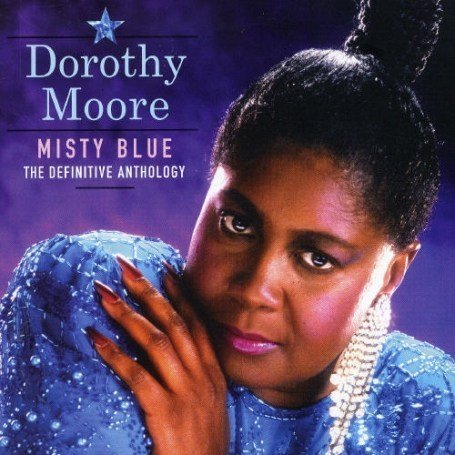 “I moved to Jackson and we continued our friendship,” Wolf said. “Tommy wanted to open a recording studio, so it started out here in 1967. The first success that we had was with Groove Me by King Floyd out of New Orleans in 1970. The next thing we had was Misty Blue with Dorothy Moore in 1976. In the early 80s, we were the beneficiary of a big downturn in the music business; Stax went out of business, Columbia Records pared back their artist roster,” Wolf said. “TK Distributors in Miami, who distributed our products, went out of business and all of a sudden we had to become an independent record company to get our records out. At the same time, lots of other labels cut back their roster. The artists who were doing blues and R&B didn’t have anywhere else to go, so they showed up here. We could record a record, get it manufactured and get it out, and they could call up anytime day or night. We were a small, close-knit group, so it worked.”
 “Z.Z. Hill was our first big hit with Down Home Blues (1982). That was probably the biggest blues/soul album that had ever been released to that date, and here we were, a little bitty company and it cost us $8,000 to do the whole project. That song just exploded. That was like a magnet to all those other folks who were out there. His success brought Johnnie Taylor, Little Milton, Latimore (stage name of Benny Latimore), Bobby “Blue” Bland, Tyrone Davis and Denise LaSalle. We were at the right place when everybody else was cutting back.”
 “We have the largest gospel music catalogue in the world, very good traditional gospel and new artists as well,” Burton said. “We have the Mississippi Mass Choir, Dorothy Norwood, the Georgia Mass Choir, a lot of quartets; we just did an album on the Soul Stirrers, who back in the day were the Soul Stirrers with Sam Cooke. Our catalogue business, meaning our repertoire of copyrighted songs, is very strong. We license a lot of songs to movies and other venues. We continue to grow the new business into new avenues. One avenue that we’ve started is that we’ve started an online radio station. Chances are, if you were to turn on the radio, you’re not going to hear blues or Southern soul. So we’ve started our own station, which is 24 hours a day, world-wide, southernsoulradio.com. You can hear the song, download it from iTunes and click to buy the album from our Malaco website. We want to make Malaco the one-stop shop when you think of blues, gospel or Southern soul.”


