Cherries Maraschino

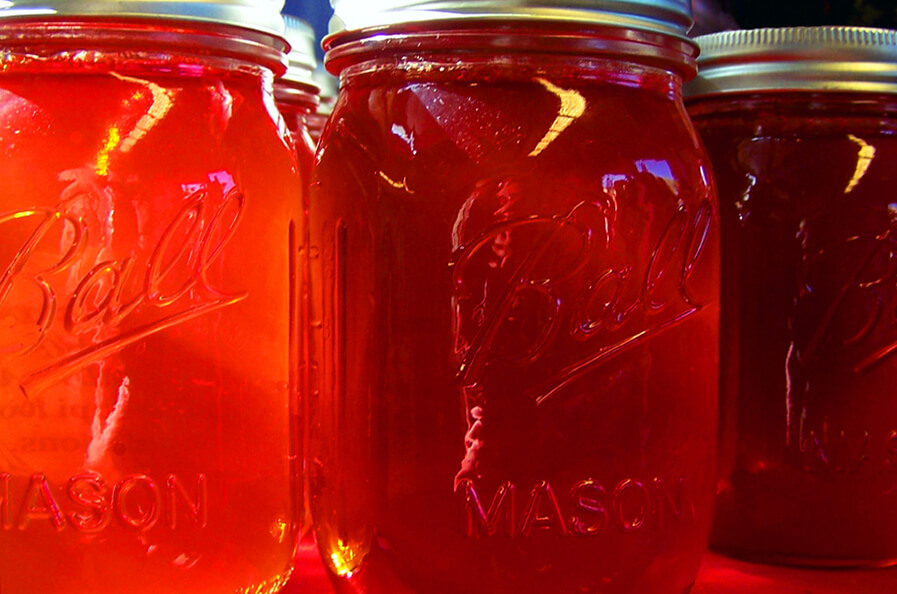
Unless you have a home bar and know people who drink Manhattans, Old Fashioneds or the occasional Tom Collins, it’s unlikely that you’re going to have any maraschino cherries. Oh, you’ll buy a jar during the holidays or if you’re having a kid’s birthday party, but otherwise maraschinos aren’t a standard kitchen item at all. On the other hand, bartenders have been stocking maraschino cherries next to the stuffed olives since before Prohibition, and in their heyday soda jerks routinely placed them atop sundaes and in sodas.

The term “maraschino” originates from the Marasca cherry—a sour, dark variety cultivated on the coast of Dalmatia (now part of Croatia) beginning in the mid-19th century. The original version was brined in ocean water, then preserved in a liqueur made from its own juices, and ground-up pits. In the 19th century, these became popular in Europe, but the supply was so small that they became a delicacy for the rich and royalty and other cherries came to be preserved in various ways and sold as “maraschino.”

Fine bars and restaurants in the United States began serving the cherries in the late 19th century. To meet the growing demand, by the turn of the century American producers were experimenting with other processes for preserving cherries, with flavors such as almond extract rather than the original alcohol liqueur and substitute Royal Anne (‘Napoleon,’ or ‘Napoleon Bigarreau’) cherries. In 1912 the USDA defined “maraschino cherries” as “Marasca cherries preserved in maraschino” under the authority of the Food and Drugs Act of 1906. The artificially-colored and sweetened Royal Anne variety were required to be called “Imitation Maraschino Cherries” instead. Food Inspection Decision 141, signed on Feb. 17, 1912, defined Marasca cherries and maraschinos.

Ernest H. Wiegand, a professor of horticulture at Oregon State University, developed the modern method of manufacturing maraschino cherries using a brine solution rather than alcohol since alcohol dehydrated the fruit, shrinking them, making them hard and wrinkled. By focusing on preserving the shape and structure of the cherry in its plump, beautiful ripeness, Wiegand discovered that adding calcium salts to the preserving brine firmed up the fruit, a method that with modifications is still used  today.

Ur Cookies

Wittgenstein asks, “Just what IS a cookie?” Analytics state, “It is easier to say what a cookie IS NOT than to say what a cookie IS!” A stentorian voice declares, “A cookie IS a cookie IS a cookie.”

Ergo, flour, sugar, and butter with a leavening agent and eggs constitute the Ur-cookie, which is an Ur-cookie. These can be topped with a sugar frosting or glaze or sprinkles, or chopped nuts. You can add food coloring to make them magenta, chartreuse or cyan. You can cut them into any shape using traditional cookie cutters, or use any number of handy implements if you’re feeling froggy.

For true inspiration, make them with children.

1 c. butter
1 c. brown sugar
1 c. white sugar
2 eggs
1 tsp. vanilla
3 c. flour
1 tsp. baking soda
1/4 tsp. salt

Cream butter with sugars; mix well. Add eggs, vanilla and then flour, sifted with salt and baking soda, a little at a time. Bake at 350 degrees on a flat, heavy baking sheet for 8 to 10 minutes. Cool thoroughly before frosting.

Coleman’s Mustard Sauce

Best made the night before. Beat well three whole eggs, combine with a cup of Coleman’s dry mustard, a cup of herb vinegar and a half cup of light brown sugar. Cook over low heat until thickened, cool, and refrigerate. This sauce is good with any smoked meat.

Ruby’s Roadhouse Omelette

While I worked in west Florida during the 1980s, I came to know people from all over the world. Then there was Ruby Ruth Reese, a down-home girl who grew up in what she called “the woargrass (wiregrass)” region of south Alabama.

Ruby Ruth (“Call me ‘Roo’”) had a heart of gold, but she was just as mean as she could be to all those displaced Yankees we worked with in Florida. She liked me because, as she once put it, “You’re just tryin’ to do right and make a place for yourself.” She even claimed to have relatives in Tupelo, but I think she just said that because she knew I was homesick all the time.

Roo told me she worked in a truck stop in Geneva County, Alabama during the Sixties, and if they knew you well enough, and you ordered something “to go”, you’d pay five dollars more, and they’d slip you a bottle of whiskey under the counter before you left. They also made what they called ham and egg pie that most of their customers would order to eat by themselves. Roo often made these for us to share on our lunch, which we took around two in the afternoon when we’d had a busy day. I’ve fancied it up a little bit with the cheddar cheese (she used American slices). She’d fuss at me for that.

For two people, beat very well four large eggs with  a half cup of milk. Stir in diced onion, cooked potatoes, ham, and grated cheddar. Heat an 6-in. skillet, add a big lump of butter. Once butter is sizzling, add half the egg mixture, shaking the pan as you do. Once eggs begin to set, top with a little more grated cheese and pop into a hot (400) oven until firm and lightly brown.

About Roux

Starch has been used to thicken dishes before kitchens existed, most often mixed with oil, which coats starch granules for a better meld. Cooking this mixture eliminates the raw, pasty flour flavor, and though roux means “red”, roux are cooked for varying lengths of time to different colors for different uses.

The best rule of thumb is one part plain white flour to one part oil, but I always use a little extra oil to make it more manageable. As to what kind of oil, that depends on what you’re cooking. Generally speaking, if you’re making a white roux, use butter (not margarine, dear hearts). Since butter will burn at higher temperatures, use vegetable oil for darker roux as in most meat dishes and seafood, adding a little olive oil (particularly in a gumbo roux) for whang. Use lard or bacon drippings for that authentic down-home flavor you need in gravies.

Yes, I know you can make a roux in the oven, or even in the microwave, but the stove top gives you much more control over the product. It also requires care and attention. A lot of people call roux “Cajun napalm” for good reason; it will stick to your skin and burn, so when you’re cooking roux, avoid any distractions, use long-handled utensils, and for heaven’s sake, keep your children under control or out of the kitchen.

Don’t use a high heat to make a roux: cook with a medium heat, and scrape the bottom of the pan to achieve an even color. If black specks appear, you’ve burned the roux, and you have to throw it away and start over. Never, never, never use a scorched roux; your gumbo, etouffee, or what have you will smell (and taste) like an ashtray.

Just like a slice of bread, a roux will toast; the longer you cook the flour, the darker the “toast”. It smells like popcorn cooking; at least, it does to me. Those of you who grill a lot may be familiar with the Maillard reaction, the reactions of proteins and sugars under heat that give meats and vegetables that roasted flavor. The same process is at work here. Cooking roux to different degrees of browning render different flavors and colors. They also thicken to a greater or lesser degree; the longer you cook a roux, the less it will thicken.

For white sauces—béchamel and dairy sauce variations—cook the roux only long enough for it to stop bubbling, not long enough for it to brown at all. When making a white roux for soups and gravies it’s better to use slightly more butter, but for a thicker, stiffer sauce such as one you might use to hold a casserole together, use more flour. As a general rule, you’ll use lighter roux for dishes involving poultry or fish, darker roux for beef or game as well as most gumbos, with the exception of a file gumbo, which traditionally doesn’t involve a roux at all. With experience, you’ll learn to customize roux to your cooking.

photo by Vicky Wasick

A Bit about Spuds

 Opposition preceded the acceptance of the potato into nearly every country of Europe. The resistance of European populations to potatoes can probably best be explained by a concept then prevalent in the intellectual milieu, that being the Doctrine of Signatures.

The Doctrine of Signatures can trace its roots back to a brilliant quack named Paracelsus. Paracelsus (1493?—1541) was a Swiss physician and alchemist. His original name was Theophrastus Bombastus von Hohenheim, so of course he changed it to Philippus Aureolus Paracelsus as soon as he could (wouldn’t you?). He was both popular and controversial. On the plus side, he rejected Galen’s humeral theory of disease; on the negative side, he promulgated the Doctrine of Signatures.

Basic to this doctrine is the notion that “like cures or affects like,” which is the underlying principle of sympathetic magic. This ancient principle enjoyed such a grip on the medieval mind that even someone as astute as Plutarch might say, “Such is the nature and such the temperament (of any given creature) that it draws out and receives the malady which issues, like a stream, through the eyesight.” Plants bearing parts that resembled human body-parts, animals, or other objects were thought to have useful relevance to those parts, animals, or objects.

So if you wanted a good ruddy complexion, you’d eat beets. If you wanted a pale complexion, you’d eat mushrooms. If you wanted big tits or a big dick, you’d eat . . . well, you get the drift.

Unfortunately for the potato, the early varieties cultivated in Europe produced irregularly shaped tubers, often with white nodules and knobby finger-like growths, which to the superstitious minds then rampant recalled the swollen, deformed feet and hands of lepers. Followers of Paracelsus made much of the supposed likeness between a particular plant and the outward manifestations of a disease, but, far from becoming celebrated as a cure for leprosy, the potato became to be condemned as a cause of the disease, the outcome of a popular inversion of the principle.

How ironic that the potato, a plentiful source of starch and rich in ascorbic acid, should find itself spurned by a population that constantly lived on the brink of starvation and suffered from epidemic scurvy.

The potato had a particularly hard time in France, where the Parliament of Besançon banned the cultivation of the potato out of fear of leprosy in 1630. It was not until 1787 that the potato became acceptable, and even then mostly by virtue of its flowers. Both Louis XVI and Marie Antoinette wore the blue blossoms as ornaments in an ill-fated attempt to influence public opinion towards a more favorable attitude of the vegetable, but given the couple’s incredibly poor record in public relations, it probably did more harm than good.

Catherine the Great shocked the Russian court by eating a dish of the tubers in public around the same time, and pronounced them “tres bien”. Catherine was an enlightened monarch, respected in many courts, and due to her blessings upon the potato, it was soon being used as a fermenting base for the making of vodka all over the Russian Empire. Potatoes became a staple in France (and Russia) by the beginning of the nineteenth century, and quickly became accepted throughout Europe.

On a more favorable note, perhaps at least from the vantage of this time of license, potatoes also enjoyed a reputation as an aphrodisiac. This attribute largely came about due to its association with the sweet potato (all potatoes derive their English name from the sweet potato’s name among the Taino, batatas), which played a role in every dish intended to “incite Venus.”

Shakespeare made use of this aspect of potato lore when he wrote of the tuber in two plays written in 1597 and 1602:

FALSTAFF:
My doe with the black scut! Let the sky rain potatoes, let it thunder to the tune of “Greensleeves,” hail kissing-comfits, and snow eryngoes*. Let there come a tempest of provocation, I will shelter me here…
The Merry Wives of Windsor, V, v., 18-22

*sea-holly, Eryngium maritium, enjoyed primarily for its roots, candied with sugar and orange-flower water which, as Evelyn noted in his diary, were a specialty of Colchester, and esteemed an aphrodisiac.

THERSITES:
How the devil Luxury, with his fat rump and potato finger, tickles these together. Fry, lechery, fry!
Troilus and Cressida, V, ii., 54-56

Potatoes were sold in the streets in 1617 when John Fletcher penned this bit:

I have fine potatoes,
Ripe potatoes!
Will your Lordship please to taste a fine potato?
`Twill advance your wither’d state,
Fill your Honour full of noble itches.
The Loyal Subject III, v.

Cobbler: A Clarification

I’m sure most of you line a dish with a crust, fill it with stewed fruit, top it with another crust—maybe a lattice—and call it a cobbler. You can do that, and you would find yourself in agreement with most professional cooks, food writers, and other such edgy riff-raff, but if you ask me–and I know you didn’t–this is just a damn deep-dish pie.

The dish I know of as a cobbler is made with stewed fruit, but no crust. My cobbler is a straight-forward, deeply satiating mixture of stewed fruit and dumplings of sweet dough that rise and brown, making a wonderful pied (sorry, I couldn’t help myself) topping over fruit and spongy dumplings.

This recipe is simple, and like most simple recipes, more procedure than ingredients. Larger fruit should be peeled and sliced or diced. Stone fruit and berries make the best cobblers, though I’ve had pineapple and fig cobblers that were wonderful, and I knew a lady who made an awesome psychedelic cobbler with canned fruit cocktail.

For four cups of fresh fruit make six cups of simple syrup and flavor with a teaspoon vanilla; nutmeg is nice touch. Stew the fruit in the syrup for an hour or so. Make biscuit dough using sweet milk and sugar, knead lightly and roll out to about half an inch, cut into strips, drop by pieces into the hot fruit/syrup mixture. Ladle into a deep baking dish and place in a hot (400) oven until browned. Spoon syrup over the dough as it cools.

If you serve this with anything other than vanilla ice cream, Satan will drag you to hell by your pubes while flogging you with his penis.

Alice, Fasha, and Arlo

Thanksgiving has a uniquely American song, not the sort that Lincoln might have imagined when he inaugurated the holiday in 1863, but “Alice’s Restaurant Massacree” is revolutionary, irreverent, and earthy, just as American as pumpkin pie.

“Now it all started two years ago on Thanksgiving, when my friend and I went up to visit Alice at the Restaurant, but Alice doesn’t live in the restaurant, she lives in the church nearby the restaurant, in the bell-tower, with her husband Ray and Fasha the dog. This song is called Alice’s Restaurant, and it’s about Alice, and the Restaurant, but Alice’s Restaurant is not the name of the restaurant, that’s just the name of the song, and that’s why I called the song ‘Alice’s Restaurant’.”

“I think a lot of people who are interested in food fantasize about having a restaurant,” Alice Brock writes in My Life As a Restaurant (1975). “I never did. I was twenty-five, married and crazy. I was a captive in a situation I had very little control over other than the role of cook and nag—being a hippy housewife was not satisfying. I had a world of fantasies; none included a restaurant, but all were based on the assumption that I would be my own person, on my own trip.”

Alice’s mother, who was a real estate broker in Stockbridge and determined to get her daughter out of her “situation”, called her one day and asked her to go with her and look at a little luncheonette for sale down an alley in the middle of town. “It had a counter down one side and three or four booths on the other side, and a tiny ill-equipped kitchen in the back,” Alice remembers. “It was painted two-tone institutional green, and it was definitely not the kind of place where I would eat, much less own. But it was a chance, a chance to escape. Before we left, I was hooked. I was already creating a menu, I was already free. Those moments, when suddenly an opportunity appears, a door opens—they are what life is all about.”

Alice called her restaurant “The Back Room”. “I knew nothing, absolutely nothing,” she admits. “I can’t believe how innocent I was. But it didn’t matter.” Opening night was a near-disaster, “a nightmare”, but she persevered, and soon she and her sister, who was also in a “situation”, were staying up all night cooking things she later wouldn’t consider for hundred-dollar-a-plate dinners and working five hours making thirty portions of some exotic soup that would vanish in twenty minutes the next day. “I was crazy, she said, “but I know that for all our unprofessionalism, we cooked some pretty wonderful dishes, and I established a reputation as a cook.”

The summer of 1966 was a magical time for Stockbridge; the Berkshire Playhouse had reorganized with an eye to becoming more than just a summer stock theater, attracting stars and would-be stars to the town. “Dustin Hoffman and Gene Hackman liked hamburgers with onion, green peppers, and an egg in them,” Alice writes. “Frank Langella was called ‘Mr. Mushroom Omelet’. Ann Bancroft was wonderful, and when her whole family came, I cooked giant meals; when they stayed late, she helped me clear the table.”

One spring morning a year after opening, Alice says that she walked through the front door and freaked out. “I felt that instead of owning it, it owned me. The plates were out to get me, the pots were planning an attack, the stove was laughing at me. I had a terrible urge to smash everything.” Instead, she called Eastern Airlines and booked a midnight flight to Puerto Rico, emptied the cash box and gave away all the food. “It was a wonderful restaurant. It was a success. I ran it for one year. It turned me into a madwoman. I made enemies of old friends. I broke up with my husband. I left my home. I had actually broken free and become my own person. I didn’t know what I was going to do, but I knew I would never have another restaurant. Never say never.”

Alice Brock went on to open not one but several more restaurants; she now lives in Provincetown, Massachusetts, where she owns an art gallery. After Arlo premiered “Alice’s Restaurant Massacree” before a captivated crowd of over ten thousand at the Newport Jazz Festival in July, 1967, he performed it live on non-commercial New York City radio station WBAI one night later that summer. The song became so popular that for months afterward WBAI rebroadcast it only when listeners pledged to donate a large amount of money. The eponymous (less the massacree) album was released that same year, with the song (at 18:20) taking up the entire first side, the other filled with a selection of bluesy folk tunes. The ballad has become a Thanksgiving tradition not only for classic rock stations, but for thousands of households across the nation.

The Sixth Deadly Sin

In The Taste of America, John and Karen Hess refer to an article by Harriet Van Horne, “Edunt et Vomant” (“They have eaten and let them vomit.”), commenting on a 1975 fluff piece in the New York Times describing a dinner Craig Claiborne and his partner Pierre Franey had in Paris, a $4000 meal for two that featured 31 dishes and 9 wines. As Claiborne and Franey were licking their decadent fingers, the fringes of their world hungered and starved.

Van Horne wrote, “No journalistic caprice has, in my memory, set off such a shudder of distaste. This calculated evening of high-class piggery offends an average American’s sense of decency. It seems wrong, morally, esthetically and in every other way.” The Hesses included Van Horne’s quote to further elaborate on the gourmet absurdities of the time which elevated overpriced, tasteless food, (canned foie gras, canned truffles, cottony chicken breasts in a floury velouté sauce) that were championed by those like Claiborne who lauded expense as a barometer of taste. The Vatican newspaper echoed, deploring the display while millions were starving. Paul VI “as a humble servant for a suffering humanity” demanded significant changes of the rich in America and Europe in favor of the poor, a plea the affluent either ignored or atoned with in pittances.

In the most general terms gluttony involves an over-indulgence and/or over-consumption of food, drink or intoxicants to the point of waste, particularly in terms of a misplaced desire of food or its withholding from the needy, an excess that’s damned by every spiritual path in the world in every quarter of the globe. European theologists from the Middle Ages took a more expansive view of gluttony, arguing that it also consists of an anticipation of meals, the eating of delicacies and costly foods, seeking after sauces and seasonings, and eating too eagerly. Gregory the Great described five ways by which one can commit the sin of gluttony, and corresponding biblical examples:

  1. Eating before the time of meals in order to satisfy the palate. Example: Jonathan eating a little honey when his father Saul commanded no food to be taken before the evening. [1Sa 14:29]
  2. Seeking delicacies and better quality of food to gratify the “vile sense of taste.” Example: When Israelites escaping from Egypt complained, “Who shall give us flesh to eat? We remember the fish which we did eat in Egypt freely; the cucumbers and the melons, and the leeks and the onions and the garlic,” God rained fowls for them to eat but punished them 500 years later. [Num 11:4]
  3. Seeking after sauces and seasonings for the enjoyment of the palate. Example: Two sons of Eli the high priest made the sacrificial meat to be cooked in one manner rather than another. They were met with death. [1Sa 4:11]
  4. Exceeding the necessary amount of food. Example: One of the sins of Sodom was “fullness of bread.” [Eze 16:49]
  5. Taking food with too much eagerness, even when eating the proper amount and even if the food is not luxurious. Example: Esau selling his birthright for ordinary food of bread and pottage of lentils. His punishment was that the “profane person . . . who, for a morsel of meat sold his birthright,” we learn that “he found no place for repentance, though he sought it carefully, with tears.” [Gen 25:30]

In his Summa Theologica (Part 2-2, Question 148, Article 4), Thomas Aquinas revised the list of five ways to commit gluttony:

* Laute – eating food that is too luxurious, exotic, or costly
* Nimis – eating food that is excessive in quantity
* Studiose – eating food that is too daintily or elaborately prepared
* Praepropere – eating too soon, or at an inappropriate time
* Ardenter – eating too eagerly.

Aquinas notes that the first three ways are related to the nature of the food itself, while the last two have to do with the time or manner in which it is consumed.

Even to the exclusion of these examples, which are admittedly rather fastidious themselves, we are all guilty of gluttony in our complacency as citizens of one of the most affluent nations in the history of human civilization.  We quaff fine wines, stuff ourselves with costly foods, and watch celebrity chefs preparing dishes in a gladiatorial setting. Some wretched sinners sneer at those who eat off-cut chops, misshapen homegrown vegetables, or don’t use Zanzibar cinnamon. In our current moral implosion, hunger itself has come to be seen as a sin, almost as an illness that needs treatment, instead of a type of self-discipline for we who have grown too indulgent.