Bess’s Parched Peanuts

Aunt Bess was a woman of intrepid notions who did not let the world at large get in her way of doing what she knew was right. She found nothing wrong with locking Uncle Ewell in the corn crib to keep him from drinking and picking up loose women in his baby-blue 1954 Buick Skylark, and just because her brother-in-law was the sheriff did not stop her from chasing him out of her house with a fly swatter when he put ketchup on her fried chicken.

Bess lived in a big, ramshackle house with a wringer-washer on the back porch, and two swings out front. She kept a huge garden, almost an acre of corn and beans, okra and tomatoes, potatoes, cabbages, and two long rows of peanuts. When it came time to pull peanuts, her four nephews—niece Cindy was exempt because she was such a pampered little princess—would trudge up there on a weekend afternoon, and after Bess had used a garden fork to loosen them, we’d haul the plants out of the ground and hang them on the back porch. Later Bess would cut away the nuts and put them in a burlap tote sack.

This is how Bess parched peanuts. For a pound of very well-washed raw peanuts in the shell, dissolve a cup of salt in two quarts of water, bring to a rolling boil, and remove from heat. Add peanuts. Sink in the brine with a plate of a pie pan, and let them soak for a few hours. Drain and spread on sheet pan. Roast at 350, stirring a time or two. Serve warm when shells are brittle, and enjoy the beautiful.

Candy Corn Rice Krispie Cake

Rice Krispies Treats are the American version of marzipan, easily molded into such things as teddy bears, clowns, and the inevitable boobs and balls. This clever little innovation is fun to make, just cute as can be, and a great Halloween treat. Please read through this recipe first; you need to know what you’re doing before you make it.

For the outer yellow ring use 5 cups Rice Krispies, 5 cups miniature marshmallows, and a quarter stick butter with yellow food coloring; for the middle orange ring, 3 cups Rice Krispies, 3 cups miniature marshmallows, and a quarter stick of butter, with orange food coloring; and for the white center, 2 cups Rice Krispies, 2 cups miniature marshmallows, and a quarter stick of butter.

For each ring, combine marshmallows and butter, and microwave for about 3 minutes, stirring after a minute or so, until blended. Stir in food coloring; you don’t need much, only a few drops of yellow and a couple of yellow and red for the orange. Pour over the cereal, coat your hands with butter and mix the marshmallows into the cereal with your fingers until the color is uniform.

Working quickly, divide each color batch in two, then beginning on the outside of greased 8 in. cake tins, make your rings: yellow first, then orange, then the white center. Keep them an even width. Press the cereal/marshmallow mixture into the pan to ensure they stick together and make them a consistent thickness. Let the rings set for thirty minutes, then turn out on a cutting board and slice first in half, then into quarters, then into eight even wedges. Store with waxed paper between layers.

Senate Bean Soup

Navy bean soup has been a fixture on the menu in the U.S. Senate restaurant as far back as the administration of Grover Cleveland. In 1903, Senator Fred T. Dubois of Idaho brought to passage a resolution–written by Senator Knute Nelson of Minnesota–requiring that the soup be served every day to sustain the distinguished members of that august body through the vigorous throes of contentious deliberation.

The official recipe printed on the back of the Senate restaurant menu calls for “Michigan navy beans”, though Craig Claiborne (never one to leave well enough alone) wrote that the best bean for the soup is “a pea bean from California.” The more perspicacious John Edgerton argues that this soup is a Southern recipe, pointing out the inclusion of smoked ham hocks as conclusive proof.

“Does that sound like Michigan? California? Minnesota? Idaho? Of course not!” he declares, adding that it sounds more like North Carolina, Alabama, or Arkansas, where cooking with pork is a 400-year-old tradition.

“Any fair and honest person seeking the creators of U.S. Senate bean soup would ask not who the senators were at the time the soup was given official status, but who the cooks were,” and in the District of Columbia the cooks in the Senate kitchen, as well as almost any other institutional kitchen in Washington, were black men and women from the South.

“There ought to be a plaque somewhere in the capitol to honor those skillful citizens, their names now forgotten, who cooked bean soup in the Southern style with such a masterful touch that even the solons of the North and West came to realize that they simply could not do without it,” Egerton claims.

Fortunately for us sans sans-culottes, you don’t have to lie, buy, or storm your way into the Capitol to enjoy navy bean soup. Here’s my recipe; it’s not official by any stretch, but it’s wonderful, all the same. Pick through and wash one pound white (navy) beans, place in a pot with two smoked hocks, cover with water by half, and place in a low oven for about 2 hours.

Remove the hocks and cool; throw away the rind, de-bone, chop the meat and add back to the beans along with one finely-chopped large onion sauteed in light oil with two minced cloves of garlic. You can throw in a stalk or two of minced/grated celery if you like. Add water if needed, simmer until creamy, season with pepper and salt to taste. If you don’t serve cornbread with this, you’ll die and go to hell.

Immediately.

A Savory Dutch Baby

Whip into a froth two large eggs and a half cup each flour and whole milk. Season with salt and pepper and stir in a scattering of shaved onion. Pour into a hot buttered skillet and pop into a very hot oven until puffed and browned. Top with sliced onion and ham or bacon. Serve with grated hard cheese and sour cream.

Leg of Wild Boar

If you live in the South you know a hunter, and sooner or later you’re likely to find yourself with game in your kitchen. Deer, duck, and dove are among the most typical, but the possibilities are only limited by state legislatures, and I have it on good authority-–actually a stentorian chorus thereof–-that Mississippi’s version of this august body politic is subject to circumvention.

Yet because feral hogs have become very much a nuisance in Mississippi, I’m also given to understand that hunting the beasts is encouraged; the only red tape involved is permit fees. (“Cross my palm with silver.”) Pig season stretches from October to May, but that, too, is (again, from what I understand) loosely enforced. So be advised: given a likely glut of hog carcasses, it’s a good bet that if you show the slightest interest in wild pork to anyone with a good gun, you’re liable to end up with a haunch of wild hog even if you don’t remember saying you wanted one at that kegger in Pelahatchie.

And, yes, I have a copy of Priscilla, Queen of the Desert on DVD, and yes, I know words to several Donna Summer songs, and during my salad days, I even wore Daisy Dukes (don’t say it). But unless you wear gear to bed, I am not what you would call delicate, much less fastidious, so when my buddy Raydale, a sure shot, showed up at my door with this huge haunch of meat dripping blood in his hands, I gratefully accepted it and sent him on his way with a jar of pear preserves and his promise that he’d be back the next day after work to take some of the cooked meat home.

Back in my college days I studied medieval literature, and the accounts of their gargantuan feasts, where great gobbets of meats were served and consumed with vast goblets of wine made a great impression, so the sight of this shoulder of boar sent a vicarious thrill through my little want-a-Garter mind. I longed to have an open hearth with a blazing fire and a turnspit dog to cook the meat evenly. Alas and alack, I had no such fire, not even a place to build one in the yard, and besides, my snooty neighbors would look askance on me roasting meat on anything less than a designer grill, which left me with my trusty little gas oven (c. 1964).

First I washed the shoulder, which thankfully had been skinned but still had a generous sprinkling of stiff, short black hairs. I knew this wild meat had to be marinated, and for a long time, so I dragged a cooler out and there I placed the leg, which I’d salted ever-so-lightly, while I made the marinade. Not being one to waste wine, I chose to use a big can of pineapple juice and apple vinegar (4:1) with about a half-dozen freshly-squeezed oranges, two tablespoons pickling spices, several branches of fresh rosemary and threw in a Zatarain’s sack out of sheer habit.

I let this simmer for a while on the stove, then poured it on the meat, added enough water to cover, closed the lid and placed the cooler in a corner. After the leg had marinated for about 12 hours, I drained it, stabbed it in the meaty parts with a short, sharp knife and stuffed sliced cloves of garlic into the cuts. I then brushed it with a light oil (NOT olive oil), and dusted it with a mixture of salt and pepper (50/50). It went into the oven about 8 a.m. on a rack at 400 for about an hour, then I reduced the heat to about 300, and there it cooked for the rest of the day.

I took it out around 4 to cool, and when Raydale came by around 5:30, we carved it up, Ray taking most of it as well as bones for his dog Terry, who is a friend of mine as well. The meat was quite good, not gamey at all, and just as tender as it could be.

Bobbie Gentry’s Cherry Cookie Bars

This recipe appeared in Bayou Cuisine (1970) and was credited to Edith Streetner of Greenwood, Gentry’s stepmother, who writes that it’s “Bobbie’s favorite recipe that she has loved since she was a little girl, and I always made them for her when she came home.”  These two-in one cookie bars have a rich, buttery cream-colored layer below and scarlet cherries, coconut, and nuts in the layer on top.

Sift together 1 cup plain flour and 1/4 cup confectioner’s sugar. Cut in 1/2 c. butter until mixture resembles coarse meal. Press mixture firmly into the bottom of an ungreased 11×7 or 9×9 inch pan. Bake in a moderate (350) oven for 10 minutes. Sift together 1/4 c. plain flour 1/2 tsp. baking powder 1/2 teaspoon salt and 3/4 c. sugar. Add 2 eggs lightly beaten, then fold in 1/2 c. maraschino cherries, finely cut, 1/2 c. grated coconut, and 1/2 c. chopped nuts (walnuts, pecans, or almonds). Spread over a blind crust and bake in a moderate (350) oven 30-40 minutes. Cool and cut into bars or squares.

Mexican Corn Sticks

Use the Martha White Buttermilk Mix. Add chopped chilies–hot, mild, or mixed, your preference–whole kernel corn–do NOT use creamed corn–a little minced onion, and a hefty sprinkling of diced tomato or pimento, . Season lightly with chili powder, cumin, and black pepper. Pour into a hot, well-oiled corn stick pan and bake in a very hot oven until toasty. Cool before turning out.

Corn Cookies

What you have here is pretty much a sugar cookie made with cornmeal and masa. As with flour cookies, they’re often seasoned with various flavorings, herbs, spices, and/or fruit. This recipe makes a somewhat soft cookie that can be firmed up with a bit more masa.

Whisk together a quarter cup of yellow cornmeal and a quarter cup of masa with a cup and a half of AP flour. Add a teaspoon each of baking powder, baking soda, and salt. Beat until fluffy with two sticks softened butter, a cup and a half of sugar, a quarter cup of honey, a large egg, and a teaspoon of vanilla. Gradually add cornmeal mixture until just combined. Form dough into a ball and refrigerate in plastic wrap for about a half an hour. Roll out to a quarter inch. Cut into rounds and bake on a lightly oiled cookie sheet on the middle rack at 350 until toasted.

Pear Preserves

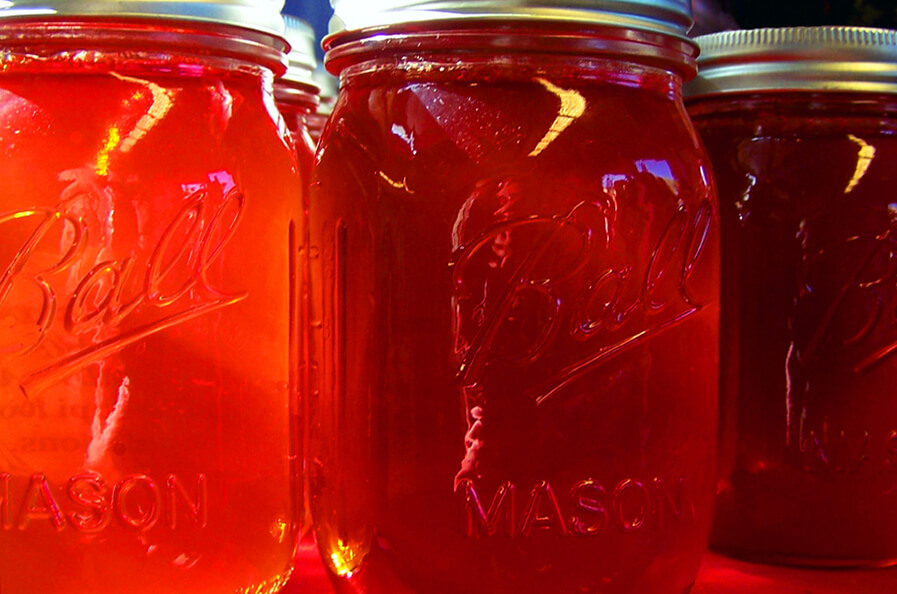
This recipe provides you with firm chunks of fruit in a simple syrup that will keep without processing for a good month on the shelf if jars and lids are sterile and the syrup hot. For two quarts peeled, sliced, very firm pears, use a quart of sugar and enough water to cover by an inch. Add juice of a lemon; a little ginger is a nice touch. Bring to a boil, reduce heat, and simmer until syrup thickens. While hot, ladle into sterile jars, and cool before sealing.

Molasses Popcorn Balls

Mix two cups white sugar with a cup of molasses and a half cup water. Stir until smooth, add a half stick of butter, bring to a slow boil, and cook to hard crack. Pour six cups popped corn in a large oiled bowl, throw in a pack (or two) of red skin peanuts, and drizzle with warm molasses syrup while tossing with a spoon. Working quickly, rub a pat of butter between your hands, and form popcorn into balls. Spear with sharpened Popsicle sticks, and place on a greasy pan. Dust with salt.