About Waiting

Anyone who prides themselves on their patience and understanding should wait tables for a week or so to find out just how patient and understanding they really are. Many people are notoriously insensitive to workers in the food service industry; just ask any waitperson, bartender or cook. Any given one of them doubtless has several stories to tell of rude and insensitive if not to say vulgar treatment at the hands of a patron. The business of food and drink is a service industry, and it’s no coincidence that the word service comes from the Latin root servus, meaning slave. The food industry trains people to be servile, to cater to customers (and management) in an overtly deferential way because so much of a restaurant’s livelihood depends on steady patronage. I’m not suggesting that anybody who works in the business is at the beck and call of every s.o.b. with enough money to buy a hamburger, but some people seem to think so.

In her autobiography, My Life as a Restaurant, Alice Brock, owner of Alice’s Restaurant, describes the situation well and offers a very human response:

I am often accused of being rude to customers. Well, it’s true, I am as rude as they are, only they don’t always realize their behavior is inhuman: after all, I am in a restaurant and THEY are hungry, THEY drove all the way from Florida, THEY just want a sandwich, THEY just want to see Alice, THEY just want to look around, and take a picture, get an autograph, use the bathroom, introduce me to their dog, who is named Alice, have a cup of coffee, SPEAK TO THE OWNER…because this food-covered lady in work boots, who is so rude, can’t possibly be the OWNER. I guess I have a temper…good! I won’t stand for being treated like a piece of public property or a freak and I will never allow a customer to get away with giving an employee a hard time. The customer is NOT always right.  Being a “service industry” makes people think we are just computerized slaves.

One of the high-lights of an evening is to hear of a customer bringing a waitress to tears…I rush out to the dining room, pull their plates off the table and point to the door: “OUT…OUT…GET OUT AND LEARN SOME MANNERS!” To try to please the “difficult” customer at the expense of my fellow workers is ridiculous. Some people just have an attitude. They upset the waiter or waitress, who in turn upsets me, who in turn upsets the whole evening. It’s not worth it to try to please or placate these bitter, unhappy people, better to put them out at the first sign of trouble. This is something I have to be there to do…it’s hard to tell or expect someone else to do it. Sometimes I’m wrong, or the waitress is wrong, but better to lose a customer than a co-worker.

Ms. Brock is a notable exception, I might add, since most managerial-type people treat their waitstaff as expendable. And, to be fair, most people who eat out frequently learn how to deal courteously with waiters, but I’ll be the first to admit that it is a learning process, not an instinct. Nowadays, dining out is almost always coupled with another experience (a movie, a play or some other sort of public entertainment) but at one time dining out itself was often taken as a singular occasion to be enjoyed on its own merits rather than as an appendage to another event. This happy time was when restaurants were successful not merely on the basis of turnover, but more on the quality of the foods they offered, the comfortable atmosphere they maintained and the genial clientele they accommodated. Great care was taken not only with the menu, which usually involved many courses designed to fit the season as well as the particular talents of the cooks and the general style of the restaurant itself, but also with the presentation, the service, the table, seating, lighting and other elements of atmosphere. Such staging demanded a great deal of planning as well as much care in the execution.

I have seen some degree of return to this tradition, but it is still rare to find a restaurant that does not cater to some abominable god of expediency. I’ve often encountered difficulty when dining out and trying to take my time between one course and the next with a pause to have a bit of beverage and conversation because waitpersons tend to interrupt with an insistent, “Are you alright?” as if to say that by not yelling at them for not bringing the food immediately that they were falling down on their job. The reason for this is that waiters are programmed to turn over tables as quickly as possible and since most patrons have had the “20% tip” rule-of-thumb drummed into their heads, waiters are eager to get the ten or twenty buck tip and get you out in order to get the next ten or twenty bucks. (Me, I tip as well as I can; just want you all to know that.)

To learn how to wait tables efficiently and unobtrusively is an art; I’ve known some champion waiters from both sides of the kitchen doors, and I’ve been subject to the attentions of some world-class bartenders (be nice, people). Yet some customers, out of ignorance or stupidity, will exhaust and demean a good waiter, detracting not only from their own enjoyment of a meal but also from that of others. Bartenders, on the other hand, just will not put up with a bunch of bullshit; trust me, I know. Perhaps what I’m describing is simply an example of what is being called a decline in civility, but, as Alice says, “Some people just have an attitude,” and in my book as well as hers, such people simply require an adjustment. This, you understand, takes patience and understanding. To a point.

An Essential Mexican Cookbook

Diana Kennedy was a Brit who married the NY Times correspondent for Latin America in the 1950s and early 1960s.

She fell in love with Mexican food, learning the cuisine literally from the ground up, visiting every state in Mexico on buses, donkeys and in her pre-power steering Nissan pickup, carrying a shovel to dig out of mud and sand.

Kennedy’s explorations resulted in an authoritative body of work that provides a thorough, extensive survey of the many cuisines of Mexico from Chiapas to Baja, but her most essential work is The Cuisines of Mexico (Harper & Row, 1972). If you are at all interested in food and cooking, and you have a taste for books that are well-written, well-researched, and ring with authority and  conviction, then you must have this within reach.

Kennedy’s introduction, “A Culinary Education” certainly ranks among the most notable essays about coming to know food as more than mere nourishment (see below). The first section, “Ingredients and Procedures” gives the initiate a thorough grounding in such arcana as herbs, kitchen equipment, and chilies. You’ll find no better introduction to the basics of the Mexican kitchen.

As to the recipes, bear in mind that Kennedy was writing for a somewhat less sophisticated audience, and these were selected for simplicity and ease of preparation; still you will find surprises. You might be, as I was those many years ago on first reading, delighted by the seafood recipes (“There is an awful lot of coast to Mexico …”), which includes perhaps one of the first recipes for “cebiche” included in an American cookbook.

The inclusion of many Gulf species among these recipes is poignant indeed in this post-BP Gulf world. My personal favorite among them is the snapper Vera Cruz, which we served at the Warehouse during my tenure.

Kennedy’s writing is strong and serviceable, rarely lyrical but savory when so. Her most powerful gift is an excruciating, attention to detail in every respect, evidence of her intelligence and commitment to authenticity. She wanted you to know what she loved.

Kennedy died on July 24, 2022, at the age of 99.

A Culinary Education

Although I have always loved good food, it was in Wales during the war years, when I was doing my service in the Women’s Timber Corps, that I first savored food I can still remember today.

In the Forest of Dean we would toast our very dull sandwiches over the smoldering wood fires and roast potatoes and onions in the ashes to help eke out our rations on those frosty, raw mornings. Later, in the Usk Valley, as we cycled for pleasure through the country lanes and walked the Brecken Beacons, we would stop for the farmhouse teas: thick cream and fresh scones, wedges of homemade bread spread thickly with freshly churned butter, wild damson jam, buttery cakes that had been beaten with the bare hand. From there I moved to an even more remote village in Carmarthenshire.

After the war there were occasional trips to France, and memories flood back of the first belons, and moules along the Côtes du Nord; rice cooked with minute crabs that had to be sucked noisily to extract their sweet juice; the ratatouille, and refreshing Provençal wines in a Saint-Tropez bistro. I can’t forget the lunchtime smell of olive oil in northern Spain as we walked up through the oleander bushes from the beach, and the never ending meals in the Ramblas restaurants in Barcelona, or beef à la tartare after a day’s skiing in the Austrian Alps. It was then that I really learned to cook, to reproduce what had been eaten with such pleasure.

I met Paul Kennedy in Haiti, where he was covering one of the many revolutions for The New York Times. We fell in love and I joined him in Mexico later that year.

And so life in Mexico began. Everything was new, exciting, and exotic. Luz, our first maid, loved to cook. One day she brought her corn grinder to the house and we made tamales: first soaking the dried corn in a solution of unslaked lime, washing the skin of each kernel, and then grinding it to just the right texture. It seemed to take forever, and our backs ached from the effort. But I shall never forget those tamales. She introduced us both to the markets and told us how to use the fruits and vegetables that were strange to us.

Finally Luz had to go, and Rufina came from Oaxaca; it was her first job. She was young and moody, but she was a really good cook and my apprenticeship continued as she taught me how to make her rather special albóndigas, rabbit in adobo, and how to draw and truss a hen.

But I suppose it is Godileva to whom I am most indebted. I always loved the evenings she would stay to do the ironing; we would chat about her life when she was a young girl on her father’s small ranch in a remote area of Guerrero. They had lived well, and she loved good food. She would pat out our tortillas, and before lunch would make us gorditas with the fat of marrow bones to enrich them, and as we came in the door would hand us, straight from the comal, sopes smothered with green sauce and sour cream. We would take turns grinding the chilies and spices on the metate, and it is her recipe for chiles rellenos that I have included in this book.

I had other influences as well. My friend Chabela, on several trips into the interior, taught me almost all I know about the handicrafts of Mexico; together we visited craftsmen in remote areas and on those journeys we would try all the local fruits and foods. It was she who spent many hours in my kitchen showing me, accompanied by meticulous instructions, the specialties of her mother’s renowned kitchen in Talisco.

At last our stay had to come to an end. Paul had been fighting cancer courageously for two years, and it was time to return to New York. By then we had traveled extensively together, and on my own I had driven practically all over the country, seeing, eating, and asking questions. I started to collect old cookbooks and delve into the gastronomic past to learn more for the cookbook that I hoped some day to write.

Paul died early in 1967, and later that same year Craig Claiborne suggested that I start a Mexican cooking school. I suppose I wasn’t ready to start a new venture; I was too saddened and worn by the previous three years. But the idea had planted itself, and in January 1969, on Sunday afternoons, I did start a series of Mexican cooking classes-the first in New York. A wintry Sunday afternoon is a wonderful time to cook, and the idea caught on.

The classes expanded beyond those Sunday afternoons, and the work for the book went on as well. But while the classes continue to flourish and grow, the research and testing have come at least to a temporary halt-if only to allow the book to be published at last. For I find myself involved in a process of continual refinement, due both to the frequent trips I make to Mexico to discover new dishes and to refine old ones, and to the constant dialogue between myself and my students and friends who try these recipes with me.

DIANA KENNEDY
New York April 1972

Pulled Pork

This method takes much less  time than  the a slow cooker and gives much better results. I prefer a bone-in shoulder roast, also known as a “picnic” shoulder. This is an inexpensive cut of well-marbled meat, and the bone adds flavor.

Preheat oven to 400, For a 6-8 pound cut, make a spice blend of 3 tablespoons each paprika, granulated garlic, and black pepper, and about a tablespoon of salt. You can add a couple of tablespoons of brown sugar to this if you like, but I don’t. I don’t like to use much salt, either, because salt and sugar draw moisture from the meat. Besides, you’re going to get plenty of sugar and salt in any barbecue sauce, no matter who makes it.

Mix  this blend with about 1/2 cup vegetable oil and rub over meat. Peel and chop into quarters 2 white onions, separate, and place in the bottom of an oven roaster. Put meat on top on onions, a set on a mid/low rack; I place a saucepan of water alongside the roast to help keep it moist.

After an hour, reduce heat to 250. After another two hours or so, when the pork is fork-tender, remove from oven, cool enough to handle, discard fat and bone, and reserve some of the pot liquid (without the fat). Shred meat into a lidded container and add enough of the reserved liquid for even moisture.

Ice Cream Bread

Versions of this recipe have been bouncing around a lot recently, most of them praising its fool-proof simplicity, but as with these simple recipes—and those with two ingredients are about as basic as they come—the devil is in the details.

Most versions call for 1 ½ cups of hot rise flour and a pint of melted ice cream that makes  a soft, sticky dough rather than a batter baked in a standard 8×5 loaf pan at 350 for 45 minutes. I’ve found the recipe works best when baked in a 5×3 (16 oz.) loaf or a similarly-sized spring-form pan at 350 for only 35 minutes.

I’ve also found that you must use a very rich ice cream such as a French vanilla or (as in this case) a butter pecan and that LuVel works just as well if not better than Ben & Jerry’s, but you must let the ice cream melt slowly on the kitchen counter or in the refrigerator. I’m unsure of the science behind this, but microwaving the ice cream will make for a dense, pudding-y cake.

Though for many a dollop of whipped cream might seem less excessive, I don’t find a scoop of ice cream redundant at all.

Ginger Pecan Sandies

A simple recipe for a rich, crumbly cookie.

Cream 1 stick butter with a cup of confectioner’s sugar and a teaspoon each almond and vanilla extract. Blend in 2 cups plain flour sifted with a teaspoon of baking powder, a  half cup chopped pecans, and a heaping tablespoon of ground ginger.

(Note: I have tried this recipe with freshly-grated ginger, and it simply does not work at all well with the butter.)

This makes a soft, elastic dough. Work it into a ball and refrigerate for an hour or so. You can wrap it up if you want; I never do, I’m going to wad it up and roll it out anyway.

Pat or roll dough a half inch thick, sprinkle with sanding sugar, and cut into rounds or squares. Bake at 350 until lightly browned.

Autumn Cider

This recipe fills your home with those aromas many Southerners associate with the coming of cool weather: apples, cloves, cinnamon, and oranges. I recommend tangerines, satsumas, or Valencia oranges, and a mix of tart and sweet apples.

To a gallon of water, quarter about a half dozen apples and three or four oranges, depending on size. Don’t peel the apples, but by all means peel the oranges, saving a strip of peel for zest. Add four sticks of cinnamon, a teaspoon of whole cloves, and a thumb of peeled ginger.

When the apples are soft through, let it cool. Then mash and strain, first through a colander, then a wire strainer. For better clarity, use cheesecloth. Add the juice of a lemon, and brown sugar to taste. A healthy slosh or two of dark rum ensures a warm reception.

About Molasses

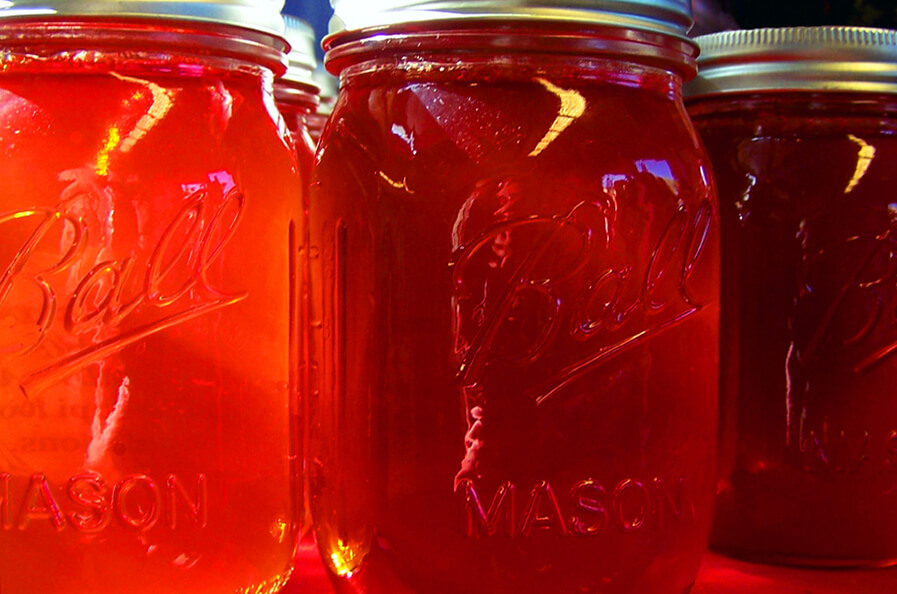
All of my life, I’ve heard sorghum syrup called molasses, so it came as something of a shock when I read recently that sorghum molasses is not considered a “true” molasses by certain authorities. These same people will tell you that the only real molasses comes from sugar cane and beets, though in the same breath they will also say it can be made from grapes, dates, pomegranates, mulberries, and carob, which certainly muddles the definition. Thoreau, in one of his more superfluous tangents, claims he made “excellent molasses from pumpkins”, exhibiting an appealing disregard for the fine line between molasses and syrup.

The process for making what passes as true molasses seems complicated, since once the canes (or beets) are crushed (or mashed), the juice is boiled to concentrate and crystallize the sugar. This stage produces the “first molasses” which has the highest sugar content. Boiling the cane/beet juice again produces “second molasses” (!), and the third boiling produces blackstrap. This is a simple process of reduction identical to the one used to make sorghum molasses which even Harold McGee, the genius who wrote the authoritative On Food and Cooking: The Science and Lore of the Kitchen, claims is a syrup. What it boils down to (sorry) is a matter of terms; if I want to call sorghum syrup a molasses, then I will and do.

Like any sugar in solution (i.e. a syrup), sorghum molasses differs in taste and texture depending on the length of time it’s reduced, resulting in varying degrees of caramelization. I’ve seen blackstrap-style sorghum as well as sorghum pale as honey. Me, I prefer it light, retaining just a shadow of the golden-green color I remember from my childhood dripping from a paddle over a simmering pan of syrup, in Ellard, Mississippi, a memory I’m more likely to realize now since rural family-run sorghum cane mills are making a comeback.

Be advised that the production of sorghum molasses remains a largely commercial enterprise, and there are dozens of brands on the shelves throughout the region, but most of these are not pure sorghum molasses; if you read the ingredients, corn syrup will likely be the first ingredient listed. Unadulterated sorghum can always be found in autumn at roadside stands and farmers’ markets. Find it.

New Stage Baked Eggs

This stellar recipe comes from Standing Room Only, the stellar entertainment cookbook published by Jackson, Mississippi’s New Stage Theatre in 1983.

The original recipe states that this breakfast casserole can be prepared the night before and refrigerated, but I don’t because the croutons get soggy. It also calls for a sprinkling of chopped black olives and crumbled bacon, which is a nice touch.

Beat six eggs in two cups of whole milk, add a teaspoon of dry mustard and two cups grated cheddar along with chopped ham, green onions. Butter a 9×13 casserole and cover the bottom in a layer of herbed croutons, pour in egg and cheese mixture, and bake at 350 on a middle rack until lightly browned and springy, about 45 minutes. I often serve it cold with sour cream.

On Heirloom Recipes

For a long time I’ve been remiss about not getting beloved recipes from people who’ve since passed from my life. I came to feel those recipes were irreplaceable riches that had been swallowed by the maw of time, as indeed they are.

Yet this remarkable world goes around, and I’ve come to realize that getting recipes from others is important, perhaps even crucial in some larger scheme of things. So we must wrench the dishes we love from those who create them, even if we have to beat the holy hell out of them to do so.

It’s our duty as members of the human race.

Calliope Muffins

The lady who gave me this recipe said it came from the Ringling Estate in Sarasota, Florida, and while I have no reason whatsoever to doubt that it did, I wish she had known the history behind them.

Whisk together 2/3 a cup of cocoa, 2 cups plain flour, 1 ¼ packed cup brown sugar, a teaspoon each of baking powder and soda, and dash or so of salt. Set aside. Beat 2 large eggs into ¾ cup milk. Add 2 teaspoons vanilla extract and a slash of vinegar along with a melted stick of butter. Mix dry and wet ingredients. Blend just enough to ensure the moisture is evenly mixed; muffins don’t need a lot of work. Bake at 350 for about a half hour.