B-Flat Cranberry Brisket

Doubtless more elaborate, foodie-friendly versions of this recipe exist, but—speaking strictly for myself—I stand with mouth agape in admiration for the breathtaking simplicity of this 60s-era version.

Mix well a 14-oz. can jellied cranberry sauce with a packet of Lipton Onion Soup Mix for each two pounds of untrimmed brisket. Place brisket in a lightly oiled baking pan, slather with cranberry/soup mix and cook tented in a 275 oven an hour or so for each pound until meat is tender. Serve with onion rolls and red cabbage slaw.

A Tiki Tale

In 1950, when William Styron was a low-level reader at McGraw-Hill , he rejected a book written by a Norwegian explorer about an 8000 mile voyage across the Pacific Ocean on a hand-built raft. The book, Kon Tiki, later became an international best-seller and made Thor Heyerdahl a legend.

Had Styron not been such a scribbler he might have realized that Heyerdahl’s book would catch the tiki wave that had been cresting in popular culture since U.S. troops came home from the Pacific. In 1947, James Michener won a Pulitzer for his Tales of the South Pacific, which were based on his service as a lieutenant commander in the New Hebrides Islands. The book was adapted by Rodgers and Hammerstein into the musical South Pacific that premiered in 1949 on Broadway and ran for 1,925 performances.

It was wanna-be Cajun Ernest Raymond Beaumont-Gantt who kicked off the mid-century tiki culinary craze. Ernie claimed to have been from Mandeville, LA, but grew up in Texas. After sailing the South Pacific, he changed his name to Don Beach, moved to California in 1934, and opened a Polynesian-themed bar, ‘Don the Beachcomber,’ in Palm Springs. Three years later, Victor “Trader Vic” Bergeron, adopted a tiki theme for his restaurant in Oakland.

It wasn’t long before tiki got a lot of surf all the way to the East Coast. During the 50s and well into the 60s, tiki parties were a popular spin on those must-have barbecues, involving smoky bamboo torches, rickety pastel patio furniture, neon paper leis, and loathsome drinks with teeny-tiny parasols.

A mai tai became the quintessential tiki cocktail, and rumaki the quintessential tiki appetizer. Ernie is credited with inventing rumaki; it first appeared on the menu at Don’s, as “mock Polynesian”, marinated chicken livers and water chestnuts skewered with bacon and broiled. In time, rumaki became a cliché cocktail appetizer in dozens television shows and films.

Heat half cup of grated ginger in a cup of vegetable oil until bubbling. Keep at heat for about five minutes and drain. Mix oil with lite soy 1:2 with brown sugar and  to taste. Cut the livers into bite-sized bits and whole water chestnuts into halves. Marinate both for at least an hour. Wrap  livers and chestnuts in bacon sliced to size, skewer, and grill or broil until bacon is crisp.

The Occasional Bramble

The Fairchild household is in an uproar over Dabney’s marriage, but however peculiar the match, the proprieties must be observed, standards maintained, and that includes lavish decorations for the rehearsal supper. At one point during the hustle and bustle the matriarch Ellen says, “I thought in the long run . . . we could just cover everything mostly with Southern smilax.”

Most of those who read Welty’s Delta Wedding probably skip over Ellen’s references to smilax without taking the time to find out what smilax is, likely thinking it a type of fabric or paper, but had they bothered to look it up, they’d have found that smilax is a coarse evergreen vine whose many varieties proliferate throughout the South in woods, fields, roadsides, and–yes–your yard.

Evergreen and durable, the vines have long been used for greenery in the home during festive events and holidays, and not just in the South. In the stage version of Harvey, the opening scene describes the home as being “festooned with smilax”.

Members of the enormous lily family, smilaxes are close relatives of asparagus, and they’re just as edible, just not as toothsome. In fact, before the invention of artificial flavorings, one species, Smilax ornata was used as the basis for sarsaparilla and root beer. (S. ornata was also registered in the U.S. Pharmacopoeia as a treatment for syphilis from 1820 to 1910.)

Linnaeus named the genus Smilax after a nymph who was by reason of some divine infraction transformed into a brambly vine (her lover Croesus for the same reason was—grotesquely disproportionally—transformed into a crocus).

Indeed most smilaxes are “brambly”, profuse with thorns, a notable exception being Smilax smalii (previously lanceolata), which only has thorns around the base of the stems. Steve Bender says one name for this plant, Jackson vine, comes from ladies in Alabama who would decorate their homes with the evergreen when Stonewall Jackson came to town, but frankly I have a hard time swallowing that. Most people just call it, as Ellen Fairchild did, Southern smilax.

People once often trained smilax vines around their porches for evergreen framing, but the vine is rarely cultivated because of an undeserved reputation as invasive. Smilax takes readily to use in wreaths, swags and garlands. Like any plant cutting, the vines last longer when kept in water.

Mississippi Statehood: A Timeline

1540
Hernando de Soto and his remaining troops crossed the Tombigbee near present-day Columbus and spent the winter near Tupelo, reaching the Mississippi River on May 8, 1541.

1682
René-Robert Cavelier, Sieur de La Salle explored the Ohio River Valley and the Mississippi River Valley and claimed the entire territory for France as far south as the Gulf of Mexico. La Nouvelle-Orléans was founded May 7, 1718 by the French Mississippi Company under the direction of Jean-Baptiste Le Moyne de Bienville.

1699
The first permanent settlement in French Louisiana was founded at Fort Maurepas (now Ocean Springs referred to as Old Biloxi) in 1699 under Pierre Le Moyne d’Iberville, with Louisiana separated from Spanish Florida at the Perdido River near Pensacola (founded 1559 and again in 1698).

1712
New Biloxi founded across the bay from Fort Maurepas.

1716
Fort Rosalie—the site of modern-day Natchez—was established by the French. Natchez was to become the most important European settlement in the Lower Mississippi Valley up until the Civil War.

1736
The Chickasaw Campaign of 1736 consisted of two pitched battles by the French and allies against Chickasaw fortified villages in present-day northeast Mississippi. Under the overall direction of the governor of Louisiana Jean-Baptiste Le Moyne de Bienville a force from Upper Louisiana attacked Ogoula Tchetoka on March 25, 1736. A second force from Lower Louisiana attacked Ackia on May 26, 1736. Both attacks were bloodily repulsed, and French domination of the Mississippi Valley fell into decline.

1763
The Treaty of Paris, also known as the Treaty of 1763, was signed on 10 February 1763 by the kingdoms of Great Britain, France and Spain, with Portugal in agreement, after Great Britain’s victory over France and Spain during the Seven Years’ War. By the terms of the treaty, Britain wrested the area east of the Mississippi River from the French.

1774
Phineas Lyman led a group of New England veterans of the French and Indian War to settle in the new colony of West Florida (then a territory of Great Britain) near Natchez on the Big Black River where he died shortly before the outbreak of the American Revolutionary War.

1783-1795
Under the terms of the Peace of Paris (1783), a series of treaties between Great Britain, France and Spain, what is now Mississippi above 31° north latitude parallel passed to the United States of America, but a separate Anglo-Spanish agreement, which ceded both Florida provinces back to Spain, did not specify a northern boundary for Florida, and the Spanish government assumed that the boundary was the same as in the 1763 agreement by which they had first given their territory in Florida to Britain. Spain claimed the expanded 1764 boundary, while the United States claimed that the boundary was at the 31° parallel. Negotiations in 1785–1786 between John Jay and Don Diego de Gardoqui failed to reach a satisfactory conclusion. The border was finally resolved in 1795 by the Treaty of San Lorenzo, in which Spain recognized the 31° parallel as the boundary, and British troops were withdrawn in 1798.

April 7, 1798
The Mississippi Territory was organized. The territory’s original boundaries consisted of the region bounded by the Mississippi and Chattahoochee rivers in the west and east, the 31st parallel in the south, and the point where the Yazoo River emptied into the Mississippi River in the north. Government was patterned after the 1787 Northwest Ordinance which established a governor, secretary and three judges to serve as a ruling council. After the territory’s population reached 5,000 free adult males, an assembly could be elected and a delegate sent to Congress. Winthrop Sargent, a New England Federalist, was appointed governor.

1799
Chafing under Sargent’s autocracy his opponents presented their grievances to the federal government, which granted a second stage of territorial status to Mississippi, including the popular election of officials. In 1801 Democratic-Republican President Thomas Jefferson removed Sargent from office. The new administration repealed all of Sargent’s laws and moved the territory’s capital from Federalist-dominated Natchez to nearby Washington.

1804
The northern boundary of the Mississippi Territory was extended to the Tennessee state line.

1812
President James Madison annexed land along the Gulf of Mexico, and by 1813, the Mississippi Territory encompassed the boundaries of present-day Alabama and Mississippi.

March 27, 1814
General Andrew Jackson won the Battle of Horseshoe Bend which destroyed the Red Stick Creeks as a military power. The subsequent Treaty of Fort Jackson forced the devastated Creeks to cede over 23 million acres of land to the United States and cleared the way for an influx of immigration into the Mississippi Territory.

October, 1816
Prominent residents from throughout the Territory met at the home of John Ford, south of Columbia, to discuss statehood. In what became known as the “Pearl River Convention,” the attendees—the majority overwhelmingly eastern section residents—decided to send leading territorial official Harry Toulmin to the nation’s capital to request admission of the Mississippi Territory as a single state.

March 1, 1817
President James Madison signed the Enabling Act that granted admission of the western section of the Territory as the state of Mississippi on; the eastern section was organized as the Alabama Territory at the same time. The line of division, which still serves as the boundary between Mississippi and Alabama today, was designed to be a compromise between the wishes of western and eastern residents of the Territory.

July, 1817
Forty-eight delegates from Mississippi’s fourteen counties met at Washington to draft the new state’s constitution. The constitution established Mississippi’s government and recognized Natchez as the state’s capital.

August 15, 1817
The Alabama Territory was carved from the Mississippi Territory.

December 10, 1817
President James Monroe signed the resolution that admitted Mississippi as the nation’s twentieth state. Territorial governor David Holmes won election as the state’s first governor. Electors also chose George Poindexter as its only congressman and Walter Leake and Thomas H. Williams as its first senators. Alabama entered the Union on December 14, 1819.

Thumbprint Cookies

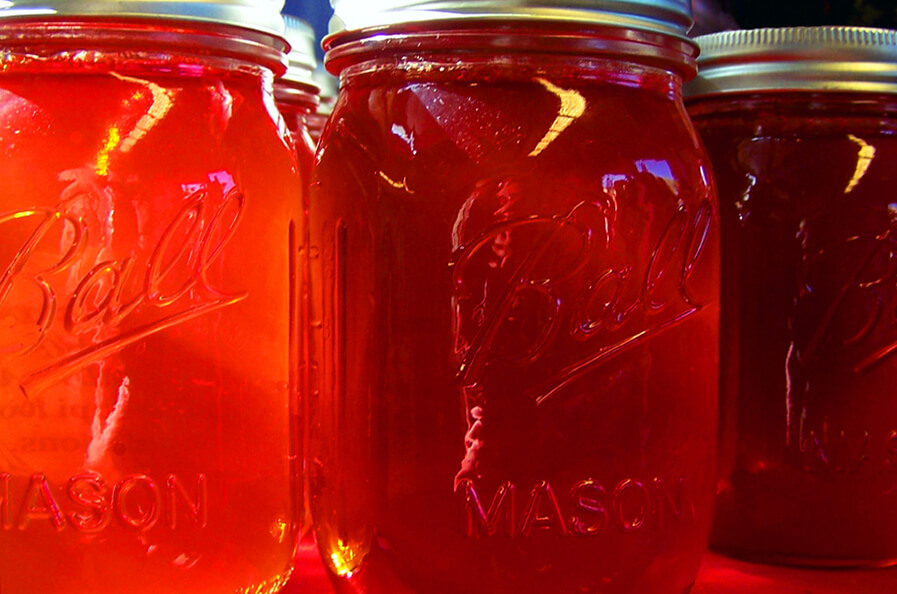
When working with the dough, use powdered sugar on your hands instead of flour; these cookies are flour-y enough. The longer you chill the dough, the better it holds its shape. Use unsalted butter, and almost anything other than red currant jelly is too sweet. Mash the jelly with a fork so it won’t bubble up and spill over on the dough.

Take 3/4 cup softened butter, 1/2 cup sugar, 1 egg yolk, and 1 1/2 cups cake flour. Cream butter and sugar with egg yolk. Fold in flour, knead a little bit, wrap in wax paper, and chill. Roll into 1/2 inch balls, make a small depression in the middle, and fill with jelly. Bake at 325 until golden.

Yancy’s Cajun Potatoes

Cut red potatoes into chunks and boil with Zatarain’s liquid seasoning (I use a lot) until just tender. Drain  and toss with vegetable oil, salt, pepper, and granulated garlic. Bake in a well-oiled shallow pan in a hot oven, stirring until browned and crisp.

Hugh Dean Encounters the Oyster Cracker

Hugh Dean Miller is one of those who believes in a reason for everything, that his life is a juggernaut of nuts, bolts, and steel plates steaming without perturbation across the turbulent waters of existence with a ponderous, placid faith in an eventual haven. No wave nor berg, neither Scylla nor Charybdis will delay this passage.

I find Hugh Dean’s crow’s nest enviable, if for nothing else than it’s intrepid stability, but then again, for that he is regularly beset by petty nuisances of meager impediment that disturb him by their absence on his charts. Such was the case when Hugh Dean and I were shopping, and he stumbled upon oyster crackers.

“Jesse!” he shouted. “Get over here!”

Two aisles over, I abandoned a fruitless search for large curd cottage cheese and came upon Hugh Dean with sacks of Premium oyster crackers in both hands, wiggling them this way and that, watching the little wafers tumble in the cellophane.

“Have you ever seen these?” he asked with a look of naked and furious accusation.

“Yes, Hugh Dean, they’re oyster crackers. Some people put them in soups.”

Typically, Hugh Dean wasn’t listening to me. “You can’t put an oyster on these,” he said. “Do they have oysters in them? They don’t even look like an oyster.” Puzzlement was written all over his face.

“Hugh Dean, that’s just what they’re called,” I tried to explain. “That doesn’t mean you eat them with oysters or they’re made of oysters.  They’re really popular in clam chowder.”

Somehow that made a connection. “Well then why in the hell don’t they call them clam crackers? Or chowder crackers? Who decided to call them oyster crackers anyway? Why would anyone make something like this when you can just crumble up a saltine in your soup like normal people do in the first place?”

Hugh Dean sighed, tossed the sacks back on the rack, and struck out towards the beer cooler. “Jesse, let me tell you something,” he said over his shoulder. “There are some things in the world you ought not waste time worrying over. They’ll just keep you from focusing on the Big Things.”

“Hugh Dean,” I said. “That’s the smartest thing I’ve ever heard.”

Ruby’s Roadhouse Omelet

While I worked in west Florida during the 1980s, I came to know people from all over the world. Then there was Ruby Ruth Reese, a down-home girl who grew up in what she called “the woargrass (wiregrass)” region of south Alabama.

Ruby Ruth (“Call me ‘Roo’”) had a heart of gold, but she was just as mean as she could be to all those displaced Yankees we worked with in Florida. She liked me because, as she once put it, “You’re just tryin’ to do right and make a place for yourself.” She even claimed to have relatives in Tupelo, but I think she just said that because she knew I was homesick all the time.

Roo told me she worked in a truck stop in Geneva County, Alabama during the Sixties, and if they knew you well enough, and you ordered something “to go”, you’d pay five dollars more, and they’d slip you a bottle of whiskey under the counter before you left. They also made what they called ham and egg pie that most of their customers would order to eat by themselves. Roo often made these for us to share on our lunch, which we took around two in the afternoon when we’d had a busy day. I’ve fancied it up a little bit with the cheddar cheese (she used American slices). She’d fuss at me for that.

For two people, beat very well four large eggs with  a half cup of milk. Stir in diced onion, cooked potatoes, ham, and grated cheddar. Heat an 6-in. skillet, add a big lump of butter. Once butter is sizzling, add half the egg mixture, shaking the pan as you do. Once eggs begin to set, top with a little more grated cheese and pop into a hot (400) oven until firm and lightly brown.


Grinch Crinkle Cookies

Mix together one box vanilla cake mix—I use the French vanilla—two beaten eggs, one stick softened butter, a tablespoon of vegetable oil,  and 1 oz. green food coloring. In another bowl, mix one cup corn starch with 1 cup powdered sugar. Using a large spoon, scoop up a lump of the green dough, shape it into a ping-pong ball, and roll it around in the starch/sugar mixture until coated.

Place on a lightly oiled cookie sheet and bake at 375 on a middle rack until they crinkle, about 8-10 minutes. Take care they don’t brown. Once done, remove from oven and let sit 2 minutes before placing on wire rack to cool completely. For hearts, mix a half cup each of flour, corn starch, and powdered sugar mixed with a half stick soft butter, just enough cold water to make a stiff dough, and red food coloring. Cut into heart shapes and bake on an oiled cookie sheet at 350 until crispy. Glue to cookies with a paste of powdered sugar and water.