Black Bean Chili

This recipe comes from the Harvest Café in Oxford. We always served it with a dollop of sour cream, sides of (brown) rice, and a dense crusty bread we got from some stoner in Abbeville. It was a substantial dish, and this recipe will feed dozens of people. The tomatoes were optional depending who was cooking and how hungover, but were always added after the beans were cooked. This is crucial: if you add tomatoes or salt to dried beans, they will toughen and sour.

1 lb. black beans
2 medium white onions finely chopped
5 cloves garlic, minced
1 4 oz. can chopped green chilies
4 poblanos diced
1 can diced tomatoes, drained (optional)
2 tablespoons ground cumin
2 tablespoons paprika
2 tablespoons chili powder
1 teaspoon black pepper
corn oil
Salt

Sort and rinse beans, place in a heavy metal pot with six cups water (or vegetable stock), and bring to a rolling boil for fifteen minutes. Reduce heat, add onions, garlic and chilies. Simmer covered until beans are soft, adding liquid as needed. Add mixed seasonings and keep on low heat. This is when you should add tomatoes.  Blend in a slash of corn oil for consistency.  Salt to taste. When serving, provide pico de gallo or a pepper sauce, and toppings such as diced avocado, chopped cilantro, minced onion and peppers.

Ed’s Low-Down on Buffalo Wings

Much like the ubiquitous pork belly, which seems to find its way onto every upscale menu at an exorbitant price these days, chicken wings were once considered very much a poor man’s pick when it came to buying meat. Wings then more often than not found their way into a stock pot, but sometime in the late 1970s, a wings recipe came out of Buffalo that took the nation by storm and has become a staple. Nowadays, chicken wings cost more than any other cut of chicken in the supermarket, and more than most beef or pork; $3.10 a pound today in my local meat department. I’ve known Ed Komara, a native of Buffalo, for a very long time, ever since he was the curator of the Blues Archive at the University of Mississippi, so I asked him to give me his low-down on chicken wings, and here it is, in 7 points (no less):

REAL Buffalo wings are not battered, but rather deep-fried as-is. After frying, the wings are then shaken in a container with butter (or margarine) and hot sauce (in the cheap places, usually Frank’s Hot Sauce).

  1. The main effect of a true Buffalo wing is the immediate sharpness of the spicy heat, then a quick lowering of that spice.
  2. By contrast, the Rochester, NY version is battered and deep-fried, so as to hold more of the hot sauce (in a sticky/honey sort of variant) and make the spicy burn last for a long time in one’s mouth. (This is especially true of the wings made at Country Sweet in Rochester).
  3. In Buffalo, historically speaking, there are two main places for wings: the Anchor Bar, and Duff’s. The Anchor Bar was where wings were first served in 1964, to the owner’s son and friends as late-night munchies. The bar is located near the Allen Street, aka “Allentown” which is the bohemian arts section of the city. By 1990 when I went there, the “bar” became more like a restaurant serving some killer Italian food (including the richest pizza I’ve ever tried).
  4. Duff’s began offering wings in 1969. It is located conveniently on Sheridan Drive (on the cusp of city and suburb) for those who don’t really want to go all the way to Allentown for the Anchor Bar.
  5. There may be a missing link between the Anchor Bar and Duff’s. My dad remembered sometime in the 1960s that a couple of Buffalo Bills football players were partners in a chicken wing stand that brought wings to city pop-culture attention beyond the Anchor Bar. But I haven’t seen that documented anywhere.
  6. I don’t know where the heck the idea of including celery and blue cheese dressing with wings came from or why. It’s as gratuitous as applesauce with potato pancakes.

Wing stands are pretty common in Buffalo. Much less often seen are places serving beef on weck, the other distinctive Buffalo bar food. The ‘weck is short for kummelweck (or as the locals pronounce it, “kimelwick”), which is a salty bun. The one place among my haunts that served it was Anacone’s Inn (now closed, alas), which always seemed to have run out of beef on weck every time I arrived there (usually at 1 a.m.).

Here is the original recipe. Joint the wings, (discard the tips) then pat dry (IMPORTANT!) and deep-fry them until crispy. Toss in sauce while hot.

8 tablespoons hot sauce (Frank’s or Crystal recommended)
8 tablespoons unsalted butter or margarine
1 1/2 tablespoons white vinegar
1/4 teaspoon cayenne pepper
1/8 teaspoon garlic powder
1/2 teaspoon Worcestershire sauce
salt to taste

Sweet Potatoes with Lime Crema

Mix a cup of sour cream to a half cup of sweet cream. Add the juice of half a lime and a tablespoon of capers. Cover, keep at room temperature overnight, then refrigerate. Coat sweet potatoes with vegetable oil and salt. Bake, slice, and cool. Top with cold lime crema and black pepper.

Scripture Cake

In the realm of riddle recipes, scripture cakes number among examples of culinary evangelism the world over, all stiff echoes of a textured oral tradition. This dense spice cake is typical. Here ingredients precede verse, which you’d not do for a lesson.

½ cup butter (Judges 5:25)
1 ½ cups white sugar (Jeremiah 6:20)
3 eggs (Isaiah 10:14)
2 cups all-purpose flour (1 Kings 4:22)
2 teaspoons baking powder (Luke 13:21)
1 teaspoon ground cinnamon (1 Kings 10:10)
1 teaspoon ground mace (1 Kings 10:10)
1 teaspoon ground cloves (1 Kings 10:10)
½ teaspoon salt (Leviticus 2:13)
½ cup water (Genesis 43:24)
1 tablespoon honey (Proverbs 24:13)
1 cup figs (1 Samuel 30:11)
1 cup raisins (1 Samuel 30:11)
½ cup almonds (Genesis 43:11)

Follow Solomon’s prescription for unruly boys in Proverbs 23:14.
Bake at 350 until springy and toothpick dry.

Stewed Greens

Cut, strip, and tear three bunches of turnip and two of mustard greens. If you like, peel and cube/dice turnip roots. Put greens in a clean stoppered sink, sprinkle with salt, cover with water, and agitate to knock off sand and other debris. Repeat until thoroughly clean. Drain and load into a pot along with roots, a quart of water or light stock, a chopped white onion, and a half pound of sliced bone-in ham or smoked turkey tail. After greens have reduced, cut heat to low and cover. Stew, stirring occasionally, for at least two hours. Add liquid as needed. Adjust salt, pepper to taste, and let sit uncovered a half hour before serving with pepper vinegar.

Pickled Eggs

Any time you enter a beer joint in Mississippi, you’re likely to find a big jar of pickled eggs on the counter next to the beef jerky, the pieds de porc à l’écarlate and all the other Bubbas that belly up to the fast food Southern sideboard.

Such eggs are sour, rubber shadows of those properly pickled, which are a great side with cold meats, poultry or game, also good in–and with–tuna, chicken, or vegetable salads. A recipe from a Junior League-type cookbook published in the 1930’s claims that they’re “ever so good chopped into hash, and provide just the right touch bedded on greens with a dressing of sharp, spicy goodness.” Craig Claiborne included a pickled egg recipe in his New York Times Cookbook (wouldn’t he just?).

The white of a pickled egg should be firm, not tough or rubbery, the yolk moist and creamy, not crumbly. The eggs should also have a light, balanced tangy/sweet flavor as a platform for other seasonings: I like a couple of slit hot peppers, a slice or two of garlic and a bay leaf to flavor mine–which are, admittedly, unsuitable for any occasions requiring plates, much less silverware–but dill, caraway or even cloves figure among attractive possibilities for the eclectic.

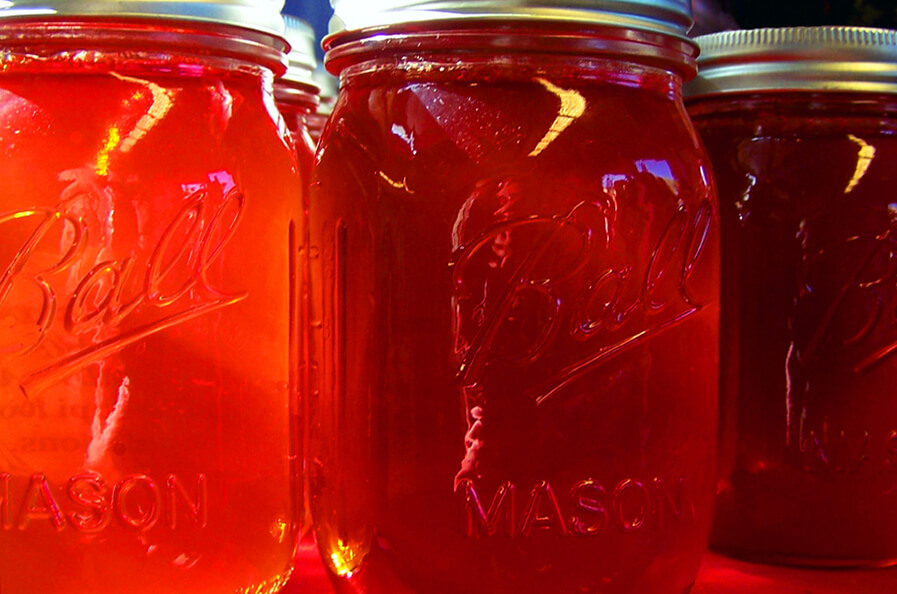
For pickling, boil a dozen medium eggs until just done; you can easily fit a dozen large in a quart glass jar. Then stuff the (peeled) eggs into the jar along with whatever accompaniments you like (jalapenos, onion, garlic, bay leaf, etc.). Fill the jar with a mixture of white vinegar and water (4:1) just to the top; jiggle the jar to burp bubbles. Pour vinegar mixture into a saucepan along with a tablespoon of salt, a tablespoon of sugar and a tablespoon of pickling spices. (If you miss the barroom rose, use beet juice.) Heat to almost boiling and pour back over the eggs; if there’s not quite enough liquid to cover them entirely, add a little more water. Seal the jar and store for at least a week before putting them out at your next kegger.

Mickler’s Revolt

By 1986 publishing was already wedded to celebrity so much so that the best-selling cookbook that year was by “The Frugal Gourmet”, an ordained minister who was convicted of molesting teenage boys some years later. But Smith, for all his faults, was an international media presence, while Ernest Matthew Mickler (God rest his sweet soul) who in the same year published White Trash Cooking, was a dying man with a vision.

Ernie insisted on the title, which left him an open target since his simultaneously unblinking and winking approach to the stereotype of the rural South confounded people across the country as well as people on the Redneck Riviera. The only thing even remotely resembling a precedent for White Trash Cooking was written by another Floridian, Zora Neale Hurston, whose studies in anthropology brought her back home, much as it did Mickler, who threw down a gauntlet, insisting that while the nation might profile Southerners as a whole as white trash, the behaviors that earmark anyone anywhere as decent and honorable hold sway in the American South as well, a region that is no more tragic than any other section of the country.

He also knew that people outside of the South consider us low and mean, but we are (as they are) a layered society undeserving of their unilateral condemnation; our culture, our manners, our morals all have as much a measure of  civilized imprint as those of our fellow countrymen, but instead of embracing our differences, they persist in considering the South and its people worthy of their disdain.

With White Trash Cooking, Mickler opened a portal of discovery into the essential character not only of the South, but of the nation; white trash cooking uses cheap ingredients, commercially frozen, dried or canned, few seasonings, packaged mixes, plenty of salt and sugar, lard and margarine in dishes that are quick and easy to cook, unsullied by any degree of sophistication. It remains the most basic form of cooking in the nation,  the cooking of people who don’t read Bon Appetit, people who work a forty-hour week (or more) at a poorly-paying job with little or no insurance, living from paycheck to paycheck, struggling to make a life for themselves and their children. They wouldn’t go to a Whole Foods store unless they lived next door and had to, which is good advice for anybody without an attitude.

White Trash Cooking celebrates a significant surface of our many-faceted country, one we should all recognize as uniquely ours and none others. Love it.

Orange Spice Cake

Cream 2 cups sugar with 2 sticks softened butter until light and fluffy. Beating well, add 5 eggs one at a time. Sift 3 cups plain flour with a teaspoon each of cinnamon, nutmeg, and ground cloves. Add to butter with a cup of milk, a half cup of orange juice concentrate, and a teaspoon of vanilla extract . Mix thoroughly, pour into an oiled and papered  9″ loaf pan, and bake at medium high (375) until toothpick dry. Slice, toast, and drizzle with honey.

Rodney’s Chicken Sausage

Grind 5 pounds chicken meat–I boned thighs and threw in a couple of boneless breast halves–with skin through a ¼” plate into a large bowl. . Add two tablespoons salt, a tablespoon ground black pepper (more if you want), and a quarter cup each of fresh chopped sage, thyme, and parsley,. Some people add cayenne, but don’t; it kills the herbs. Blend in a half cup fresh chopped green onion along with a half cup cold chicken broth.

Mix very well and refrigerate before stuffing loosely into casings. You’ll need about 12 feet. Twist sausages into about 6-inch links, and refrigerate overnight to let the seasoning work through the meat. This chicken mixture can also be cooked as patties, but will not keep well raw; freeze if you’re not going to use it the following day.

Louvain’s Grillades

My friend Rick Louvain from New Orleans loves going to supermarkets “to see what the Great Unwashed are consuming,” and insists on dragging me to my little neighborhood store for a scathing inventory when he’s in town.

On a recent outing he declared the entire produce aisle nothing more than a compost heap. His withering assessment of the floral department brought a tall bald queen around the corner clicking his nails like a scorpion. Rick had to buy a dozen roses to save us both from getting bitch slapped and owning it.

After declaring every can in the store a ptomaine grenade, we hit the meat section.

I was jittery because the butcher on duty was my buddy Charlie, who has the build of a Sumo wrestler and the disposition of a lamb. After a sweeping forensic analysis of the meat section as a whole, we came to the discount section where he grabbed a flat pack of thin round for two bucks and grinned.

Big Charlie was right next to him, humming to himself and marking down hamburger. Rick slapped Charlie on the shoulder. “Hey! Is this round steak?”

I tried to die three times. “It surely is,” Charlie said with the most bountiful smile in the known universe.

“Great!” Rick said. “Run three pounds fresh through the tenderizer for me. We’re gonna get some stuff in the deli, we’ll be back in a couple of minutes.”

Charlie winked at me when we got the meat, and I think he was thanking me for the customer, but I’m not sure. He goes out of his way to cut me t-bones to order, and if you ask me, I think he’s flirting. And that’s a big okay.

Once out of the store, Rick said, “We’re going to make grillades. This is what my gammy uses. She breads it, fries it, makes a roux in that, throws in some garlic and onion, bell pepper and celery, diced tomato, cooks it down in a casserole in the oven. Food of the gods, and you’re cooking.”

“You’ll never let up on me, will you, Rick?”

“You’re one lucky hoss, Jess.”