THe Lord is There CHurcH

A Southern Gallimaufry

Jeff Weddle’s vision encompasses many facets of the human condition—focused rage and conflict, love and lust, the peevishness of petty minds—but for the most part his vignettes confront you with those moments in life when the world shifts a bit, when the things that were in place lose their balance, bringing into focus the law that states life can turn on a can of sardines. Weddle’s stories are about those brief, shining moments in a South of indiscriminate geography, for the most part that of two-lane roads, the landscapes of Flannery O’Connor and Larry Brown, in a sturdy, staccato prose that tell what happens when we come to face the world as who we are, naked and without artifice.
The most powerful stories in the collection are “A Feast of Feathers”, a harrowing story of the loss of innocence; “Hot Sardines”, which delineates a situation packed with potential, a study in lowered expectations that explode into chaos and disorder; “A Constant Battle of the Flesh”, a very, very funny story of tangled lust that ends in the complex complacency many such situations do; “Epiphany”, perhaps best described as a prose poem about “God’s cruelest gift”, insufficient talent; “She Finds Herself Dancing”, a truly beautiful observation/reflection on that magic which takes place when the spotlights are upon you; “Dooley’s Revenge”, retelling that “oldest story” of two men and a majorette; the back-to-back stories of “Dog Day” and “Ditto”, which describe how some people weren’t made to care for others while some care for others too much in the wrong way; and “State of Grace”, a story that defies description but one you will find yourself reading again to find the song behind the words, “I wonder who you are.”
For the life of me, it is my fondest hope that in time the whimsical cover for this dark and perceptive collection of short stories, an image taken from the last story, which in itself is a reflection on theology, perhaps even on the need for theology, will become a collector’s item more illustrative of a publisher’s misconception of a work than it is of the work itself. Jeff Weddle is far from whimsical, and though When Giraffes Flew does have visions of exotic animals cavorting in clouds, nobody has an umbrella.

Transitions in regional media are often difficult to discern, but when it comes to the South, which has an arguably more identifiable character than any other region of the country, watersheds can be mapped with a bit more precision.
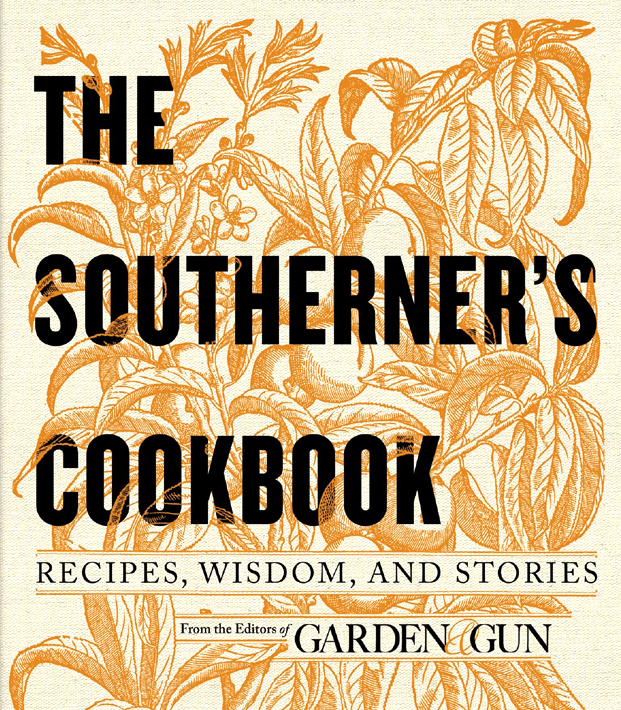
Such is the case with Garden & Guns newest release, The Southerner’s Cookbook, which is the third installment in three years (each October) under the G&G label. The first two imprimaturs, The Southerner’s Handbook: A Guide to Living the Good Life (Oct., 2013) and Good Dog (Oct., 2014), set the tone of the magazine’s brand, which is clearly targeted, in the words of G&G president and CEO Rebecca Darwin, “to people like me or to people who were very sophisticated, very worldly, but in love with where they’re from, which is this beautiful place called the South.” The label has a pronounced literary bent as is evidenced by its contributors, and given its added emphasis on sophistication and worldliness, one might well gather that Darwin and her team have set their collective caps to filling a decidedly upscale niche somewhere between brashness of The Oxford American and the comfort of that grand dame of regional periodicals, Southern Living. What with the progression of G&G’s publications so far, it’s a safe bet to expect the release of a book on Southern gardening next year.
The Southerner’s Cookbook is indeed market-generated, and I really shouldn’t be surprised that only one restaurant from the entire state of Mississippi carries a recipe. John Currence has a passage about his latest project, whole roast hog, which is somewhat of a departure for a native of the Big Easy operating in the Little Easy, but this is an era of diversity. Martha Foose inexplicably given the context is mentioned in a recipe for bacon crackers. The one recipe that shocks and dismays me is the one for “Comeback Sauce (sic)”, which is not only compared with McDonald’s “Secret Sauce”, but also provided by a chef from Alabama with a restaurant in Atlanta. The nod to Jackson in the first few words simply does not make up for such a slight. The cookbook is also far off the mark by consigning Jesse Houston’s restaurant Saltine, which specializes in oysters and seafood, to a sauce (Black Pepper Ranch Dressing) rather than an entrée. Both Mississippi and Jesse deserve far, far better than this.
If you need more evidence that Mississippi is nothing more than “that land mass between Louisiana and Alabama”, you need turn no further than The Southerner’s Cookbook. Yupster cookbooks have come of age, and Julia Reed is the bellwether for Mississippi. God help us all.

Parochialism is endemic in rural America, and though Southerners are of a naturally hospitable nature, they and Mississippians in particular have an acquired sense of xenophobia engendered by their brutal treatment at the hands of outsiders, most especially writers.
In the case of Mississippi, perhaps the most stupefying example of such mistreatment comes from Bill Bryson, a native Iowan and former chancellor of Durham University, U.K., who recounts his visit to Mississippi in The Lost Continent: Travels in Small-Town America, in which Bryson chronicles a 13,978 mile trip around the United States in the autumn of 1987 and spring 1988. Bryson’s tale of his journey through Mississippi is as full of bile as most American writers who venture south, packed with shopworn stereotypes and clichés, saturated with ridicule and derision. He left Mississippi with impressions of the state that are what we have come to expect of most people who visit with baggage consisting of preconceived prejudices and with no desire to do anything more than capitalize upon the surety that their condescension would be well-received by the world at large.
That same summer of 1988, V.S. Naipaul visited Jackson during a tour of the American South that resulted in his travelogue A Turn in the South, which was published the following February. Naipaul, who was awarded the Nobel Prize in 2001, had by that time achieved international recognition as an observer of post-colonial politics and societies. It was in this vein, that of an observer, that Naipaul visited the South, ostensibly to compare it to his own Trinidadian background. Though the issue of race was of obvious interest, the importance of race seems to move further to the background as the work progresses, and Naipaul finds himself increasingly preoccupied with describing the culture of the South, including country-western music, strict Christianity, Elvis Presley and rednecks. This shift of focus seems to take place largely in the section on Mississippi. Entitled “The Frontier, the Heartland”, his visit to the state is for the most part restricted to Jackson, where he becomes captivated with a character he calls Campbell, from whom he received a description of rednecks that fascinated and entranced Naipaul to the extent that he seems to become obsessed (he describes it as “a new craze”) with rednecks not merely as a group or class of people, but as almost a separate species; when someone tells him that “There are three of your rednecks fishing in the pond,” he “hurried to see them, as I might have hurried to see an unusual bird . . .”
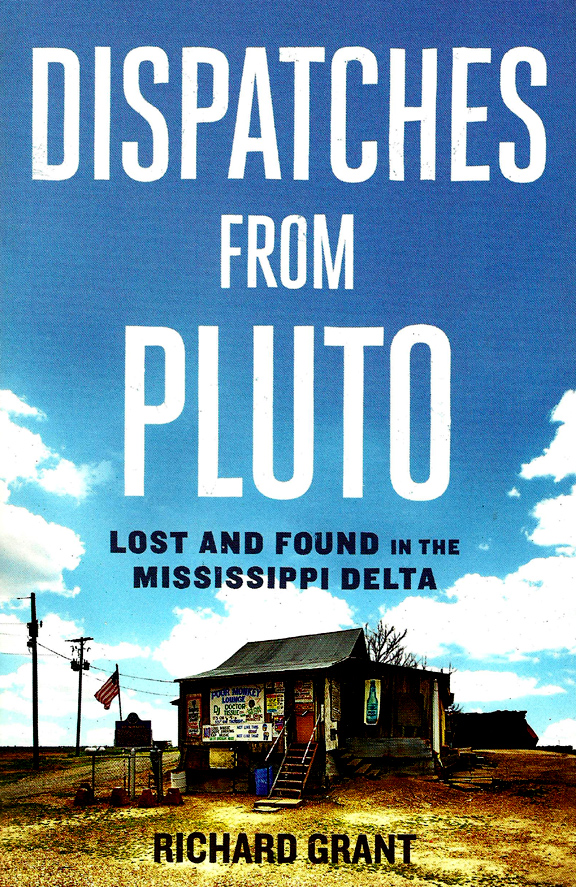
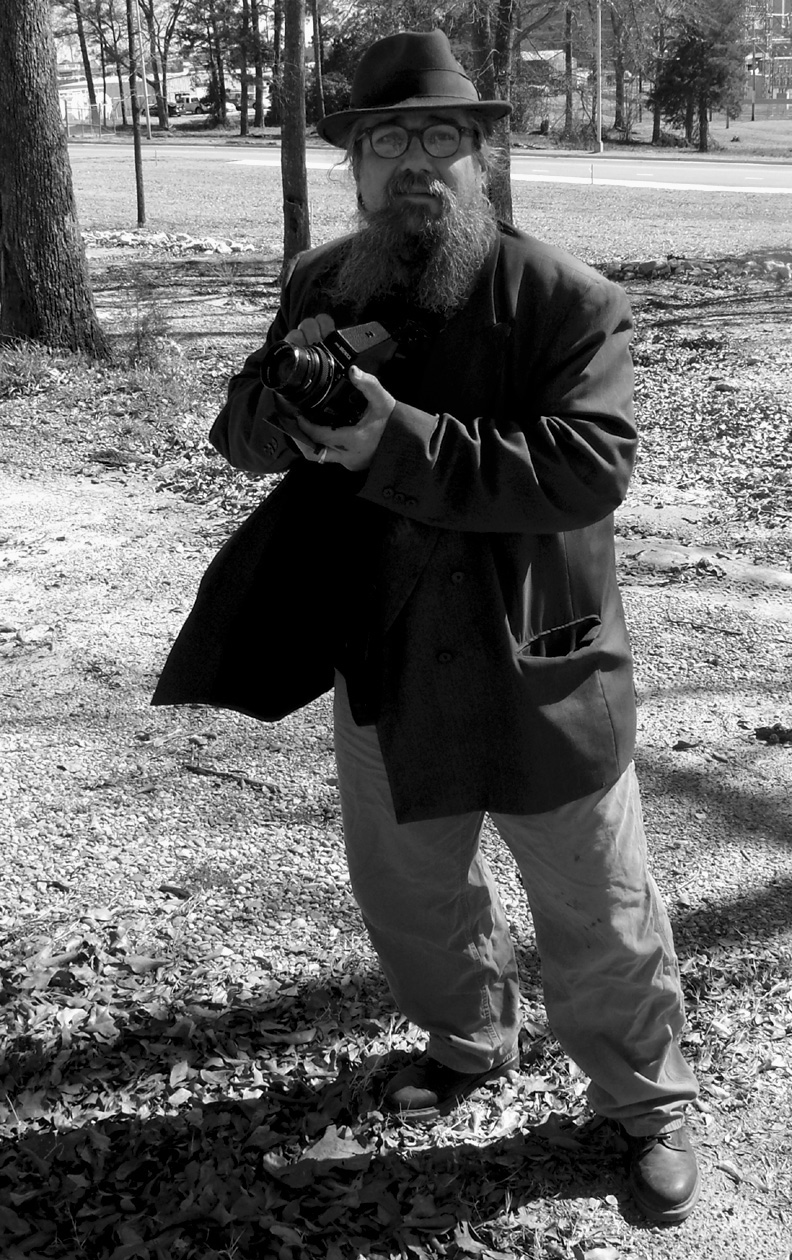
Then we have Richard Grant, whose primary if not unique distinction among outside observers of Mississippi is that he did not “just pass through”. Grant is still here, though no longer in Pluto. He also sounds like a nice fellow, and his tale of buying a home on the fringes of the Mississippi Delta has a somewhat beguiling innocence about it, reminiscent of that involving a certain young lady who fell down a rabbit hole. Indeed, his story has a few other holes in it, not the least of which is why Grant, a British travel writer formerly based in Tucson but living in New York decided to “buy a house and move to Mississippi”. Some might find simply visiting here in character for a travel writer; after all, Mississippi, a state of overwhelming poverty with a stratosphere of commanding wealth, does have a perverse sort of attraction for people in search of something off the beaten path as well as a solid claim to have produced one of the most enduring and influential musical genres of any century, but the most embarrassing legacy of blues music and one augmented by Delta writers themselves (no surprise there) is the myth of the Delta as “the most Southern place on earth”, when in reality it’s just as full of “poverty, faith and guns” as any other neck of the woods between Annapolis and Austin.
Three clues as to why Grant came to Mississippi to live and write are his friendship with a Delta food maven with a national profile whose well-to-do father just happened to have a high-end fixer-upper to sell in a hamlet on the eastern bank of the Yazoo River, a pixilated party with the Usual Suspects at Square Books in Oxford and Grant himself, a talented and hard-working writer with an ear for blues music as well by all appearances a bit of capital and no small amount of time on his hands. If those aren’t compelling components for a new book about the Mississippi Delta, then I challenge you to fabricate more plausible ones.
Grant is a fine writer with an amiable voice, but there’s a lot to get past in Dispatches from Pluto. He understands the intensity of isolated people and knows that in such empty places minds fix on petty matters, but in Mississippi he seems to have lost his compass on what is petty and what is not. Granted, travel writers should employ a degree of objectivity, but at some point the observer must become engaged, and throughout this book I kept asking myself, “Where is Richard Grant?” The answer is that he was making a living on many levels, steadily at work not only on what eventually became Dispatches but also on any number of other projects, including making the house he bought habitable, an effort that took an increasing amount of time and money, surely trying not only his patience but that of his long-suffering companion Mariah, not to mention Savannah. His engagement with the Mississippi Delta is in the most basic sense one of making do and getting by, one to which by his own accounts he as a free-lance writer is well accustomed and one well understood by Mississippi’s native residents. It’s worth suggesting that this is the reason he came and stayed, though there’s far more to it than that. A man such as Richard Grant does not lead a simple life.
This is not to say that all else in Dispatches is window-dressing, but much of it can be dismissed as such. One reads a great deal about the people, places and things in the Delta that any Mississippian or for that matter most people in the South or even the nation might find iconic to the point of cliché; the same tired recitation of the rich, sophisticated upper crust and poor, simple lower crust, the same circuitous itinerary of colorful towns and villages, the same boring assortment of restaurants, juke joints and run-down architecture as well as the obligatory nods to racial tension, a whole slew of blues musicians, firearms, possums and raccoons, alligators and snakes, cotton, sweet potatoes and catfish. In Dispatches from Pluto you won’t find any airy odes to the union of earth and sky or muddy elegies on the preponderance of the past; such things are no doubt within Grant’s ability, but that’s just not his style. He is a journalist at heart, a documentarian, if you will.
Curtis Wilkie likens Dispatches to Innocents Abroad, which might be more apt than it appears on the surface; Twain was of course far from innocent, and one suspects that Grant’s placid detachment is a mask for the sort of ferocious cynicism Twain himself often employed, but cynicism doesn’t seem to be Grant’s style either. He is a camera with a finely-ground lens, and this is why you should read this book, particularly if you are from Mississippi: to see Mississippi through the eyes of another person who came here not to deride or ridicule but for an account of how it is being here, or in Eliot’s fortuitous phrase, to explore and perhaps arrive where we started and know the place for the very first time.